They Sold Toxic Soda
You buy the store brand to save a few dollars. It’s a simple calculation every working person makes. You trust that the orange soda on the shelf, sitting next to the big national brands, has met the same basic safety standards. You trust it won’t poison you.
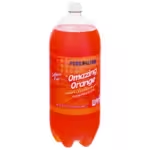
A new class-action lawsuit filed against The GIANT Company, LLC argues that trust was broken. The complaint, filed by plaintiff Shavonne Daniels on behalf of a national class of consumers, alleges that the company knowingly sold a product containing a toxic industrial chemical: Brominated Vegetable Oil, or BVO. For years, while other corporations were pulling this chemical from their recipes, GIANT allegedly kept it in theirs, failing to warn customers about the documented health risks.
The Non-Financial Ledger
This isn’t just about a refund for a 12-pack of soda. This is about the theft of peace of mind. The lawsuit states that plaintiffs were “deprived of the basis of their bargain.” You paid for a safe beverage. You received a product containing a substance linked to thyroid damage and neurological disorders.
The real cost is the anxiety that now settles in. It is the need to “undergo periodic medical testing to detect and protect themselves from future injury or illness,” as the complaint details. It’s the corrosive feeling of being betrayed by a company you trusted with something as fundamental as the food and drink you give your family. The damage isn’t just physical or financial; it is the violation of a social contract that says the products on our shelves should not actively harm us.
Societal Impact: A Timeline of Negligence
The story of BVO is a textbook case of corporate profit put before public health. The chemical, an additive used to keep citrus flavoring suspended in liquid, has a long and sordid history with regulators.
Public Health Catastrophe
The U.S. Food and Drug Administration once considered BVO “generally regarded as safe.” That changed. As early as 1970, the FDA removed BVO from that safe list after toxicity studies raised red flags. For decades, it existed in a regulatory grey area.
- 2014: A full decade ago, public pressure and growing health concerns led beverage giants Coca-Cola and PepsiCo to announce they would remove BVO from all their products. This was a clear signal to the entire industry that the chemical’s time was up.
- May 2022: An FDA study found that BVO consumption in rodents “is associated with increased tissue levels of bromine and that at high levels of exposure the thyroid is a target organ of potential negative health effects.”
- July 3, 2024: The FDA finally banned the use of BVO in food. The agency’s decision came “after the results of studies conducted in collaboration with the National Institutes of Health (NIH) found the potential for adverse health effects in humans.”
The health risks are not minor. The lawsuit cites evidence linking BVO’s key ingredient, bromine, to severe neurological symptoms: persistent headaches, memory loss, lack of coordination, tremors, and slurred speech. It also has “toxic effects on the thyroid gland” and can cause hypothyroidism, a condition leading to weight gain and depression.
Legal Receipts
The lawsuit is blunt in its accusations. These are not our words; they are the direct claims from the legal complaint against The GIANT Company.
“Defendant omitted and concealed the fact that prolonged consumption of brominated vegetable oil was known to have significant health consequences. Thus, Defendant’s conduct deceived Plaintiff into believing prolonged consumption of the Product was safe.”
“Defendant knew, or reasonably should have known, that this information is material to reasonable consumers… yet Defendant did not disclose this material information.”
“The defective warnings and labeling on the Product and BVO used in the beverage were substantial factors in bringing about the injuries to the Plaintiff and Class Members.”
What Now? The Resistance
Accountability does not happen on its own. It is forced by collective action. This lawsuit is the first step, seeking not only refunds but also the cost of medical monitoring for everyone who was exposed.
Corporate Watchlist
These are the entities responsible, according to the legal filings. Their decisions led to a dangerous product remaining on store shelves.
- The GIANT Company, LLC (formerly Giant Food Stores, LLC)
- Executive Leadership of The GIANT Company
- Board of Directors of The GIANT Company
Regulatory Watchlist
These agencies have the power to protect consumers. They must be monitored to ensure they enforce the new ban and hold corporations accountable for past harm.
- U.S. Food and Drug Administration (FDA)
- National Institutes of Health (NIH)
- Federal Trade Commission (FTC) – for deceptive marketing and failure to disclose.
Your Next Move
This fight goes beyond a single lawsuit. It’s about dismantling a system that allows corporations to gamble with public health for profit. Support class-action lawsuits that hold companies financially responsible. Demand radical transparency in supply chains. Most importantly, support local food systems, mutual aid networks, and community gardens that break our dependence on the corporate grocery model that has failed us.
The source document for this investigation is attached below.
Explore by category
Product Safety Violations
When companies sell dangerous goods, consumers pay the price.
View Cases →Financial Fraud & Corruption
Lies, scams, and executive impunity that distort markets.
View Cases →