A bleach manufacturer stored enough chlorine to kill a neighborhood. Then it skipped the safety checks, falsified its own diagrams, let equipment defects sit for over a year, and let emergency training lapse for five years. The EPA noticed. The fine tells you everything about who this system protects.
The Non-Financial Ledger
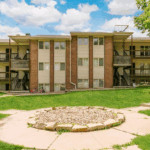
Saugus is a community in the Santa Clarita Valley, part of Los Angeles County. People live there. They go to work, drop their kids at school, run errands, breathe the air. Some of them live or work close enough to 23119 Drayton St. that a worst-case chlorine release from that facility could reach them. The EPA’s own rules confirmed this: Hasa was classified under Program 3, the highest-risk tier, precisely because public receptors were within the calculated distance to endpoint for a worst-case release.
Chlorine is not a theoretical hazard. It is a dense, yellow-green gas that attacks the respiratory system on contact. At sufficient concentrations, it causes pulmonary edema, chemical burns to the lungs, and death. During World War I, it was used as a chemical weapon. At industrial facilities today, it is tightly regulated because the consequences of an accidental release are severe and fast-moving. The people near Hasa’s facility did not choose to live adjacent to a chlorine processing plant. They simply live where they live.
While those residents went about their lives, the safety systems designed to protect them in the event of an emergency were degraded in multiple documented ways. The piping diagrams that emergency responders would consult to shut down equipment during a release were wrong. The procedures that workers were supposed to follow to initiate an emergency shutdown of the chlorine railcar did not include the conditions under which that shutdown was required. One employee had not received required hazardous materials response refresher training in over four years at the time of the inspection. Equipment defects flagged by a third-party inspector in 2022 continued in service for nearly thirteen months while no documented measures were taken to ensure safe operation.
None of this constitutes a catastrophe. No release is documented in the EPA’s findings. But the entire architecture of the RMP rules exists precisely because releases happen, and when they do, the difference between a near-miss and a mass casualty event is often whether the safety documentation was accurate, the procedures were current, and the workers were trained. Hasa let all three slip, simultaneously, for years. The people closest to that facility were never told.
Legal Receipts
These are direct quotations from EPA Docket No. CAA(112r)-09-2026-0064, signed April 13, 2026. What follows is the government’s own language describing what it found.
“EPA determined that at the bleach plant, Respondent’s process safety information had inaccurate safe upper and lower limits for process parameters, including inaccurate low and high alarms on various equipment; no evaluation of consequences of deviation; and piping and instrument diagrams that did not match equipment observed in the field, including the locations of valves and local pressure indicators, locations of connections between equipment, the incorrect direction of flow inside equipment, and blinded equipment that was still active in the field.”
- The piping and instrument diagrams (P&IDs) are the master reference documents for how hazardous process equipment is connected and how it should behave. Emergency responders and workers rely on them. Hasa’s P&IDs were inaccurate in four distinct documented ways: wrong valve locations, wrong connection points, wrong flow direction, and equipment shown as inactive that was still running.
- Inaccurate alarm thresholds mean that automated safety systems could trigger too late, too early, or not at all relative to actual dangerous conditions in the plant.
- The absence of any consequence-of-deviation evaluation means there was no documented analysis of what happens if something goes wrong. That analysis is not optional; it is a federal requirement under 40 C.F.R. § 68.65(c)(1)(v).
“Respondent made a process management change between the 2014 and 2019 PHAs by adding a bleed off valve to the Unipro air tank and did not include the change in its 2019 PHA. This change was not added until after the Inspection and was submitted to US EPA on August 25, 2025.”
- A Process Hazard Analysis (PHA) is required to reflect the actual current state of the process. Hasa added a valve to its air tank, a change that affects how pressure is managed in the system, and never updated the hazard analysis to account for that change.
- The omission persisted from sometime between 2014 and 2019 through at least June 2023 when the inspection occurred. The correction was not submitted until August 25, 2025, more than two years after the inspection.
“Respondent failed to address in its operating procedures for the bleach plant and chlorine railcar at the Facility the conditions under which emergency shutdown is required and the consequences of deviation and steps required to correct or avoid deviation.”
- This means workers at Hasa did not have written instructions telling them when to initiate an emergency shutdown of the chlorine railcar. That is not a paperwork problem; it is the difference between a worker knowing to act and a worker hesitating during a release event.
- The absence of documented deviation steps means that when a process parameter went out of range, there was no written protocol for workers to follow to bring it back under control.
“Respondent failed to correct deficiencies in equipment found during a 2022 inspection by a third-party technician before further use or in a safe manner; such deficiencies were corrected nearly 13 months after they were identified while the equipment continued to be used without taking means to assure safe operation.”
- A third party came in, found equipment defects, and documented them. Hasa then ran that equipment for nearly thirteen more months without fixing the defects and without any documented interim safety measures. Federal regulations required either correction before further use or documented safe interim operation. Neither occurred.
“One employee was last trained on Hazardous Materials Response on March 28, 2019, and refresher training has been overdue for that same employee since March 29, 2020.”
- At the time of the June 2023 inspection, this employee’s emergency response training had been expired for over three years. In a chlorine release scenario, this is the person who might be expected to respond. The Integrated Contingency Plan required annual refresher training. It did not happen.
Profit-Maximization at All Costs
The documented pattern at Hasa’s Saugus facility is one of systematically deferred safety investment, not isolated oversights.
- Equipment defects identified by a third-party technician in 2022 were left unresolved for nearly 13 months. Shutting down or restricting affected equipment while defects were corrected would have cost production time. The record shows no documented interim safety measures were taken; the equipment simply kept running.
- Process safety documentation, including piping diagrams, process hazard analyses, and operating procedures, requires ongoing maintenance. Maintaining accurate records is a recurring cost in staff time and engineering resources. Hasa’s documentation had not kept pace with physical changes to the plant, suggesting those updates were deprioritized.
- Emergency response training for at least one employee lapsed continuously from March 2020 through the June 2023 inspection. Annual refresher training is a low-cost, mandatory requirement. It did not happen for over three years.
- The total penalty Hasa agreed to pay is $165,246. The document contains no figure for Hasa’s revenues or profits from its bleach operations. Without that data, a direct fine-to-profit ratio cannot be calculated from the source. What is clear is that the penalty resolves six counts of violations spanning multiple years with no admission of wrongdoing.
What the Paperwork Said vs. What Was Actually There
The RMP program requires companies to file accurate documentation with regulators so that both the facility and emergency responders know exactly what they are dealing with. Hasa’s filed documents differed from physical reality in documented ways.
- Claimed: Piping and instrument diagrams accurately represented the facility’s process equipment. Reality: The diagrams showed incorrect valve locations, incorrect connection points, the wrong direction of internal flow, and equipment marked as blinded (sealed off) that was still active and in use.
- Claimed: Safe operating limits (alarm thresholds) were accurately documented for process equipment. Reality: The alarm thresholds documented in the process safety information were inaccurate.
- Claimed via the 2019 PHA: The process hazard analysis reflected the current state of the process. Reality: A physical change to the Unipro air tank, the addition of a bleed-off valve, was made between the 2014 and 2019 PHAs and was never included in the 2019 document. It was not corrected until after the EPA inspection and was not submitted until August 25, 2025.
- Claimed via the RMP emergency contact filing: Emergency contact information in the Risk Management Plan was current. Reality: Hasa failed to update its RMP when emergency contact information changed, leaving the filed contact three months out of date before correcting it.
Regulatory Gray Zones
The RMP rules create a tiered compliance structure, and the mechanics of that structure created documented gaps that Hasa’s violations fell through over extended periods.
- The PHA update cycle is set at five years. That means a process change made in 2014 or 2015 would not be required to appear in a new PHA until 2019. Hasa added a bleed-off valve to the Unipro air tank after its 2014 PHA, and the five-year update cycle meant the deficiency would not necessarily be caught until 2019. When the 2019 PHA was filed without the change, the same five-year clock reset, meaning the omission would not surface in a mandatory periodic review until 2024, unless an inspection occurred first.
- The RMP rules require emergency contact information to be updated within one month of a change, per 40 C.F.R. § 68.195(b). Hasa’s contact was outdated for three months. The regulation’s one-month window is a soft administrative deadline, and violations of it do not trigger automatic enforcement; they require an inspection or complaint to surface. This structural gap means outdated emergency contacts can persist well beyond one month without any automated detection.
- The mechanical integrity inspection requirements mandate that defects be corrected “before further use” or “in a safe and timely manner when necessary means are taken to assure safe operation.” The second clause creates flexibility: a facility does not have to shut down immediately if it documents interim safe-operation measures. Hasa ran defective equipment for nearly 13 months with neither condition met: no documented interim measures and no pre-use correction.
Societal Impact Mapping
Public Health
The documented safety failures at Hasa’s Saugus facility created a sustained window of elevated risk for people living and working near the plant.
- Hasa’s Program 3 designation was triggered by the presence of public receptors within the distance to the endpoint for a worst-case chlorine release. This means the EPA’s own calculations confirmed that residents near the facility were within the potential impact zone.
- Inaccurate P&IDs and missing emergency shutdown procedures for the chlorine railcar mean that in a release scenario, emergency responders would have been working from incorrect information about how the facility was physically configured. Response time and effectiveness in a chlorine incident are directly degraded by inaccurate documentation.
- The employee whose hazmat training had been expired since March 2020 remained, by implication of continued employment, part of the facility’s emergency response capacity. An untrained responder in a chlorine emergency is a risk multiplier, not a resource.
- Equipment defects run in service for nearly 13 months without documented interim safety measures represent a sustained period during which the mechanical barriers between chlorine and the surrounding community were operating in an unverified state.
- The absence of documented deviation consequences and corrective steps in operating procedures means that during any out-of-range process event at the bleach plant or chlorine railcar, workers had no written protocol to consult. Human error rates increase when workers must improvise during emergencies.
Economic Inequality
Industrial facilities that store hazardous substances at quantities above federal thresholds are disproportionately located in working-class and lower-income communities. The source document does not provide demographic data for the Saugus area surrounding the facility; however, the structure of the violations reflects a cost-shifting pattern that is common to this dynamic.
- The residents near Hasa’s facility absorbed the risk created by deferred safety spending without any disclosure, compensation, or recourse. Hasa’s operating costs were lower because it skipped inspections, deferred documentation, and let training lapse. Those savings came at the expense of the public buffer zone around the plant.
- The $165,246 penalty is a one-time cost to Hasa. The residents near the facility bore years of elevated risk with no corresponding payment, remediation, or right-to-know notification arising from these violations.
The Settlement Isn’t Justice
The $165,246 penalty closes this case without trial, without admission of wrongdoing, and without any public accounting of what Hasa earned during the years these violations persisted.
- Hasa “neither admits nor denies specific factual allegations contained in this CA/FO.” This is standard settlement language, but its consequence is that no court, no regulator, and no jury has ever found Hasa legally responsible for the conditions described in this document. The violations are alleged, not adjudicated.
- The penalty resolves six separate violation counts across five regulatory requirements: process safety information, process hazard analysis, operating procedures, mechanical integrity, emergency response, and RMP maintenance. Six counts of multi-year failures resolved for $165,246 total means roughly $27,541 per count on average, before any weighting for severity or duration.
- No portion of the $165,246 goes to residents who live within the worst-case release radius. There is no restitution mechanism for the community in this settlement. The money goes to EPA.
- Hasa certified in the agreement that it “has taken all steps necessary to return to full compliance.” That certification is made by Hasa itself, under penalty of law, but the corrections to the PHA were not submitted to EPA until August 25, 2025, more than two years after the inspection. The timeline of compliance is part of the record.
- The settlement expressly does not resolve Hasa’s liability under CERCLA, EPCRA, or any other statute; EPA explicitly reserved those rights. This is standard, but it means the full scope of potential violations at this facility may extend beyond what is addressed here.
Explore by category
Product Safety Violations
When companies sell dangerous goods, consumers pay the price.
View Cases →Financial Fraud & Corruption
Lies, scams, and executive impunity that distort markets.
View Cases →