The Starco Group Keeps Breaking The Same Environmental Regulation. The Fine Is $1,400.
A Pesticide Factory. A Paper They Were Supposed to File. They Didn’t. Twice.
The Federal Insecticide, Fungicide and Rodenticide Act, known as FIFRA, is one of the foundational environmental laws in this country. It exists to make sure that companies producing pesticides, fungicides, and related chemical products are not operating in the dark. The law is specific and the requirement is minimal: once a year, by March 1st, every registered pesticide-producing facility must tell the EPA what it is producing, what active ingredients it is using, what it has sold, and what it has distributed. That is the entire ask. File a report. Tell us what you made and sold last year. The agency prescribes the form. The company fills it out. The public is, theoretically, protected by the fact that the government at minimum knows what chemicals are moving through commerce from a given address.
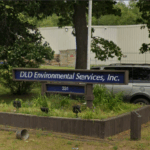
The Starco Group, Inc., operating out of an industrial facility at 3137 E 26th Street in Vernon, California, did not do this. For the 2022 reporting year, they failed to submit their annual pesticide production report by the March 1, 2023 deadline. The EPA did not immediately penalize them. Instead, the agency issued a Notice of Warning on November 1, 2023. A warning. A formal, documented notice from a federal agency telling a company: you broke the law, here is your warning, do not do it again.
The Starco Group did it again. For the 2024 reporting year, they again failed to submit their annual pesticide production report by the March 1, 2025 deadline. The EPA filed a complaint. The case was assigned Docket No. FIFRA-09-2025-0066 in EPA Region 9, the agency’s San Francisco-based regional office covering California and the broader western United States. The matter was filed with the Regional Hearing Clerk on May 8, 2025.
The outcome of this enforcement action is an Expedited Settlement Agreement and Final Order: The Starco Group pays $1,400 and the matter is closed. No admission of the factual allegations is required. The company “neither admits nor denies” what happened. They simply pay the fine, certify that they have now filed the report they were supposed to file years ago, and walk away. The EPA retains the right to pursue future violations, but the penalty for this documented pattern of regulatory avoidance at a pesticide-producing facility amounts to roughly what a working-class family in California spends on groceries in a month.
The Timeline: A Pattern Visible From Space
The Non-Financial Ledger: What This Costs People, Not Governments
Vernon, California is a small industrial city in Los Angeles County. It is surrounded by the communities of Maywood, Huntington Park, Bell, Commerce, and East Los Angeles. These are working-class, majority Latino communities, densely populated, historically underserved by environmental enforcement, and already carrying a disproportionate toxic burden from the industrial operations that have been permitted to run in and around their neighborhoods for generations. When a pesticide-producing facility in Vernon operates with reduced transparency about what it is manufacturing and distributing, the people breathing the air, drinking the water, and living within miles of that facility are the ones absorbing the risk of that information gap.
The reporting requirement that The Starco Group bypassed is not bureaucratic paperwork designed to make a company’s life harder. It is the baseline mechanism by which regulators, researchers, public health officials, and community advocates can know what is happening inside a chemical manufacturing operation. The annual pesticide production report tells the EPA the types of pesticides being produced, the active ingredients involved, the quantities manufactured, and the amounts that have been sold or distributed into commerce. Without that data filed on time and accurately, the chain of knowledge that is supposed to protect communities from toxic exposure is broken. Regulators cannot respond to what they cannot see. Researchers cannot study health trends connected to production patterns they do not know exist. Residents cannot organize around hazards that have been rendered invisible by a company’s failure to report.
What compounds the insult in this case is the pattern. A single missed deadline could be characterized as an administrative oversight, a clerical failure, a momentary lapse. The Starco Group received a formal federal Notice of Warning in November 2023 for missing the 2022 reporting deadline. That notice was the government saying, in explicit terms: we see you, we are watching, comply with the law. The company then proceeded to miss the same deadline for the 2024 reporting year. This is a documented pattern of disregard for a disclosure obligation that exists entirely to protect the public. The people who bear the cost of that disregard are the residents of the low-income communities surrounding Vernon, not the shareholders or executives of The Starco Group.
There is an additional detail buried in the Certificate of Service attached to this settlement document that deserves scrutiny. The contact person listed for The Starco Group, Inc. in the official legal proceeding is John Decker, reached at JDecker@fourstarchemical.com. The Starco Group’s official correspondence with the EPA on a matter involving their own facility routes through the email domain of a separate chemical company: Four Star Chemical. This is the kind of corporate structural detail that means everything to communities trying to hold industrial operations accountable. When the lines of identity, liability, and responsibility are blurred across corporate entities, the burden of proving harm and demanding accountability falls harder on the people with the fewest resources to fight it. The executives and legal teams have the structure. The residents of Maywood and Huntington Park have the asthma rates.
The $1,400 penalty itself communicates a message that goes beyond this single case. It tells every company operating a registered pesticide facility in the western United States that the cost of non-compliance with basic transparency requirements is approximately what a mid-level manager spends on a weekend in Las Vegas. It tells them that a repeat offense following a federal warning will cost them a sum that most small-to-medium industrial operations can absorb without any meaningful financial impact. It tells the communities living adjacent to those facilities that their right to know what chemicals are being produced near their homes carries a government-set dollar value that is, in practice, negligible. The law exists. The enforcement mechanism exists. The penalty structure is what makes a mockery of both.
The settlement document states plainly that Respondent “neither admits nor denies the factual allegations contained herein.” This language is standard in regulatory settlements, but its consequences are real. The Starco Group does not have to say, on the record, that it repeatedly failed to disclose its pesticide production activities. It does not have to explain why it missed the deadline twice. It does not have to account for what was being produced during those unreported periods. It pays the fine, certifies current compliance, and moves on. The record of what was actually manufactured at 3137 E 26th Street in Vernon during the periods covered by the missed reports remains, in practical terms, outside the public’s grasp.
Legal Receipts: The Document Speaks For Itself
Every quotable passage below is drawn verbatim from Docket No. FIFRA-09-2025-0066, the Expedited Settlement Agreement and Final Order filed with the U.S. EPA Region IX Hearing Clerk on May 8, 2025. Read these. They are the receipts.
Paragraph 4 — The Core Violation “Respondent has failed to comply with Section 7(c)(1) of FIFRA, 7 U.S.C. § 136e(c)(1), and the regulations at 40 C.F.R. §167.85(d) by failing to complete and submit its annual pesticide production report for the 2024 reporting year for the facility located at 3137 E 26th Street, Vernon, CA 90058 by March 1, 2025.”
Paragraph 5 — The Prior Offense “Respondent previously failed to submit an annual pesticide production report for the facility for the 2022 reporting year by March 1, 2023, for which Respondent was issued a Notice of Warning on November 1, 2023.”
Paragraph 6 — The Penalty “Complainant and Respondent agree that settlement of this matter for a civil penalty of $1,400 (One-Thousand Four-Hundred Dollars) is in the public interest.”
Paragraph 2 — What The Law Actually Requires “Section 7(c)(1) of FIFRA, 7 U.S.C. § 136e(c)(1), requires any producer operating a registered pesticide producing establishment to inform EPA of the types and amounts of pesticides and, if applicable, active ingredients used in producing pesticides, which it is producing, which it has produced during the past year, and which it has sold or distributed during the past year. The information required by this paragraph shall be kept current and submitted to the Administrator annually as required by such regulations as the Administrator may prescribe.”
Paragraph 3 — The Specific Regulatory Deadline “Pursuant to 40 C.F.R. § 167.85(d), a producer operating a registered pesticide producing establishment must submit an initial report to EPA no later than 30 days after the first registration of each establishment the producer operates and thereafter complete and submit an annual pesticide production report on or before March 1 of each year, even if the producer has produced no pesticidal product for that reporting year.”
Paragraph 8 — The Admission Structure (What They Admitted and What They Didn’t) “By signing this Agreement, Respondent: (a) admits that Respondent is subject to the requirements in Paragraphs 2 through 3 above; (b) admits that EPA has jurisdiction over Respondent and Respondent’s conduct as alleged herein; (c) neither admits nor denies the factual allegations contained herein; (d) consents to any conditions specified in the Agreement and to the assessment of the civil penalty; and (e) waives any right to contest the allegations contained herein or and its right to appeal the proposed Final Order attached hereto.”
Paragraph 11 — What Paying The Fine Does NOT Resolve “Full payment of the penalty set forth in this Expedited Settlement Agreement and Final Order shall only resolve Respondent’s liability for federal civil penalties for the violations and facts alleged herein.”
Paragraph 14 — EPA’s Reserved Rights “EPA reserves all of its rights to take enforcement action for any other past present or future violations by Respondent of FIFRA, any other federal statue or regulation, or this Agreement.”
Paragraph 15 — The Certification of Current Compliance “By its signature below, Respondent certifies, subject to civil and criminal penalties for making a false submission to the United States Government, that it has now submitted its 202[4] annual pesticide production report; and it is presently in compliance with all requirements of FIFRA, 7 U.S.C. §§ 136 et seq.”
Paragraph 13 — If They Don’t Pay “If Respondent does not timely pay the civil penalty, EPA may bring an action to collect any unpaid portion of the penalty with interest, handling charges, nonpayment penalties, and the United States enforcement expenses for the collection action. The validity, amount and appropriateness of the civil penalties are not reviewable in a collection action.”
Certificate of Service — Contact Information for The Starco Group’s Representative “RESPONDENT(S): John Decker, The Starco Group, Inc., 3137 E 26th Street, Vernon, CA 90058, JDecker@fourstarchemical.com”
Societal Impact Mapping: What This Actually Touches
Environmental Degradation
The FIFRA annual production report requirement exists at the intersection of environmental accountability and chemical safety. When a pesticide-producing facility goes dark on its reporting obligations, the environmental consequences are not hypothetical. The active ingredients in pesticide formulations include compounds that are persistent in soil, capable of runoff into waterways, and subject to atmospheric drift. The entire regulatory apparatus designed to track the lifecycle of these substances, from production volume to distribution patterns to environmental monitoring, depends on accurate, timely self-reporting by producers. Without those reports filed on time, the EPA’s ability to conduct meaningful oversight of what is entering the environment from a specific facility is structurally compromised.
Vernon, California is a heavily industrialized municipality. It sits within the Los Angeles Basin, an air quality nonattainment area where pollutant accumulation is already a documented, chronic problem. The industrial corridor in and around Vernon handles significant volumes of chemicals, solvents, and processed compounds. A pesticide manufacturer in this environment that operates outside of the reporting framework is not merely an administrative nuisance. It is a facility whose environmental footprint, in terms of what is being produced, how much of it is moving into commerce, and what active chemical ingredients are involved, is known to the government at a lower level of detail than the law demands. The communities adjacent to Vernon, including Maywood, a city of roughly 27,000 people in less than two square miles, live in the shadow of that information gap.
The source document does not specify which pesticide types or active ingredients The Starco Group was producing during the 2022 or 2024 reporting years for which they failed to file. That is precisely the point. The failure to report means the specifics of production during those periods are not in the public record via the mechanism designed to put them there. Environmental monitoring, community right-to-know frameworks, and cumulative impact analyses all depend on that data pipeline functioning. When a company breaks the pipeline twice and pays $1,400 to make the legal problem go away, the environmental information gap persists.
Public Health
Pesticide active ingredients are, by definition, designed to be biologically active. They kill or repel target organisms. That biological activity does not stay neatly contained to the intended targets. Pesticide exposure has been associated in the scientific literature with a range of human health outcomes, including neurological effects, endocrine disruption, respiratory irritation, and carcinogenic risk depending on the specific compound, exposure route, duration, and population vulnerability. Children are disproportionately vulnerable. Communities with higher rates of outdoor labor, as is common in working-class Latino communities in the greater Los Angeles area, face higher exposure risk.
The FIFRA reporting framework is one of the mechanisms by which public health researchers and local health departments can assess community exposure to pesticide production activity. When a facility producing pesticides fails to report what it is making and distributing for an entire year, not once but twice, the ability of health officials to connect production activity with community health outcomes is degraded. The Los Angeles County Department of Public Health, community clinics in Maywood and Huntington Park, and environmental justice researchers working in the region all work downstream of the data that FIFRA reporting is supposed to make available. A broken reporting chain means those researchers and clinicians are working with an incomplete picture of the chemical environment their patients are living in.
The document records that The Starco Group certified, upon signing the settlement, that it is “presently in compliance with all requirements of FIFRA.” That certification covers forward-looking compliance. It does not restore the public health data gap created by two years of missed reporting at a pesticide-producing facility. The communities near Vernon cannot retroactively benefit from information that was never filed. The health effects, if any, that occurred during those reporting gaps happened whether or not anyone documented the production volumes that may have contributed to them.
Economic Inequality
The $1,400 civil penalty at the center of this settlement is not simply a small number. It is a number that illuminates the architecture of environmental enforcement and who bears the cost of its failures. For a company operating a registered pesticide-producing facility in a major industrial city, $1,400 is a rounding error in any operating budget that includes regulatory compliance as a line item. The penalty is less than the cost of a single lawyer’s hourly rate in a complex regulatory matter. It is less than what many industrial facilities spend on compliance software subscriptions in a month. It is not designed to deter. It is designed to close a case.
The communities nearest to Vernon’s industrial corridor do not have the option of paying a modest fee to exit the consequences of a facility’s regulatory noncompliance. The residents of Maywood, Huntington Park, Commerce, and Bell are not filing a settlement agreement that makes their exposure risk “resolved.” They are living in a region with documented environmental justice burdens, in communities that have historically lacked the political power to demand the same level of industrial accountability that wealthier, whiter neighborhoods have obtained through decades of organized advocacy and litigation.
The economic structure that produces a $1,400 penalty for a repeat FIFRA violation is the same structure that permits industrial operations to cluster in low-income communities of color because land is cheaper, political resistance is lower, and enforcement pressure is lighter. The fine in this case was set under an “expedited settlement” process designed to resolve small-dollar penalty cases efficiently. That efficiency serves the regulatory system’s caseload management. It does not serve the people whose right to know what chemicals are being produced near their homes is the entire justification for the reporting requirement that was violated. The $1,400 is the price the market has set on that right to know. It is not a price the residents of Maywood set. It is the price set by a system that values industrial efficiency over community protection.
The “Cost of a Life” Metric
What Now: The Watchlist and The Way Forward
The settlement is signed. The fine is set. The case is formally closed on the EPA’s docket. That does not mean the story ends here. Here is who is watching, who should be watching harder, and what people on the ground can do.
Corporate Roles Identified in the Source Document
- Respondent: The Starco Group, Inc. — Registered pesticide producer, 3137 E 26th Street, Vernon, CA 90058
- Company Contact in Legal Proceedings: John Decker — Title not listed in source. Email routes through fourstarchemical.com domain.
- EPA Complainant Authority: Kaoru Morimoto, Assistant Director, Enforcement and Compliance Assurance Division, EPA Region 9
- EPA Attorney of Record: Carol Bussey, Esq., Office of Regional Counsel, Air & Toxics Section II, EPA Region 9
- EPA Enforcement Staff: Rieko Nishimura, Enforcement and Compliance Assurance Division, EPA Region 9
- Presiding Judicial Officer: Beatrice Wong, Regional Judicial Officer, EPA Region 9
Regulatory Watchlist
- U.S. EPA Region 9 (FIFRA Enforcement): The agency that brought this case. Under paragraph 14 of the settlement, they have explicitly reserved all rights to pursue future violations. Watch whether they use them.
- California Department of Pesticide Regulation (CDPR): California has its own pesticide regulatory authority operating parallel to federal FIFRA. CDPR can pursue state-level enforcement independently of EPA action.
- California Air Resources Board (CARB) and South Coast AQMD: Relevant to any air quality implications of pesticide production activity in the South Coast Air Basin.
- California Environmental Protection Agency (CalEPA) / OEHHA: The Office of Environmental Health Hazard Assessment maintains community environmental health data. Relevant for cumulative impact analysis in Vernon-adjacent communities.
- OSHA (Federal and California Division of Occupational Safety and Health): Pesticide-producing facilities carry worker safety obligations independent of FIFRA reporting requirements.
For the Community: What Grassroots Resistance Looks Like Here
The environmental justice organizations already working in the communities surrounding Vernon have been doing this work for decades. If you live in Maywood, Huntington Park, Bell, Commerce, or East Los Angeles, or if you want to support people who do, here is where organized power is being built:
- Request the FIFRA Production Reports: Now that Starco has certified compliance and filed its 2024 report, that document is part of the EPA’s records. Submit a Freedom of Information Act (FOIA) request to EPA Region 9 for the annual pesticide production reports filed by The Starco Group for all available years. Know what is being produced near your home.
- Contact EPA Region 9 Directly: The enforcement staff on this case are named in the document. Regional enforcement offices respond to documented community pressure. Public comments and formal complaints from residents are part of the record.
- Connect with Environmental Justice Organizations in Southeast LA: Groups working on industrial accountability in the Vernon corridor and surrounding communities include organizations focused on cumulative environmental impact, air quality, and community health in Southeast Los Angeles County. Mutual aid and local organizing remain the most durable tools for communities that cannot afford litigation.
- Watch the Docket: EPA Region 9 enforcement dockets are public. If The Starco Group misses another reporting deadline, the next case will also be public record. The pattern is already two offenses long. Document it.
The source document for this investigation is attached below.
Here is a link to the EPA’s website with a document on this legal case: https://yosemite.epa.gov/OA/RHC/EPAAdmin.nsf/Filings/864E686662E23C4385258C850006E1E9/$File/The%20Starco%20Group%20Inc%20(FIFRA-09-2025-0066)%20-%20Filed%20ESA.pdf
Explore by category
Product Safety Violations
When companies sell dangerous goods, consumers pay the price.
View Cases →Financial Fraud & Corruption
Lies, scams, and executive impunity that distort markets.
View Cases →