You Drove Hours to the Job. They Said That Time Was Free.
A federal appeals court just ruled that a staffing firm stole wages from skilled tradespeople by refusing to pay them for travel time to remote job sites. The workers drove for hours during their normal workday. The company called it “commuting.” The court called it what it was: unpaid labor.
The Non-Financial Ledger: What Getting Robbed of Your Time Actually Feels Like
Picture a Tuesday morning. You are an electrician. You wake up at 5 a.m., pack your tools, and get in your truck. You have a six-hour drive ahead of you to a job site in another state. You will not sleep in your own bed for at least a week, maybe two. You are not going on a business trip where someone books you a flight and pays your salary through the airport. You are just a tradesperson doing what your employer told you to do: drive to where the work is.
For the entire time you are behind the wheel, Professional Labor Group is watching the clock in the other direction. As far as they are concerned, your workday has not started yet. You are on your own time. You are commuting. The fact that your “commute” is six hours long, passes through multiple states, and ends at a remote industrial job site where you will sleep in temporary housing — none of that changes anything, according to PLG. You are not owed a cent for those hours.
This is the core insult. It is not just about money, though the money matters. It is about a company looking at a working person’s most exhausting, most road-worn hours and deciding that those hours have no value. You are only worth paying once you clock in on their client’s time. The drive there? That is your problem. The drive home? Also your problem. The fact that both drives eat directly into what would otherwise be your normal working day? The company’s lawyers argued in federal court — twice — that none of that counts.
These were not office workers with flexible schedules and remote laptops. These were skilled tradespeople: electricians, millwrights, construction specialists. Workers who built their careers on physical skill and reliable labor. Workers who took assignments far from home because that is how the staffing industry operates, because that is what PLG’s entire business model was built on. The company’s value to its clients was precisely that it could send qualified workers anywhere, on short notice. The workers made that mobility possible. PLG profited from it. And then PLG declined to pay for it.
James Walters worked for PLG for only four months — June to October 2021. In that brief window, he regularly drove to remote sites and worked those assignments for days at a stretch. He filed suit, not just for himself, but on behalf of every similarly situated worker. That took courage. Taking your employer to federal court is not a casual decision. It is financially and emotionally expensive. It means years of litigation while you still need to make rent. It means a company with legal resources spending that money specifically to defeat you. And it means learning, over time, that you were right all along.
Legal Receipts: What the Court Actually Said
Every legal argument PLG made in this case is documented in the court record. The Seventh Circuit addressed each one directly. Here is the verbatim record.
“PLG does not compensate its employees for time spent traveling to and from assignments during their normal working hours.”
— Seventh Circuit Court of Appeals, No. 23-3346 (Oct. 30, 2024), background section
- This is the court’s own factual summary of what PLG did. It is not disputed. PLG’s entire appeal was about whether this practice was legal, not whether it happened.
- The phrase “normal working hours” is the key. The court found these workers had normal working hours, travel occurred during those hours, and PLG still refused to pay.
“There is no genuine dispute as to any material fact that PLG violated the Fair Labor Standards Act by failing to compensate its employees for their time spent traveling to overnight assignments during normal working hours.”
— Seventh Circuit Court of Appeals, No. 23-3346, Section II
- This is the full court’s unambiguous conclusion. “No genuine dispute” is the highest degree of legal certainty available in civil proceedings at this stage. The court is saying PLG had no credible legal argument.
- The ruling affirms the district court’s earlier grant of summary judgment in Walters’ favor, meaning the workers won at every level of the federal court system.
“An ordinary commute requires an employee ‘to return[] to his home at the end of the workday.’ Walters and the other PLG employees traveled to client sites and stayed for days or weeks at a time. Because they did not both leave and return home on the same days, their travel was not ordinary commuting.”
— Seventh Circuit Court of Appeals, No. 23-3346, Section II.A
- This dismantles PLG’s primary defense. The company argued workers were “commuting,” a legal category under 29 C.F.R. § 785.35 that requires zero compensation. The court found that category simply does not apply when workers sleep away from home.
- PLG cited four other federal circuit court cases to back up its “commuting” argument. The Seventh Circuit reviewed all four and found that, in every single one, the workers went home at the end of each day. PLG’s own case law undercut its own argument.
“PLG attempts to argue that its employees have no normal working hours because their hours may change from one client to the next. Yet even when an employee’s hours vary across assignments, ‘for any given project, there would be normal working hours.'”
— Seventh Circuit Court of Appeals, No. 23-3346, footnote 3 (citing Mendez v. Radec Corp. and U.S. Dept. of Labor Opinion Letter, Apr. 12, 2018)
- PLG tried a second line of defense: that because workers’ schedules varied across clients, they had no “normal working hours” at all, making the overtime travel rule impossible to apply. The court rejected this as well.
- The court noted that PLG itself agreed on average work hours for each plaintiff when the parties settled on damages, which proved the company always knew what the normal working hours were.
“Courts should not look to [the Portal-to-Portal Act] when deciding what an employee’s ‘workday’ is for purposes of assessing travel time under 29 C.F.R. § 785.39. Instead, courts must consider what the employee’s typical work hours were.”
“The Sixth Circuit’s reliance on the Portal-to-Portal Act in Abell was misplaced. As Judge White explained in her partial dissent, courts should not look to that Act when ‘decid[ing] what an employee’s workday is for purposes of assessing travel time under 29 C.F.R. § 785.39.'”
— Seventh Circuit Court of Appeals, No. 23-3346, Section II.B (citing Judge White’s partial dissent in Abell v. Sky Bridge Resources)
- PLG borrowed a legal argument from a 2017 Sixth Circuit case called Abell v. Sky Bridge Resources, which held that workers at a similar staffing firm were not owed travel pay. The Seventh Circuit not only rejected that precedent, but specifically cited a dissenting judge from within that case who said the majority got it wrong.
- This is significant: PLG’s strongest legal support came from a ruling that a sitting federal judge had already identified as legally flawed. The company knew this, cited it anyway, and lost.
Societal Impact Mapping: This Case Is Bigger Than One Company
Public Health
Unpaid travel time is not just a legal technicality. It directly shapes how workers live, sleep, and survive.
- Workers who are not compensated for long-haul travel time to remote sites face a hidden compulsion: drive faster, skip breaks, push through fatigue, because every unpaid hour behind the wheel is money lost. This is a documented driver-fatigue risk in industries where travel is common and uncompensated.
- The FLSA’s overtime protections exist specifically to discourage employers from extracting excessive labor from workers. When travel time is excluded from the “hours worked” calculation, workers may complete 50-hour weeks of total labor while only triggering overtime on 40 hours of on-site work. The physical toll of those extra hours is real even when the legal protection does not attach.
- PLG’s tradespeople stayed at job sites for “days or weeks at a time,” per the court record. Extended periods away from home, family, and established routines carry well-documented mental and physical health costs. The refusal to compensate for the travel that forces those separations adds economic stress to an already demanding assignment structure.
Economic Inequality
The staffing industry model, as PLG operated it, transferred a specific cost of doing business from the company onto its lowest-paid workers.
- PLG’s entire revenue model depended on the willingness of skilled tradespeople to travel to remote clients on short notice. That mobility had a cost: hours of the workers’ time, fuel, wear on personal vehicles, time away from home. PLG reimbursed mileage at the IRS business rate and provided per diems, but refused to count the travel hours as work, stripping those hours of any overtime protection.
- Walters and similarly situated workers were classified as hourly, nonexempt employees, meaning they were the workers with the least structural power in the employment relationship. They could not negotiate custom compensation packages. They relied on federal law to set the floor. PLG’s strategy was to argue that the floor did not apply to them.
- Staffing firms routinely serve as intermediaries between large corporate clients and individual workers, collecting margins on both ends while workers bear the risks of precarious, project-based employment. The travel pay dispute in this case is a textbook example: PLG charged its clients for flexible, mobile skilled labor, then refused to pass the cost of that mobility to the workers who actually provided it.
- The Seventh Circuit’s ruling creates binding precedent across Indiana, Illinois, and Wisconsin. Every staffing firm in those states that currently operates a similar “travel is unpaid commuting” policy is now exposed to FLSA class action liability. The financial stakes across the industry are substantially larger than the damages in this single case.
The Cost of a Life Metric
The court record does not publish a total damages figure. The parties negotiated a stipulated damages amount after the district court ruled, and that figure is sealed from public view. What is confirmed: workers did not receive back pay for those hours until litigation forced the issue. Every dollar PLG saved by not paying travel time was a dollar extracted from workers who drove that distance, spent those hours away from home, and received nothing for it.
What Now: Who to Watch and What to Do
The ruling is binding precedent in the Seventh Circuit. Here is who is accountable and what workers and advocates can do with this win.
Leadership Roles on the Hook
- The President and General Counsel of Professional Labor Group, LLC oversaw the compensation policy that denied travel pay. The court record does not publish their names. Their titles are: those responsible for designing and enforcing a pay structure a federal court has now ruled illegal.
- Every staffing firm in Indiana, Illinois, and Wisconsin that currently excludes overnight travel time from “hours worked” calculations is now operating with direct legal exposure under this ruling.
Regulatory Watchlist
- U.S. Department of Labor, Wage and Hour Division (WHD): The agency that enforces the FLSA. Workers who believe they are owed back travel pay from any staffing firm can file a complaint at dol.gov/agencies/whd. The WHD can investigate and recover wages without requiring you to hire a private attorney.
- U.S. Department of Labor, OSHA: Relevant where unpaid travel time connects to worker fatigue and road safety hazards for tradespeople driving to remote sites.
- State Labor Departments (Indiana, Illinois, Wisconsin): State-level wage and hour enforcement agencies can bring parallel claims under state wage laws, which in some cases offer stronger protections or longer statute of limitations than the FLSA.
- The U.S. Court of Appeals for the Sixth Circuit: The Seventh Circuit explicitly called out the Sixth Circuit’s decision in Abell v. Sky Bridge Resources as legally misplaced. Workers in Michigan, Ohio, Kentucky, and Tennessee who faced identical situations should consult labor attorneys; that circuit’s precedent may now be vulnerable to challenge.
If your employer sends you away overnight for work and the drive happens during normal business hours, federal law says those hours belong to you. The Seventh Circuit just confirmed it in writing.
Actions for Workers and Organizers
- Document your travel. If you work for a staffing firm and travel to remote assignments, log your departure times, arrival times, and normal work hours for each project. That documentation is the foundation of any wage claim.
- Contact a wage theft attorney. Many employment lawyers take FLSA cases on contingency, meaning you pay nothing upfront. The Walters ruling strengthens your position significantly if your facts are similar: overnight assignment, travel during normal hours, staffing firm employer.
- Connect with your trade union. Electricians, millwrights, and construction tradespeople often have union resources including legal support, grievance processes, and collective bargaining protections. If you are in a union, bring this ruling to your shop steward. If you are not, this case is a concrete example of what collective organizing protects against.
- Share this ruling with co-workers at other staffing firms. The Walters case is now public record and freely accessible at no cost through federal court databases. Workers at competing firms who face the same policy have a right to know it has been ruled unlawful in the Seventh Circuit.
- Support mutual aid networks for traveling tradespeople. Workers on long-haul assignments are geographically isolated and often unaware of their rights. Local labor councils, apprenticeship programs, and worker centers in major metro areas can serve as nodes for spreading this information to the workers who need it most.
The source document for this investigation is attached below.

PLS Pros was kind enough to include photos of their leadership team! Poggers!
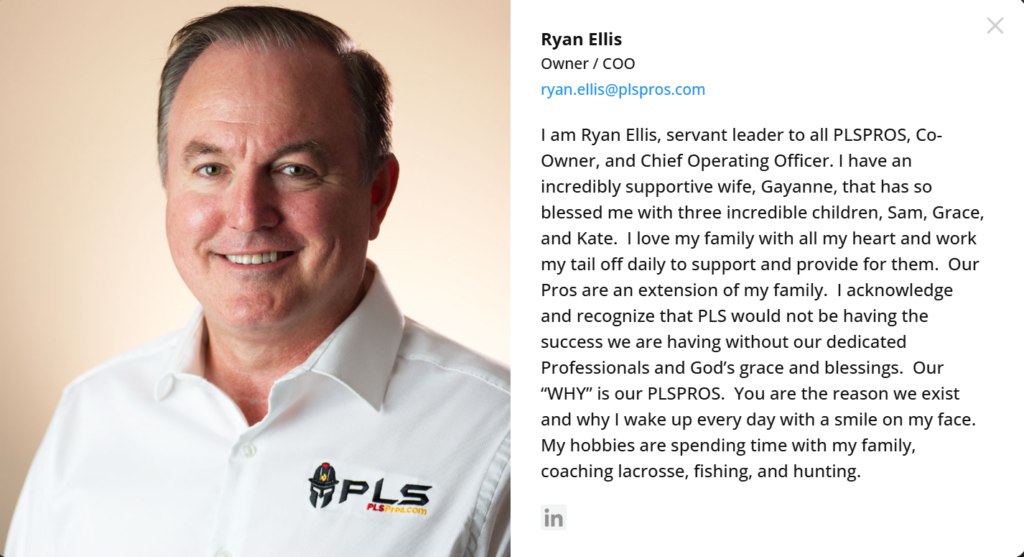

At the time that the lawsuit was filed, PLS Pros was actually called Professional Labor Group. They appear to have done a slight rebranding to PLS Pros, their website’s URL https://plspros.com/
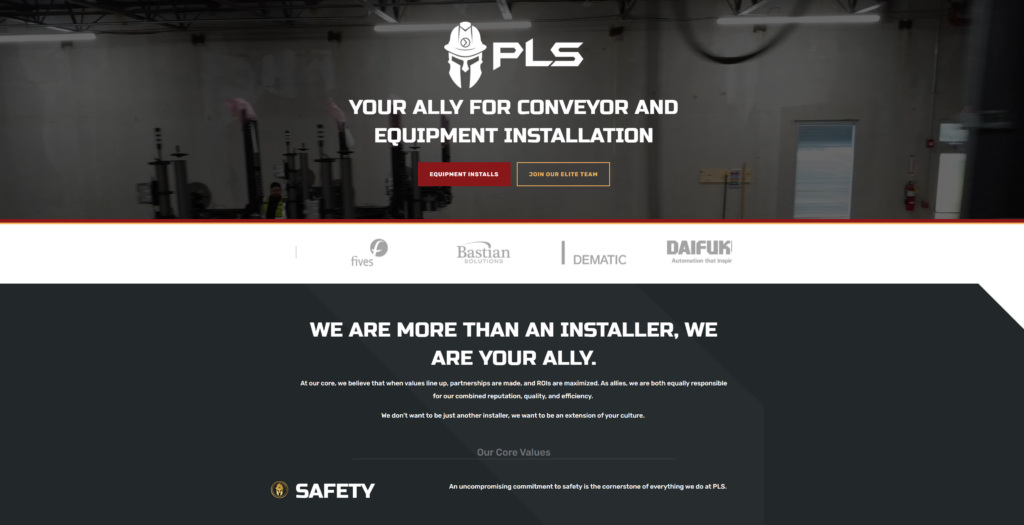
I wonder what the “S” in “PLS” stands for🤔Services? Staffing, maybe?
They are based out of 1300 Windhorst Way, Greenwood, IN 46143
PLG’s office phone number is (317) 865-7757
PLG’s fax number is (317) 865-4757
They have social media pages too:
https://www.linkedin.com/company/plspros
https://twitter.com/pls4safety?lang=en
https://www.facebook.com/PLSPros
https://www.instagram.com/plspros