Environmental Accountability • Boston, Massachusetts • EPCRA Enforcement
Three Years of Silence
How Houghton Chemical Kept an Allston Neighborhood in the Dark About Toxic Chemicals in Their Backyard
Filed: July 21, 2025 • EPA Region 1 • EPCRA-01-2025-0007
For three consecutive years, a chemical company sitting in a residential Boston neighborhood processed over 25,000 pounds of toxic chemicals annually and told the surrounding community absolutely nothing.
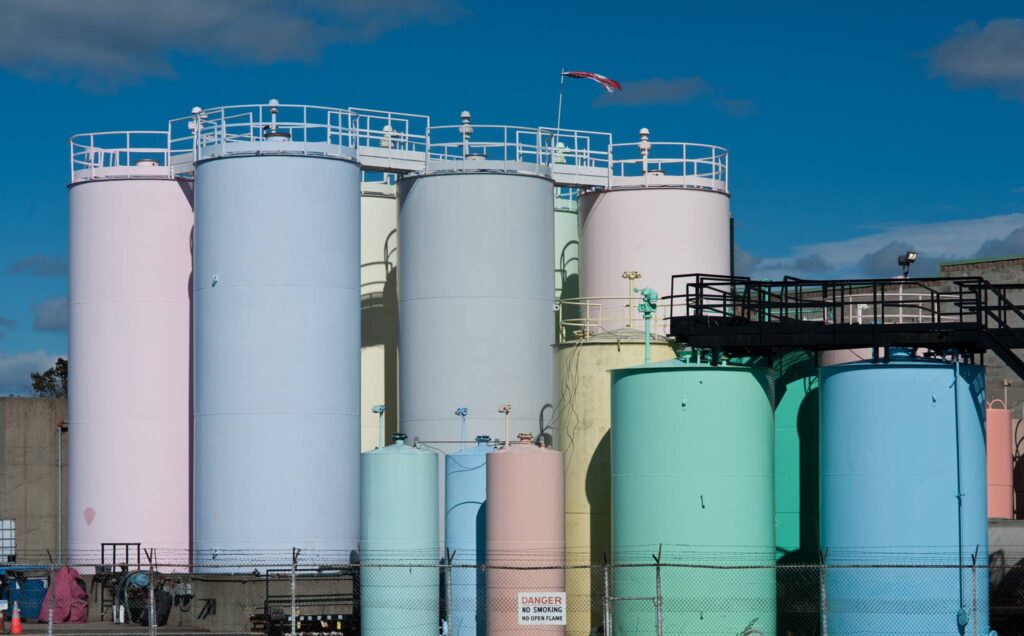
That community is Allston, Massachusetts. The facility is at 52 Cambridge Street. The company is Houghton Chemical Corporation. And the law they broke, the Emergency Planning and Community Right-to-Know Act (EPCRA), exists for exactly one reason: so that you, the person living near a chemical plant, can find out what is being released or processed near your home, your school, or your child’s playground.
Houghton Chemical stores, blends, packages, transfers, and distributes specialty chemicals, including antifreeze and heat transfer fluids. Those operations, according to federal regulators, involved processing well over 25,000 pounds each of Cyclohexane and N-Methyl-2-Pyrrolidone (NMP) every single year for three years running. Under federal law, that triggers a mandatory annual public disclosure report. Houghton filed none of them on time.
The Law They Broke Was Built Specifically to Protect You
EPCRA Section 313 exists because of Bhopal. After a chemical disaster killed thousands of people in India in 1984, the U.S. Congress decided that communities had a right to know what toxic substances were being handled near them before a disaster happened. The Toxic Chemical Release Inventory (TRI) reporting system that followed is one of the most direct forms of environmental transparency the federal government has ever enacted.
The rule is simple: if your facility processes more than 25,000 pounds of a listed toxic chemical in a calendar year, you file a report with the EPA by July 1 of the following year. That report goes into a public database. Journalists, community groups, parents, and local health officials can all access it. It is the early-warning system that the public paid for through decades of political organizing after industrial disasters.
Houghton Chemical failed that system six separate times across three years.
Houghton Chemical: Reporting Deadlines Missed vs. Actual Filing Date
The Non-Financial Ledger
The human cost that does not appear in the settlement amount.
The Right to Know Is Not a Bureaucratic Formality
The Emergency Planning and Community Right-to-Know Act was not written by policy wonks who wanted more paperwork. It was written in response to death. After the 1984 Union Carbide disaster in Bhopal, India, where a gas leak killed thousands of people who had no idea what was being stored in the plant next door, American lawmakers asked a fundamental question: what if that happened here? The answer was EPCRA, and at its core is a deceptively simple promise. If you live near a facility that handles toxic chemicals in large quantities, you get to know about it. The government collects that information, makes it public, and lets communities decide for themselves what questions to ask and what risks they are willing to accept.
Houghton Chemical took that promise and discarded it for three years running. The people living in Allston, Massachusetts, one of the most densely populated urban neighborhoods in New England, home to students, working families, and longtime residents, did not get to know. They could not access the TRI database and look up what was happening at 52 Cambridge Street. They could not flag concerns to local health officials. They could not organize with neighbors. They could not make informed decisions about anything, because the information was never filed. Houghton’s silence was not an absence of data. It was an active deprivation of a right.
Cyclohexane and NMP Are Not Household Products
Cyclohexane is a flammable solvent linked to central nervous system effects, skin irritation, and aquatic toxicity. N-Methyl-2-pyrrolidone, better known as NMP, is a reproductive toxicant. The European Union classifies it as a substance of very high concern under REACH regulations. Occupational exposure to NMP has been associated with developmental harm. These are not minor irritants. These are chemicals that, when processed in industrial quantities, the public has a legal right to track.
Yet for the 2020 reporting year, the deadline passed on July 1, 2021, and nothing was filed. For 2021, the deadline passed on July 1, 2022, and nothing was filed. For 2022, the deadline passed on July 1, 2023, and nothing was filed. Houghton Chemical processed over 25,000 pounds of each substance every single year during this entire window and the surrounding community remained legally uninformed throughout. Every parent near that facility, every renter, every person who walks past 52 Cambridge Street on their way to work, lost years of their right to environmental information.
The COVID Shield and What It Actually Covers
Houghton Chemical’s defense was COVID-19. The settlement document states that “Respondent asserts it experienced unprecedented and unanticipated interruption to its normal business operations and employment continuity resulting from the COVID-19 pandemic.” The EPA neither confirmed nor rejected this claim. It simply noted it and moved on to settlement terms. This matters, because COVID-19’s disruption to business was concentrated in 2020. By mid-2021, most operations were functioning. By 2022, there was no emergency exception for missing a routine annual compliance filing. The pandemic does not explain why Houghton Chemical waited until February 2, 2024, to file every single late report at once, three years after the first deadline was missed.
That date, February 2, 2024, filed all six reports in one batch, is not the action of a company that forgot. It is the action of a company that caught up only when it had to, presumably because enforcement was already underway. The community of Allston had no way of knowing, during any of those years, that their neighborhood chemical facility was operating outside its legal disclosure obligations. They could not have known to be angry. They could not have known to ask questions. The transparency system that exists to protect them was simply absent, and they lived in that absence without ever being told.
The Price of That Silence: $64,327
The entire financial penalty for three years of community ignorance, six separate federal violations, and over 25,000 pounds of unreported toxic chemical processing per year, amounts to $64,327 ($64,327 — roughly what a Boston-area schoolteacher earns in a single year before taxes). That is the dollar value the U.S. government placed on Allston residents’ right to three years of environmental transparency. It works out to roughly $21,000 per year of silence, or about $57 per day that the community was kept in the dark. The law allows for up to $71,545 per violation, per day. The maximum theoretical penalty for six violations was enormous. The actual penalty was a fraction of a fraction of that ceiling.
Legal Receipts
Verbatim from the EPA Consent Agreement and Final Order.
“Section 325(c)(3) of EPCRA, 42 U.S.C. § 11045(c)(3), each day that an EPCRA Section 313 violation continues constitutes a separate violation.” EPCRA Statutory Authority, CAFO Section I, Paragraph 4
“Respondent is a corporation organized under the laws of Massachusetts. Respondent owns and/or operates a facility at 52 Cambridge Street, Allston, Massachusetts 02134 at which Respondent stores, blends, packages, transfers, and distributes specialty chemicals, including antifreeze and heat transfer fluids, in accordance with customer specifications.” General Allegations, CAFO Section II, Paragraph 5-6
“Respondent asserts it experienced unprecedented and unanticipated interruption to its normal business operations and employment continuity resulting from the COVID-19 pandemic.” General Allegations, CAFO Section II, Paragraph 12
“Complainant has determined that it is fair and proper that Respondent pays a total civil penalty amount of $64,327 to resolve the violations alleged in Section III of this CAFO.” Terms of Settlement, CAFO Section IV, Paragraph 48
“The SEP relates to the alleged violations and is designed to reduce the overall risk to public health and/or the environment potentially affected by the alleged violations of EPCRA by enabling a local fire department to respond effectively and safely to potential chemical accidents or releases at the Facility or other TRI facilities.” SEP Conditions, CAFO Section IV, Paragraph 67
“Without admitting or denying the factual allegations in this CAFO, Respondent admits the jurisdictional allegations in this CAFO, consents to the terms and issuance of this CAFO, and consents to the assessment of the civil penalty set forth herein. The provisions of this CAFO shall be binding on Respondent and Respondent’s officers, directors, agents, employees, successors, and assignees.” Terms of Settlement, CAFO Section IV, Paragraph 47
Financial Breakdown: What Houghton Chemical Owes vs. Maximum Possible Penalty
Societal Impact Mapping
Public Health: The Chemicals They Did Not Disclose
Cyclohexane is a volatile organic compound used as a solvent. It is flammable, meaning accidental releases can create explosive atmospheres. It is listed as a toxic chemical under EPCRA Section 313 precisely because its industrial handling poses community health and safety risks. At the neighborhood level, cyclohexane releases can contribute to ground-level ozone formation and carry acute inhalation risks at sufficient concentrations. The community around Allston cannot assess any of that risk if the company processing over 25,000 pounds of it annually never files a public report.
NMP, N-Methyl-2-pyrrolidone, carries a more serious long-term concern: reproductive toxicity. Studies link NMP exposure to developmental effects in offspring and adverse pregnancy outcomes. Workers in facilities handling NMP face elevated risks. So do people who live near facilities where NMP is in active use and where air or water pathways might carry trace exposure. For three reporting years, the residents of Allston had no legal mechanism to learn that NMP was being processed in quantities exceeding 25,000 pounds annually just off Cambridge Street. No report existed in the TRI database for them to find.
The EPA’s own settlement document acknowledges this risk directly. The required Supplemental Environmental Project, the donation of emergency response equipment to the Cambridge Fire Department, was specifically justified as a way “to respond effectively and safely to potential chemical accidents or releases at the Facility or other TRI facilities.” The agency designed the remediation around the possibility of a chemical accident. That possibility existed throughout all three years the community was kept uninformed. The drones and thermal imagers Houghton now owes to Cambridge firefighters are, in effect, a post-hoc acknowledgment that the risk was real and present the entire time.
Economic Inequality: Who Actually Pays the Price
Allston is not a wealthy neighborhood. It is home to a large percentage of renters, college students, immigrants, and working-class families. It is the kind of neighborhood where people do not have the resources to hire private environmental consultants to monitor industrial neighbors. The TRI reporting system is supposed to be free, public, and automatic, specifically because it is the great equalizer: even if you do not have money, you have the right to know what is happening near your home. Houghton Chemical’s failure to file removed that equalizer from Allston for three years.
Meanwhile, the company itself, a specialty chemical operation distributing antifreeze and heat transfer fluids to industrial customers, continued its business operations throughout. The COVID-19 claim in the settlement document is particularly pointed in this context. During COVID-19, the people of Allston lost jobs, lost health insurance, lost housing stability. They had less capacity than ever to advocate for themselves or monitor their environmental surroundings. Houghton Chemical, by contrast, apparently continued processing tens of thousands of pounds of toxic chemicals year after year, pandemic or not, because business continued.
The final settlement asks Houghton to pay $64,327 ($64,327, roughly what the average Boston-area restaurant worker would need to work over two full years to earn, before expenses) and donate $30,068 ($30,068, the cost of about six months of groceries for a family of four) in equipment. For a company operating an industrial chemical distribution facility in a major U.S. city, these figures do not represent a meaningful deterrent. They represent a cost of doing business.
The Cost of a Life Metric
Maximum legal penalty per violation, per day under EPCRA Section 325.
That is the law’s ceiling. The EPA assessed $64,327 total for six violations across three years.
Effective daily cost of keeping Allston residents uninformed, based on the assessed $64,327 penalty spread across three years of violations.
About the price of a nice dinner. Per day of community ignorance about industrial toxic chemical processing.
The law permits up to $71,545 per violation per day (enough to fund a classroom aide for an entire school year). The government settled for $64,327 total ($64,327, roughly one year of a Massachusetts teacher’s salary before taxes) across all six counts. The math makes clear what enforcement prioritized.
What Now?
Who Is Responsible at Houghton Chemical
The settlement document binds Houghton Chemical Corporation and explicitly names “Respondent’s officers, directors, agents, employees, successors, and assignees” to its terms. Specific executive or board member names are [REDACTED – Not in Source]. The company operates at 52 Cambridge Street, Allston, Massachusetts 02134. Their legal correspondence in this case was directed to mtodaro@verrill-law.com, which the settlement notes may be made public through the filing record.
The Regulatory Bodies With Jurisdiction
- EPA Region 1 (New England) — Filed and enforced this action. They hold ongoing compliance authority over Houghton Chemical under EPCRA and the terms of this CAFO.
- EPA Enforcement and Compliance Assurance Division — The division that signed off on this settlement. Contact EPA Region 1 if you have environmental concerns about facilities in your area.
- Massachusetts Department of Environmental Protection (MassDEP) — EPCRA requires TRI reports to be filed with the state authority as well. MassDEP has parallel oversight of toxic chemical reporting in Massachusetts.
- TRI National Database (TRI Explorer) — The EPA’s public search tool at epa.gov/toxics-release-inventory-tri-program. Search for any facility near you. If a report is missing, that is a red flag.
- Cambridge Fire Department — The local first responder that will now receive Houghton’s equipment donation. They are now better equipped to respond to chemical incidents at the facility.
What You Can Actually Do
Look up your zip code in the EPA’s TRI Explorer right now. Find out which facilities near you are legally required to file toxic release reports and whether they actually filed them. If you live near an industrial facility, connect with local tenant organizations, neighborhood associations, and environmental justice groups who already track this data. In Boston, organizations like Alternatives for Community and Environment (ACE) do exactly this work. Support them. The TRI system only protects you if someone is watching it, and right now, in most neighborhoods, nobody is.
The source document for this investigation is attached below.
Click here for the link to the EPA’s page on this whole ordeal with Houghton Chemical in the mitt: https://yosemite.epa.gov/OA/RHC/EPAAdmin.nsf/Filings/787A070D31600A5485258CCF006F5D89/$File/EPCRA-01-2025-0007%20Consent%20Agreement%20and%20Final%20Order%20pdf.pdf
Explore by category
Antitrust
Monopolies and anti-competition tactics used to crush rivals.
View Cases →Product Safety Violations
When companies sell dangerous goods, consumers pay the price.
View Cases →Environmental Violations
Pollution, ecological collapse, and unchecked greed.
View Cases →Labor Exploitation
Wage theft, worker abuse, and unsafe conditions.
View Cases →Data Breaches & Privacy
Misuse and mishandling of personal information.
View Cases →Financial Fraud & Corruption
Lies, scams, and executive impunity that distort markets.
View Cases →Intellectual Property
IP theft that punishes originality and rewards copying.
View Cases →Misleading Marketing
False claims that waste money and bury critical safety info.
View Cases →