Recent testing by Consumer Reports uncovered alarming levels of lead and cadmium in several of Lindt’s dark chocolate products, particularly in their 70% and 85% cocoa varieties.
These findings have sparked outrage among consumers who believed they were indulging in a premium, health-conscious treat, only to discover they may have been exposing themselves to harmful contaminants.
The presence of these heavy metals is especially concerning given dark chocolate’s reputation as a “healthier” alternative to milk chocolate, often marketed for its antioxidant properties and potential cardiovascular benefits. This irony underscores the deceptive nature of corporate marketing strategies that prioritize profits over consumer safety.
Corporate Responsibility or Corporate Greed?
Lindt’s response to these allegations has been disappointingly predictable.
The company has vehemently denied wrongdoing, insisting that their products meet all applicable safety standards[3]. This defensive stance, however, fails to address the core issue: that a corporation marketing “premium” products has potentially exposed its customers to harmful substances.
This controversy is emblematic of a broader pattern of corporate behavior in which companies exploit regulatory loopholes and manipulate public perception to maximize profits at the expense of public health. It raises critical questions about the effectiveness of current regulatory frameworks and the need for more stringent oversight of food safety standards.
A Systemic Problem
The Lindt scandal is not an isolated incident but rather a symptom of a more pervasive issue within our economic system.
In the pursuit of ever-increasing shareholder value, corporations often prioritize short-term gains over long-term sustainability and consumer welfare.
This case serves as another reminder of the very real dangers that unchecked corporate power poses to public health and safety.
Moreover, it highlights the growing wealth disparity between corporate executives and average consumers.
While Lindt’s leadership enjoys the fruits of the company’s success, it is the unsuspecting consumers who bear the risks associated with potentially contaminated products. We (the working class) are the ones who need to pay for the medical treatment of heavy metal poisoning, not the rich executives who are laughing their way to the bank.
Accountability and Reform
True reform necessitates a fundamental shift in how we approach corporate governance and accountability.
Advocates for consumer rights and public health are calling for:
- Stricter regulations on food safety, particularly concerning heavy metal content in consumer products.
- Enhanced transparency in corporate supply chains and manufacturing processes.
- More robust systems of corporate accountability, including personal liability for executives in cases of negligence.
- A reevaluation of the role of corporations in society, with a greater emphasis on social responsibility over profit maximization.
However, I must note that the burden of ensuring product safety should not fall solely on the shoulders of consumers. It is imperative that regulatory bodies step up to protect public health and hold corporations accountable for their actions.
A Bittersweet Reality
The Lindt chocolate lead scandal is a stark illustration of the dangers of unchecked corporate power and the urgent need for systemic reform.
As consumers, advocates, and citizens, we must demand greater accountability from corporations and push for a economic system that prioritizes human well-being over profit margins.
Only through collective action and sustained pressure can we hope to create a world where the pleasure of indulging in a piece of chocolate doesn’t come with the bitter aftertaste of corporate negligence and greed.
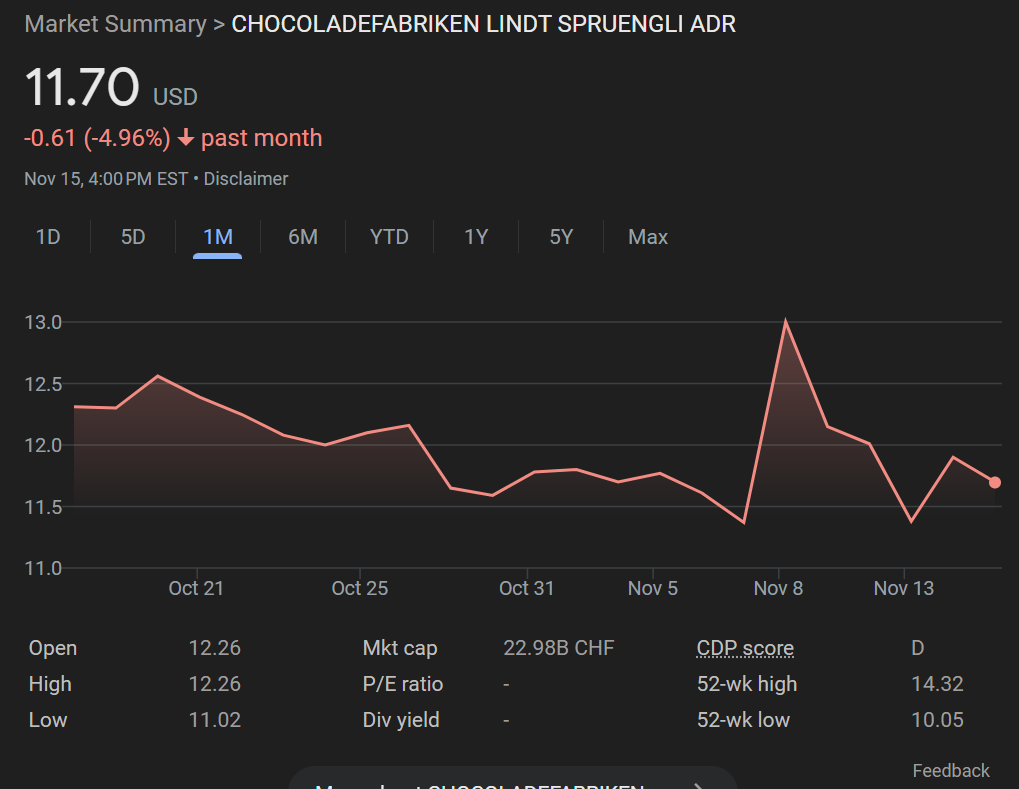
As of the market’s close on November 15th, Lindt’s owner’s stock price (Chocoladefabriken Lindt & Sprüngli AG) is down 4.96% over the past month
📢 Explore Corporate Misconduct by Category
🚨 Every day, corporations engage in harmful practices that affect workers, consumers, and the environment. Browse key topics:
- 🔥 Product Safety Violations – When companies cut costs at the expense of consumer safety.
- 🌿 Environmental Violations – How corporate greed fuels pollution and ecological destruction.
- ⚖️ Labor Exploitation – Unsafe conditions, wage theft, and workplace abuses.
- 🔓 Data Breaches & Privacy Abuses – How corporations mishandle and exploit your personal data.
- 💰 Financial Fraud & Corruption – Corporate fraud schemes, misleading investors, and corruption scandals.
sauces ate:
[1] https://www.foodandwine.com/lindt-chocolate-class-action-lawsuit-lead-cadmium-8745325
[2] https://corporateaccountability.org
[3] https://www.bakeryandsnacks.com/Article/2024/09/18/How-Lindt-s-lead-lawsuit-could-shake-up-the-bakery-and-snacks-sectors
[4] https://fortune.com/europe/2024/11/12/lindt-us-lawsuit/
[5] https://www.vice.com/en/article/lindt-admits-its-chocolate-isnt-expertly-crafted-its-actually-full-of-lead/
[6] https://www. evilcorporations.com
Explore by category
Antitrust
Monopolies and anti-competition tactics used to crush rivals.
View Cases →Product Safety Violations
When companies sell dangerous goods, consumers pay the price.
View Cases →Environmental Violations
Pollution, ecological collapse, and unchecked greed.
View Cases →Labor Exploitation
Wage theft, worker abuse, and unsafe conditions.
View Cases →Data Breaches & Privacy
Misuse and mishandling of personal information.
View Cases →Financial Fraud & Corruption
Lies, scams, and executive impunity that distort markets.
View Cases →Intellectual Property
IP theft that punishes originality and rewards copying.
View Cases →Misleading Marketing
False claims that waste money and bury critical safety info.
View Cases →