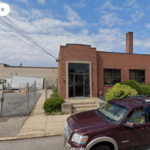
A Cement Giant Poisoned Puerto Rico’s Air for Three Years. The Fine Was $111,168.
From 2017 to 2020, Argos Puerto Rico Corp. ran a cement plant in Dorado that repeatedly blew past federal limits for dioxins, furans, mercury, and toxic hydrocarbons. The EPA caught it. The punishment cost Argos less than the average American house.
TL;DR
- Argos Puerto Rico Corp. operated a cement plant in Dorado, Puerto Rico, from February 2017 onward, and spent at least three years violating federal air pollution limits designed to protect nearby communities from cancer-linked chemicals.
- The violations include 130 days of illegal dioxin and furan emissions, 19 days of illegal mercury emissions, and 85 exceedances of the toxic hydrocarbon limit in a single calendar year, 2018 alone.
- Dioxins and furans are among the most toxic substances known to science. There is no safe level of exposure. These chemicals accumulate in the body and are linked to cancer, immune system damage, and reproductive harm.
- The EPA’s penalty for this multi-year contamination event: $111,168. That is less than the average American house costs. For a company that is a subsidiary of a multinational cement conglomerate, this is a rounding error.
- In addition to the fine, Argos was required to spend $210,928 installing solar panels at two Puerto Rican community organizations. The solar panels are a good thing. They do not undo three years of illegal toxic air emissions breathed by anyone living near Dorado.
- The company admitted EPA had jurisdiction, admitted no actual wrongdoing, and signed a consent agreement that explicitly states it “shall not be construed as an admission of liability.”
- The facility’s permit expired in January 2014. Three years before Argos even bought the plant, this facility was already operating under an expired permit. It was still operating that way through the entire investigation period.
The Legal Receipts section contains the exact language Argos used to claim that Hurricane Isaias may have scrambled their mercury monitoring data, while simultaneously reporting 15 days of confirmed mercury limit violations from that same monitoring window.
What Three Years of Illegal Toxic Air Costs a Community That Isn’t a Balance Sheet
Dorado is a municipality on Puerto Rico’s northern coast. It has beaches. It has families. It has schools. It also has a cement plant, operating since 1972, that for at least three years between 2017 and 2020 was releasing air pollutants above the legal limits set to keep people alive and healthy.
Dioxins and furans are not just “chemicals.” They are byproducts of industrial combustion. The World Health Organization classifies certain dioxins as known human carcinogens. They do not clear the body quickly. They are fat-soluble, which means they accumulate in tissue over time. A person living near this plant and breathing this air during the 130 days of documented illegal dioxin and furan emissions did not stop being exposed when the workday ended. They took those particles home. They cooked dinner. They put their children to bed.
Mercury is a neurotoxin. At sufficient doses, it destroys the nervous system. Children are especially vulnerable. In utero exposure to mercury is linked to developmental delays, cognitive impairment, and motor dysfunction. The Argos plant exceeded its mercury emission limit for 19 documented days. These are only the days the monitoring data confirmed. The company’s own letter to the EPA acknowledges that monitoring data was disrupted for multiple days during Hurricane Isaias, meaning the full picture of mercury exposure in that period may be worse than what the paperwork captured.
Then there are the total hydrocarbons: 85 exceedances in one year. Eighty-five. These are not abstract regulatory checkboxes. Total hydrocarbon emissions from cement kilns include compounds linked to respiratory damage, headaches, and long-term lung disease. For Puerto Ricans already living in a community that has faced decades of industrial encroachment, a hurricane-devastated power grid, and an economic crisis that stripped public health resources bare, this was not a technical data anomaly. It was more pollution on top of a pile that was already too high.
The EPA’s own document confirms the facility had been operating since 1972. Multiple owners have come and gone. Argos took it over in February 2017 and within the year the violations were stacking up. The community near Espinosa Ward in Dorado did not get to opt out. They did not get a notice in the mail saying: “For the next three years, the air near your home will periodically exceed federal cancer risk thresholds. Please adjust accordingly.” They breathed it. They still live there.
The penalty that closed this case, $111,168, works out to roughly $855 per day of documented violation across the 130-day dioxin/furan violation period alone. It does not account for the mercury days. It does not account for the 85 hydrocarbon exceedances. And it does not account for a single breath taken by a single person near that plant during any of those days.
What the Documents Actually Say: The Evidence EPA Put in Writing
The following are direct, verbatim quotes from EPA Docket No. CAA-02-2024-1210, the Consent Agreement and Final Order signed September 16–17, 2024. These are not paraphrases. They are the record.
“The results showed that the average D/F with the ‘raw mill off’ was 2.56 ng/dscm (TEQ), corrected to 7% O2, when the kiln baghouse inlet temperature was 472°F (over 400°F), which indicated that Argos’ kiln was not in compliance with the Portland Cement MACT D/F performance standard of 0.2 ng/dscm (TEQ) corrected to 7% O2.” — EPA CAFO CAA-02-2024-1210, Finding of Fact §61, February 2018 D/F Performance Test
- The legal limit for dioxins and furans when the raw mill is off is 0.2 ng/dscm (TEQ). Argos’ kiln tested at 2.56 ng/dscm, which is 12.8 times the legal limit. This was the first major test after Argos took over the plant.
- This test result was the opening disclosure that triggered years of extensions, corrective actions, and ultimately this enforcement action.
“According to the 30 DRA Hg emission data provided, which covered the period from June 25, 2020 through September 4, 2020 (Sept. 25, 2020 30 DRA Hg emissions), the 55 lbs/MMton 30 DRA Hg emission limit was exceeded for a total of 15 days.” — EPA CAFO CAA-02-2024-1210, Finding of Fact §101, September 25, 2020 mercury data
- This confirms that even after Argos revised its mercury calculations and flagged Hurricane Isaias as a potential data complication, the official count still landed at 15 days of mercury limit violations, up from the originally reported 8 days.
- Argos’ own note in the same email chain reads: “calculations were revised since stack flow and production data were unavailable for a number of days due to power failures.” The revised number was worse, not better.
“In total, Argos failed to demonstrate D/F compliance for the equivalent of 130 days during the Investigation Timeframe.” — EPA CAFO CAA-02-2024-1210, Conclusions of Law §107
- 130 days of illegal dioxin and furan emissions. This is the EPA’s own total, compiled from multiple performance tests and continuous monitoring data across three calendar years.
- Dioxins and furans are classified as persistent organic pollutants. They do not dissipate quickly in the environment. They settle, accumulate in soil, enter the food chain, and build up in human fat tissue over a lifetime of low-level exposure.
“In violation of 40 C.F.R. § 63.1354(b)(9), Argos failed to submit, within 60 days of the appropriate reporting periods, a CEDRI Report for the second half of 2017, the first half of 2018, and the second half of 2018 (3 violations) during the Investigation Timeframe.” — EPA CAFO CAA-02-2024-1210, Conclusions of Law §113
- Argos did not merely exceed pollution limits; it also failed to file the mandatory compliance reports that would have told regulators about those exceedances on time. Reporting was late for three consecutive six-month periods covering all of 2017’s second half and all of 2018.
- This is not a clerical mistake. Late compliance reporting is how companies buy time between when pollution happens and when regulators can respond to it.
“Respondent makes no admissions regarding the factual allegations and alleged violations of law stated above.” — EPA CAFO CAA-02-2024-1210, Terms of Consent Agreement §116(b)
- Standard legal boilerplate in consent agreements, and it matters. Argos paid the fine and agreed to the solar panel projects without ever formally admitting that it violated the Clean Air Act. The document establishing these violations will not be usable as an admission of liability in civil litigation by affected community members.
- This no-admission structure is the routine outcome of EPA administrative penalty settlements. It protects companies from the downstream consequences of their documented misconduct.
“The Facility has been in operation under several different owners and operators since 1972.” — EPA CAFO CAA-02-2024-1210, Finding of Fact §50
- This facility has been a source of industrial air emissions in Dorado for over 50 years. Argos is one chapter in a longer story of industrial use of this site, and the community’s exposure to its emissions predates any of the violations documented in this investigation.
Who Pays When a Corporation Cuts Corners on Air Pollution
Public Health
The pollutants at the center of this case are not hypothetical hazards. Each has documented pathways from industrial chimney to human body.
- Dioxins and furans, the primary violation category here, are classified by the International Agency for Research on Cancer as Group 1 human carcinogens. Exposure is linked to non-Hodgkin’s lymphoma, soft tissue sarcoma, and cancers of the lung, larynx, and prostate. Argos’ kiln exceeded the legal dioxin/furan limit for 130 total days during the investigation period, with the worst single test returning a reading 12.8 times the allowed level.
- Mercury is a potent neurotoxin. Fifteen documented days of mercury limit exceedances between June and September 2020 mean that during summer months, families in the Dorado area were breathing air with mercury concentrations above the threshold the federal government has determined safe. Developing fetuses and young children face the highest risk from mercury exposure, with documented effects including impaired brain development and reduced IQ.
- The HCl exceedance of 22.05 ppmvd against a 3 ppmvd limit, confirmed in June 2019, represents a concentration of hydrochloric acid in stack emissions more than seven times the permitted level. HCl exposure causes respiratory tract damage, eye and skin burns, and at sustained levels, chronic lung disease.
- The 85 THC (total hydrocarbon) exceedances across all of 2018 represent nearly year-round elevated emissions of organic compounds, including potential carcinogens. Long-term low-level hydrocarbon exposure is associated with leukemia, aplastic anemia, and respiratory illness.
- Puerto Rico’s public health infrastructure was already strained by Hurricane Maria in 2017, an economic crisis, and years of austerity cuts. The population near Dorado entered this period with fewer resources to manage pollution-related illness, less access to specialist care, and a healthcare system operating below capacity.
Economic Inequality
The financial structure of this enforcement action reveals the fundamental imbalance in how environmental law is applied to wealthy corporations operating in low-income and colonized communities.
- The total assessed penalty is $111,168. Argos Puerto Rico Corp. is a subsidiary of Argos, a multinational cement company operating across the Americas. The penalty represents a cost of doing business, not a deterrent. A company with the resources to run a cement plant for three years does not alter its operational behavior for $111,168.
- The maximum civil penalty under Clean Air Act Section 113(b)(2) can reach $109,024 per day per violation. For 130 days of D/F violations alone, the theoretical maximum would have exceeded $14 million. Argos paid 0.7% of that theoretical ceiling.
- The Supplemental Environmental Projects required under this settlement, solar panels worth $210,928 installed at a children’s home and a school, are genuine community benefits. They are also a mechanism that effectively lowers the financial cost of the penalty. The company received EPA credit for this investment instead of paying that sum as a straight fine to the public.
- Communities with greater political and economic power routinely see faster regulatory response, larger penalties, and more robust corrective action requirements. Dorado is a majority-Hispanic municipality in a U.S. territory whose residents cannot vote for president and are represented in Congress only by a non-voting delegate.
- The facility’s operating permit expired in January 2014 and was still not renewed through the entire investigation period. The permit renewal application was filed in January 2013. The Puerto Rico Department of Natural and Environmental Resources had not issued a renewal decision for over a decade. This administrative failure created an ongoing legal ambiguity that allowed the plant to continue operating under the original permit terms while simultaneously not being bound to updated conditions.
The Numbers That Tell You Everything You Need to Know About Corporate Accountability
The total civil penalty Argos Puerto Rico Corp. agreed to pay for three years of illegal toxic air emissions affecting the community of Dorado, Puerto Rico.
illegal dioxin/furan
emissions (130 days total)
penalty for D/F violations
alone at $109,024/day
maximum penalty
that Argos actually paid
The penalty does not include compensation to any resident. It does not fund health monitoring for exposed communities. It goes to the federal government, not to Dorado.
Who to Watch, Who to Pressure, and What to Do Next
This consent agreement is signed and filed. The fine is paid or being paid. The solar panels are going up. None of that changes the air that was breathed in Dorado between 2017 and 2020. Here is who is accountable and what people can actually do.
The Key Players in This Enforcement Action
- Jose Guillermo Araujo, Vice President, Argos Puerto Rico Corp., signed the consent agreement on behalf of the company. He is the named corporate signatory on this settlement.
- Carmen Guerrero, Director, Caribbean Environmental Protection Division, EPA Region 2, signed for the complainant and holds the delegated authority to settle CAA administrative penalty proceedings in Puerto Rico.
- Lisa F. Garcia, Regional Administrator, EPA Region 2, issued the Final Order ratifying the consent agreement, signed September 16, 2024.
- The Puerto Rico Department of Natural and Environmental Resources (PR DNER), formerly PREQB, is responsible for issuing Title V operating permits in Puerto Rico. This agency has not issued a renewed permit for the Argos facility despite a renewal application filed in January 2013, over eleven years ago.
Regulatory Watchlist
- EPA Region 2 Caribbean Environmental Protection Division: This is the primary enforcement authority. Track their public enforcement actions and inspect their docket for any new complaints or violations at the Dorado facility.
- Puerto Rico Department of Natural and Environmental Resources (PR DNER): Responsible for the still-unresolved permit renewal that has been pending since 2013. Demand a timeline and public update on that renewal process.
- EPA Office of Inspector General: If you believe this penalty was inadequately calculated or that the enforcement process was compromised, the OIG is the appropriate complaint body.
- EPA’s Central Data Exchange (CDX) and CEDRI: These are the public portals where Argos’ future compliance reports must be filed. Monitor submissions for on-time filing and review the data directly.
What You Can Do
- Request the full case file. EPA docket CAA-02-2024-1210 is a public record. Submit a Freedom of Information Act (FOIA) request to EPA Region 2 for any communications not included in the public CAFO document, including internal email chains about penalty calculation.
- Contact the EPA Region 2 office directly and ask for a status update on whether Argos has filed its required SEP Completion Reports within the 180-day window from the September 2024 filing date. Those reports are due in March 2025.
- Connect with Puerto Rican environmental justice organizations already doing this work on the ground. Groups like Coalición de Organizaciones Anti-Incineración (COAI) and Alianza Comunitaria Ambientalista del Sureste (ALIANZA) have decades of experience fighting industrial pollution in Puerto Rico. Find them. Support them. Follow their lead.
- If you live near the Dorado facility or know people who do, contact a local environmental attorney about whether a medical monitoring class action or community health study is feasible. No settlement in this case compensated any resident. Civil liability was not resolved here.
- Push your elected representatives to demand that the EPA increase Clean Air Act penalty multipliers for violations in environmental justice communities. The current penalty structure makes non-compliance economically rational for large corporations.
- Share this story in Spanish. The communities most affected by the Dorado plant are predominantly Spanish-speaking. Environmental accountability reporting in English alone does not reach the people who need it most.
The source document for this investigation is attached below.
required bedtime reading:
Explore by category
Antitrust
Monopolies and anti-competition tactics used to crush rivals.
View Cases →Product Safety Violations
When companies sell dangerous goods, consumers pay the price.
View Cases →Environmental Violations
Pollution, ecological collapse, and unchecked greed.
View Cases →Labor Exploitation
Wage theft, worker abuse, and unsafe conditions.
View Cases →Data Breaches & Privacy
Misuse and mishandling of personal information.
View Cases →Financial Fraud & Corruption
Lies, scams, and executive impunity that distort markets.
View Cases →Intellectual Property
IP theft that punishes originality and rewards copying.
View Cases →Misleading Marketing
False claims that waste money and bury critical safety info.
View Cases →