TLDR The U.S. Department of Justice and EPA sued six companies, including Amparit Industries (at the time owned by Libbey Inc), for allegedly arranging the disposal of hazardous waste at a contaminated site along Ley Creek in Onondaga County, New York, part of the notorious Onondaga Lake Superfund Site. The federal government spent years cleaning up the mess while private cleanup parties spent over $14 million on remediation. The companies are now settling, paying a combined total of roughly $245,300, with no admission of wrongdoing.
Read on for the full picture of who did what, what it cost local communities and the environment, and what you can do about it.
A Creek, a Superfund Site, and Corporate Accountability on Trial
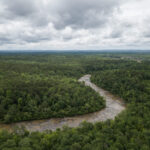
Underneath the quiet surface of Ley Creek in Onondaga County, New York, lies decades of industrial contamination. The creek flows through Salina and Dewitt, winding past residential backyards, wetlands, and floodplains before emptying into Onondaga Lake, one of the most polluted lakes in American history. Now, six companies face federal allegations that they arranged for the disposal of hazardous waste at this already-burdened waterway, triggering a costly, years-long cleanup operation that the public, and not the alleged polluters, largely funded.
The U.S. Environmental Protection Agency and the Department of Justice filed suit against Amparit Industries LLC, Carrier Circle Business Complex LLC, Jagar Enterprises Inc., North Midler Properties LLC, Northeast Management Services Inc., and Solvents and Petroleum Services Inc. The government alleges each company arranged to dispose of hazardous substances at the Ley Creek Deferred Media Operable Unit, a formal designation for a deeply contaminated stretch of land and water that sits within the larger Onondaga Lake Superfund Site. The government has called all six companies jointly and severally liable, meaning each one bears full responsibility for the entire cost of cleanup.
A separate group of private cleanup entities, operating under the umbrella of the EPLET Parties, spent more than $14 million investigating and remediating portions of the same site. In 2018, they sued the same companies to recover a share of those costs. Now, all parties have reached a settlement: the six companies will pay a combined total of roughly $245,300, plus interest, to resolve their alleged liability. They admit nothing.
Hazardous Waste, Corporate Misconduct, and a Contaminated Community
The federal government’s case rests on a key provision of the Comprehensive Environmental Response, Compensation, and Liability Act, widely known as CERCLA or Superfund. Under that law, any party that arranged for the disposal or treatment of hazardous substances at a contaminated site can be held liable for the full cost of cleanup, regardless of how small their individual contribution was.
The government alleges that each of the six companies did exactly that: arranged for hazardous substances they owned or controlled to be disposed of at the Ley Creek site. The site spans approximately 9,200 linear feet of Ley Creek, including adjacent banks, floodplains, wetlands, and forested areas. It encompasses a 10-acre wetland on the National Grid property, a 1.8-acre area north of the former General Motors facility along Factory Avenue, and the backyards of 19 residential properties on Brookline Road. In other words, people’s homes.
The EPA formally selected a cleanup plan for the site in March 2015, documented in what is called the Record of Decision. That plan was later updated and clarified through additional agency documents in September 2022 and April 2023, reflecting the ongoing complexity and severity of contamination at the site. ๐งช
What Went Wrong and When
| Year / Date | Event |
| March 2015 | EPA issues its Record of Decision selecting a formal cleanup remedy for the Ley Creek Deferred Media Operable Unit. |
| 2018 | EPLET Parties file suit against the six companies (and others) in federal court, seeking cost recovery for their $14+ million in cleanup spending. |
| March 15, 2024 | Affidavit filed in Surrogate’s Court of New York by Linda Alario regarding the Estate of John Garofalo (Jagar Enterprises Inc.) as part of ability-to-pay financial disclosure. |
| September 2022 & April 2023 | EPA issues two Explanations of Significant Differences, modifying and clarifying the 2015 cleanup remedy. |
| August 2, 2024 | Amended affidavit filed by Linda Alario in the Garofalo estate matter. |
| February 13, 2025 | Financial presentation regarding Solvents and Petroleum Services Inc. submitted as part of ability-to-pay documentation. |
| June 4, 2025 | Financial Statement of Debtor prepared by Amy Jakes-Johnson (Solvents and Petroleum Services Inc.) submitted to EPA. |
| August 1, 2025 | Property Description Report for Jagar Enterprises Inc. property sourced from Onondaga County public records. |
| August 13, 2025 | Michael Fogel emails DOJ regarding Northeast Management Services Inc. financial information. |
| October 2025 | Multiple companies sign the Consent Decree (Amparit: Oct. 29; North Midler: Oct. 9; Jagar: Oct. 9; Northeast: Oct. 22; Solvents: Oct. 14; Carrier Circle: Oct. 31). |
| October 6, 2025 | Marc Kokosa emails DOJ corrected monthly expense documents for Solvents and Petroleum Services Inc. |
| February 2, 2026 | Consent Decree filed in the U.S. District Court for the Northern District of New York. |
Hazardous Substances in Your Backyard ๐ฟ
Nineteen residential properties on Brookline Road sit directly within the contaminated zone. These are homes with backyards abutting a waterway laced with hazardous substances. When the government uses terms like ‘releases or threatened releases of hazardous substances,’ it describes a situation where toxins can leach into soil, seep into groundwater, and travel through a watershed that ultimately flows into Onondaga Lake.
Onondaga Lake itself carries a notorious legacy. Decades of industrial dumping turned it into one of the most contaminated lakes in the United States, leading to a massive, ongoing Superfund cleanup effort that has cost hundreds of millions of dollars. Ley Creek functions as a tributary feeding directly into that lake. Contamination introduced into the creek does not stay put. It migrates downstream. It settles into sediment. It enters the food chain.
The cleanup plan covers not just the creek bed but also the adjacent banks, floodplains, wetlands, and forested areas, reflecting how thoroughly hazardous waste can spread through a riparian ecosystem. The EPA’s involvement across multiple remediation phases, combined with the private parties’ $14 million in cleanup spending, signals the depth and persistence of contamination.
The New York State Department of Environmental Conservation and the New York State Department of Health both play oversight roles at the site, incurring their own costs in reviewing cleanup plans, approving deliverables, and supervising remedial actions. Those state costs fall on taxpayers, separate from what the federal Superfund contributes.
How Environmental Laws Struggle to Keep Up with Corporate Misconduct
CERCLA, passed in 1980 in the wake of industrial disasters like Love Canal, gives the federal government powerful tools to recover cleanup costs from responsible parties. Yet decades after its passage, communities still find themselves living next to contaminated waterways while cleanup efforts drag on and alleged polluters negotiate settlements that represent a fraction of the total damage.
The ability-to-pay provisions embedded in this settlement illustrate a central tension in environmental enforcement under neoliberal capitalism. Four of the six companies claimed limited financial capacity to pay full cleanup costs. The government accepted their financial disclosures and agreed to reduced payment amounts. Carrier Circle Business Complex LLC will pay $70,000. Jagar Enterprises Inc. will pay $30,000. Northeast Management Services Inc. will pay just $1,000. Solvents and Petroleum Services Inc. will pay $10,000.
Northeast Management Services, accused of contributing to a contaminated Superfund site affecting residential neighborhoods and an ecologically sensitive creek, walks away from its alleged liability for one thousand dollars.
CERCLA’s ‘ability-to-pay’ provisions exist for legitimate reasons: small businesses genuinely cannot always afford full liability. But the practical effect, within a regulatory system that relies on self-reported financial disclosures and negotiated settlements, is that accountability becomes elastic. Corporations and their attorneys know how to present financial information in ways that minimize payment obligations. The government, chronically underfunded and understaffed, often lacks the resources to mount aggressive challenges.
Critically, all six companies signed this decree without admitting any wrongdoing. This is standard practice in Superfund settlements, but it means no company goes on record as having done anything wrong. The contamination happened. The cleanup costs are real. The harm to the community is documented. But corporate accountability, in the formal legal sense, evaporates at the settlement table.
Local Lives Undermined by Industrial Pollution ๐ก
The 19 residential properties on Brookline Road whose backyards fall within the contaminated zone represent a specific, named group of people whose living environments have been compromised. The legal document identifies them as part of the site that requires remediation, which means their properties contain or border contaminated materials significant enough to warrant federal cleanup action.
Living adjacent to or within a Superfund site carries real consequences: depressed property values, anxiety about soil and water safety, disruption from years of cleanup activity, and the psychological burden of uncertainty about what hazardous substances may have already affected health. Children playing in yards near contaminated areas face disproportionate exposure risks, particularly to substances that bioaccumulate or affect neurological development.
The surrounding area includes the National Grid Wetland, the Factory Avenue area, and various portions of Ley Creek’s banks and floodplains. These are not remote industrial zones. They border community infrastructure, including a Town of Salina Highway Department garage, local roads, and residential neighborhoods. The contamination zone sits within a populated county seat region, not an isolated industrial park.
The Corporate Ethics Deficit in Industrial Waste Disposal
When businesses arrange to dispose of hazardous waste, they make choices. Proper disposal costs money. Cheaper options, including sending waste to sites that may not have adequate safeguards, cut costs. Under the logic of profit-maximization that drives neoliberal capitalism, each dollar saved on waste disposal goes directly to the bottom line.
The six companies named in this case operated across a range of industries, from petroleum services to property management to general business operations, all within the Onondaga County area. The government’s central allegation is that each of them, in one form or another, chose to route hazardous substances to a site that is now a federal Superfund cleanup zone. Whether those decisions reflected deliberate cost-cutting or negligent oversight, the result remains the same: a contaminated creek, a burdened community, and a cleanup bill largely absorbed by the public.
This is how environmental harm accumulates under market capitalism. Individual business decisions, each perhaps appearing minor in isolation, compound across years and across multiple actors until an ecosystem collapses under the weight of accumulated contamination. No single company bears full responsibility in the public narrative, but the harm is total and the affected communities have no escape route.
Who Pays When Companies Walk Away from Their Mess? ๐ธ
The EPLET Parties, a group that includes EPLET LLC, the RACER Trust (Revitalizing Auto Communities Environmental Response), and RACER Properties LLC, spent over $14 million investigating and remediating portions of the Ley Creek site. These are entities associated with the legacy of the former General Motors Inland Fisher Guide facility, a predecessor industrial user of the land whose contamination created the original problem.
The six settling companies will pay a combined total of approximately $245,300 in lump sum and installment payments. Amparit Industries LLC, named first in the case title, pays $89,300 plus interest. North Midler Properties LLC pays $45,000 in eight quarterly installments at 3.9% annual interest. The remaining four companies pay amounts ranging from $1,000 to $70,000.
Set against $14 million in private remediation costs alone, the settlement amounts are stark. The federal government’s EPA has spent additional sums on its own response actions, the precise totals of which are not specified in the settlement document but are referenced as ongoing costs. New York State agencies also continue to incur costs. All of this spending flows from taxpayers and public-interest entities while the alleged polluters resolve their liability through negotiated payments that their own attorneys helped minimize. ๐
The payment structure for North Midler Properties further illustrates the gap: the company pays $45,000 over two years, in eight installments, with interest accruing at the same modest rate a small business loan might carry. If North Midler fails to pay, the total accelerates and becomes immediately due. But the baseline obligation remains the same: $45,000 for alleged participation in contaminating a Superfund site.
How Corporate Structures Diffuse Responsibility
The Ley Creek case involves not just six individual companies but an overlapping web of LLCs, corporations, estates, and trusts. Jagar Enterprises Inc., for example, participates in the settlement through Linda E. Alario, the voluntary administrator of the estate of John J. Garofalo, a/k/a Jack Garofalo. The company’s representative is, in effect, the estate of a deceased individual.
Northeast Management Services Inc. participates through Jeanine Serle, the voluntary administrator of the estate of Florine G. Basile, Jr. Again: the named defendant is a corporation whose effective representative is a deceased person’s estate.
This is not necessarily improper. Businesses outlive their founders, and estates must sometimes navigate inherited legal obligations. But the practical effect, within a litigation and settlement context, is that accountability becomes diffuse. The individuals who made the original decisions to arrange hazardous waste disposal may be deceased. Their estates face limited financial exposure. The corporate entities they controlled carry no individual criminal liability under this civil settlement. The harm persists. The responsible decision-makers are, in some cases, beyond reach.
Under neoliberal capitalism, the limited liability corporation functions precisely to insulate individual decision-makers from the full consequences of their business choices. Environmental contamination cases often reveal this insulation most starkly: the people who decided to route hazardous waste to a cheap disposal site may face no personal accountability whatsoever, while the communities downstream bear costs for generations.
This Is the System Working as Intended
The Ley Creek settlement does not represent a failure of the regulatory system. It represents the system functioning exactly as designed under the logic of neoliberal capitalism. CERCLA gives the government authority to pursue cleanup costs from responsible parties. The government exercises that authority. Companies negotiate reduced payments based on ability to pay, admit no wrongdoing, and move on. The contaminated site gets cleaned up, eventually, funded by a mix of public money, private remediation trusts, and modest settlement contributions from the alleged polluters.
This outcome is predictable. It repeats across hundreds of Superfund sites across the United States. The companies that arrange hazardous waste disposal do so within a legal framework that allows them to limit their exposure through negotiation, ability-to-pay claims, corporate structuring, and the simple arithmetic of regulatory enforcement capacity versus the volume of violations.
Communities adjacent to Superfund sites absorb the residual risk: depressed property values, health anxieties, years of remediation activity, and the knowledge that the full cost of cleanup will never be fully recovered from those who allegedly caused it. This is not an aberration. This is the predictable output of a system that treats environmental compliance as a negotiable cost of doing business. ๐ญ
Lenient Fines and No Admission of Wrongdoing
The Consent Decree explicitly states that settling defendants do not admit to any liability arising out of the transactions or occurrences alleged by the United States. This is standard language in civil environmental settlements. It is also the legal mechanism by which companies resolve federal enforcement actions without creating a public record of wrongdoing.
The practical consequence: no company in this case will be publicly identified, in any binding legal sense, as having contaminated Ley Creek. Their payments go into a federal Hazardous Substance Superfund account or into the site’s special account. The money funds cleanup. The companies receive contribution protection, meaning other parties cannot later sue them for additional cleanup costs related to the same conduct. They receive, in exchange for modest payments and no admission of fault, a comprehensive legal shield.
The stipulated penalty for late payment amounts to $500 per day. For a company settling its alleged Superfund liability for $70,000 or $89,000, a daily $500 fine for delayed payment represents a manageable risk, not a deterrent.
What Would Actually Change Things ๐ง
Strengthening CERCLA enforcement requires first addressing the resource gap. The EPA’s enforcement budget, relative to the scale of contamination across the United States, keeps the agency in a reactive posture. Fully funding EPA enforcement and Superfund remediation so the agency can pursue responsible parties more aggressively would shift the cost burden back toward polluters.
Eliminating or narrowing the ‘no admission of wrongdoing’ standard in civil environmental settlements would create a public record of corporate misconduct, enabling communities, investors, and regulators to make more informed decisions about the companies they deal with. Companies facing public findings of environmental wrongdoing carry reputational and financial consequences that modest settlement payments do not currently impose.
Strengthening personal liability for corporate officers and directors who authorize or oversee illegal waste disposal would puncture the corporate veil that currently protects individual decision-makers. Environmental crimes that harm communities should carry consequences that reach the people who made the decisions, not just the legal entities they operated through.
Expanded public participation in Superfund settlement approvals matters as well. The Consent Decree in this case includes a 30-day public comment period, during which anyone can submit comments to the DOJ about whether the settlement is fair. Most affected community members never learn about this window. Proactive community notification, in plain language and multiple formats, would ensure that the people most affected by contamination have meaningful input into how it gets resolved.
Finally, corporate social responsibility frameworks in environmental contexts need teeth. Voluntary ESG commitments mean nothing without regulatory backstops. Companies that operate in proximity to waterways and wetlands should face mandatory baseline environmental liability insurance, independently audited waste disposal records, and regular public disclosure of any hazardous substances they generate or arrange to transport.
Ley Creek Is a Mirror, and the Reflection Is Uncomfortable ๐
Nineteen families on Brookline Road live with the consequences of industrial decisions they had no part in making. A creek that feeds into one of the country’s most polluted lakes carries decades of accumulated contamination from companies that allegedly chose disposal over responsibility. The federal government spent years and public dollars cleaning up the mess. A private trust spent over $14 million more. The six companies whose alleged conduct helped create that mess will pay a combined total of roughly $245,300, admit nothing, and walk away with contribution protection that closes the legal books on their liability.
This is not justice. It is resolution. The two things are not the same.
Ley Creek is one of hundreds of Superfund sites scattered across the United States, each representing a community that absorbed the externalized costs of industrial profit-making. The corporations that generated those externalities operated within a legal and regulatory framework that permitted, and in some sense encouraged, this outcome. Changing the outcome requires changing the framework, not just the individual settlements.
Until accountability reaches the people who make disposal decisions, until penalties carry genuine deterrent force, and until affected communities have real power over how contamination on their doorstep gets resolved, Ley Creek will keep reflecting a system that protects profits over people.
Frivolous or Serious? Assessing the Legitimacy of This Case
This lawsuit carries serious legal and factual weight. CERCLA is a mature, well-established federal law with decades of enforcement history. The Onondaga Lake Superfund Site is one of the most documented environmental contamination cases in the northeastern United States. The government’s allegations, that each named company arranged for the disposal of hazardous substances at a site now requiring expensive federal cleanup action, rest on a legally recognized theory of liability that courts have repeatedly upheld.
The fact that the government assessed ability-to-pay claims and arrived at reduced settlement figures does not diminish the legitimacy of the underlying allegations. It reflects the practical realities of enforcement against smaller companies with genuine financial limitations. The core claim, that these companies contributed to contamination at a Superfund site affecting a residential community and an ecologically sensitive waterway, reflects a meaningful legal and moral grievance.
This case is serious. The settlement is modest. The community deserves to know both things!
FAQs
What is a Superfund site?
A Superfund site is a location the EPA has designated for cleanup under CERCLA because of serious hazardous substance contamination. The Onondaga Lake Superfund Site, of which the Ley Creek area is a part, has been one of the most costly and complex cleanups in the northeastern United States.
Why did the companies pay so little?
Four of the six companies filed ability-to-pay claims, submitting financial documents to the EPA demonstrating limited capacity to cover full cleanup costs. The government determined their payments appropriate given their alleged contributions to the site and their financial circumstances. Northeast Management Services Inc. paid only $1,000 under this provision.
Do any of the companies admit wrongdoing?
No. The Consent Decree explicitly states that settling defendants do not admit to any liability. This is standard practice in civil Superfund settlements and does not mean the companies are cleared of the underlying allegations, only that the civil case is resolved without a finding of wrongdoing.
What happens to the settlement money?
Payments go into the federal Hazardous Substance Superfund or into a special account designated for the Ley Creek site. Those funds finance ongoing response actions, including remediation of the creek, banks, floodplains, wetlands, and the residential areas within the contaminated zone.
Can the companies be sued again for the same contamination?
For the specific matters addressed in this decree, the companies receive contribution protection under CERCLA, meaning other parties cannot bring additional claims against them for the same cleanup costs. However, the government reserves rights related to future contamination, natural resource damages, criminal liability, and conduct occurring after the decree is signed.
How does Onondaga Lake connect to Ley Creek?
Ley Creek flows into Onondaga Lake. The lake is already a Superfund site due to decades of industrial contamination. Hazardous substances entering Ley Creek migrate downstream into the lake, compounding existing contamination and complicating remediation efforts.
What can I do to help prevent this from happening elsewhere?
- Submit public comments during any Superfund settlement comment period. The DOJ accepts written comments and is legally required to consider them before a consent decree becomes final. In this case, a 30-day comment period follows the filing of the decree.
- Contact your congressional representatives and urge them to increase EPA enforcement funding and Superfund appropriations. Underfunded agencies cannot mount aggressive enforcement against polluters.
- Support organizations that monitor environmental enforcement, such as Earthjustice, the Environmental Defense Fund, and local watershed advocacy groups in your region.
- Research the environmental compliance history of companies operating near you using EPA’s public ECHO database (echo.epa.gov), which tracks enforcement actions and compliance records.
- Attend local government meetings, especially those involving industrial zoning, permitting, or environmental impact assessments. Community presence at these forums creates accountability before contamination occurs.
- Advocate for stronger corporate personal liability laws in your state, requiring corporate officers to face meaningful consequences for environmental violations authorized or overseen under their leadership.
- Support whistleblower protection legislation. Employees who observe and report illegal waste disposal practices often face retaliation. Strong protections encourage early reporting that can prevent contamination before it becomes a Superfund case.
According to this article, Armpit Industries is now owned by a New York based corporation: https://www.syracuse.com/news/2011/05/utica_company_buys_former_syra_1.html
The consent decree for this case can be found on the DOJ’s website for fact checking purposes: https://www.justice.gov/enrd/media/1426521/dl?inline
๐ก Explore Corporate Misconduct by Category
Corporations harm people every day โ from wage theft to pollution. Learn more by exploring key areas of injustice.
- ๐ Product Safety Violations โ When companies risk lives for profit.
- ๐ฟ Environmental Violations โ Pollution, ecological collapse, and unchecked greed.
- ๐ผ Labor Exploitation โ Wage theft, worker abuse, and unsafe conditions.
- ๐ก๏ธ Data Breaches & Privacy Abuses โ Misuse and mishandling of personal information.
- ๐ต Financial Fraud & Corruption โ Lies, scams, and executive impunity.