Nine Thousand Six Hundred Dollars
KL-ChemPak stored unlabeled tanks of hazardous fracking biocides in Lester, Pennsylvania. The EPA caught them. The price they paid wouldn’t cover two months of rent for most American families.
Filed: August 6, 2025 • EPA Region 3 • Lester, PAA chemical company in Lester, Pennsylvania spent years warehousing and shipping massive tanks of toxic fracking biocides with no safety labels on them — and when the EPA finally caught them and fined them, the bill came to $9,600 (less than the cost of a used car, less than two months of rent in most U.S. cities, and a rounding error for any company operating in the industrial chemical sector).
The Unlabeled Tanks: What KL-ChemPak Actually Did
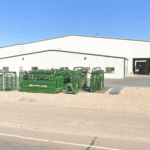
KL-ChemPak, Inc. operates a facility at 10 Industrial Hwy in Lester, Pennsylvania, a suburb of Philadelphia. The company’s business is straightforward: it warehouses raw chemical materials, blends them into end-use pesticide products, packs them into large ISO tanks, and ships them out for use in hydraulic fracking operations. The company has held an EPA-registered pesticide/device-producing establishment number since October 25, 2019.
The products at the center of this case — Tolcide PS-75, Tolcide 4FRAC, and Tolcide 4FRAC20 — are biocides. These are not household cleaners or garden pesticides. These are industrial-grade chemical agents engineered to destroy microorganisms inside fracking wells, preventing bacterial growth that would otherwise clog the pipes and slow production. They are hazardous enough that federal law requires specific safety labels to be physically affixed to the containers near their discharge valves at all times.
When an EPA inspector arrived at the Lester facility on February 9, 2023, they found three ISO tanks — one holding each biocide product — sitting without those required labels. Every single tank was non-compliant. The inspector documented the violations, issued a Notice of Inspection, and the EPA spent over two years processing the case before issuing a penalty in 2025.
Labels Exist for a Reason — And ChemPak Skipped All Three
Federal law under 40 C.F.R. § 156.10(a)(4)(ii)(B) is explicit: pesticide products stored in bulk containers must have a copy of the product labeling securely affixed to the container in the immediate vicinity of the discharge control valve. This rule exists because the discharge control valve is the exact point where a spill, leak, or accidental release is most likely to happen.
Without a label at the discharge point, a worker who opens the wrong valve, a first responder who arrives at a spill, or a transport driver who handles the tank has no way to know what chemical they are dealing with, how dangerous it is, or what protective measures they need to take. The label is the last line of defense between a routine handling task and a chemical exposure incident.
KL-ChemPak removed that last line of defense from all three tanks simultaneously. The EPA found this constituted three separate violations of Section 12(a)(2)(S) of FIFRA — one per tank, one per product.
Timeline of Events: From Violation to Penalty
The Non-Financial Ledger: What the Fine Doesn’t Count
A fine is a dollar figure. It sits on paper, gets processed through a federal payment portal, and disappears into the U.S. Treasury. What it cannot do is account for the people who worked in and around those unlabeled ISO tanks at the Lester facility between 2019 and 2023. The EPA’s inspection found the labeling violations in February 2023, but the document does not tell us when the labels went missing — or whether they were ever properly affixed in the first place.
Federal labeling law exists precisely because chemical exposure incidents do not announce themselves. A worker who handles a discharge valve on an unlabeled bulk container has no way to know what chemical they are touching, whether it will absorb through their skin, what concentration they are dealing with, or what to do if something goes wrong. The label is the instruction manual for survival. Without it, a routine task becomes a gamble.
The three biocides involved — Tolcide PS-75, Tolcide 4FRAC, and Tolcide 4FRAC20 — are not benign industrial solvents. These are registered pesticide products engineered to kill living microorganisms. They are designed for deployment thousands of feet underground in fracking wells, which means they are formulated to be persistent and effective in hostile environments. The workers at the Lester facility who warehoused, blended, tested, and transloaded these chemicals into ISO tanks were in direct proximity to products that demand the highest standards of handling protocol — protocols that begin with a label on the container.
The community surrounding 10 Industrial Hwy in Lester, Pennsylvania, a working-class suburb of Philadelphia, did not get a say in whether a chemical blending and transloading operation for fracking biocides moved in next door. They did not get a say in whether that facility maintained proper safety standards. And they certainly did not get a say in how little the company paid when those standards were found to be violated. The $9,600 (roughly the cost of 320 tanks of home heating oil — enough to heat a single family home for three winters) penalty resolves the EPA’s legal claims. It does not resolve the quiet exposure risk that sat in those tanks for however long the labels were absent.
There is also the matter of institutional trust. KL-ChemPak has held EPA registration since October 2019. That registration is, in theory, a signal to regulators, clients, and the surrounding community that the facility meets federal standards for producing and handling pesticide products. Every day those three tanks sat unlabeled, that signal was false. The company collected whatever revenue it generated from blending and shipping those biocides to fracking operations across the supply chain — and the workers and community absorbed the risk that the missing labels represent.
The consent agreement records that ChemPak’s Compliance Manager, Gregory Lyons, signed the settlement on behalf of the company. The document does not record whether any worker at the facility was ever told about the violations, whether any internal safety review was triggered, or whether any exposure monitoring was conducted after the inspection. The public record ends at the penalty figure. The human story inside the facility walls is not in the document.
Legal Receipts: The Document Says It All
The following passages come directly from the EPA Consent Agreement and Final Order. They are not paraphrased. These are the agency’s own words — the official government record of what KL-ChemPak did and what it cost them.
“The inspector observed three ISO tanks, each containing a different substance: one tank held ‘Tolcide PS-75’, another contained ‘Tolcide 4FRAC’, and the third held ‘Tolcide 4FRAC20’. None of the tanks had the required EPA-approved labels affixed to the exterior in the immediate vicinity of their respective discharge control valves.”
— EPA Consent Agreement, Paragraph 30 (Findings of Fact)
“EPA believes that the labeling deficiencies observed are violations under FIFRA Section 12(a)(2)(S), as the tanks lacked labeling that clearly and prominently display key product information necessary for safe handling and compliance with EPA regulations.”
— EPA Consent Agreement, Paragraph 31 (Findings of Fact)
“Respondent’s business includes the warehousing, blending, and transloading of chemical and pesticide products at the Facility in Lester, Pennsylvania. The Facility handles raw materials, blends them into end-use pesticide products, and places them in ISO tanks for testing, storage, and transportation purposes.”
— EPA Consent Agreement, Paragraph 15 (Findings of Fact)
“In settlement of the EPA’s claims for civil penalties for the violations alleged in this Consent Agreement, Respondent consents to the assessment of a civil penalty in the amount of NINE THOUSAND SIX HUNDRED DOLLARS ($9,600), which Respondent shall be liable to pay in accordance with the terms set forth below.”
— EPA Consent Agreement, Paragraph 48 (Civil Penalty)
“Except as provided in Paragraph 5, above, Respondent neither admits nor denies the specific factual allegations set forth in this Consent Agreement.”
— EPA Consent Agreement, Paragraph 6 (General Provisions)
The Math That Should Make You Angry
The $9,600 penalty breaks down to $3,200 per violation — one for each unlabeled tank. Here is what $9,600 actually means in the real world, compared to the penalty KL-ChemPak paid.
$9,600 Fine in Context: What Real People Pay vs. What ChemPak Paid
Annual rent and healthcare figures are U.S. national averages used for contextual comparison. Emergency fund figure reflects median American savings balance.
Societal Impact Mapping
Public Health: The Label Was the Last Warning
Fracking biocides are not consumer products. Tolcide PS-75, Tolcide 4FRAC, and Tolcide 4FRAC20 are industrial-grade antimicrobial agents designed for one purpose: killing living things. Their deployment in hydraulic fracking operations means they are formulated to remain chemically active under extreme pressure, temperature, and subsurface conditions. These are not chemicals you handle casually.
Federal labeling requirements under FIFRA exist specifically because the people most at risk from improper chemical handling are the workers who physically manage the containers — the people loading, testing, storing, and transporting those ISO tanks at the Lester facility. The label at the discharge control valve is the first and most immediate source of critical safety information: what the chemical is, what it does, what exposure risks exist, and what emergency protocols apply. KL-ChemPak removed that information from all three tanks simultaneously.
The EPA’s consent agreement does not document whether any worker exposure incidents occurred during the period the tanks were unlabeled. The document does not tell us how long the labels were absent before the February 9, 2023 inspection. It does not tell us whether the company’s workers knew what they were handling by other means, or whether they were operating blind. The public health risk is real and unquantified. The penalty is settled and closed.
Environmental Degradation: Fracking Chemicals in the Supply Chain
KL-ChemPak’s role in the energy supply chain is specific: it blends fracking biocides and ships them in ISO tanks to hydraulic fracking operations. The Tolcide product line is the end result of that process — pesticide products delivered to fracking wells where they are injected underground to keep bacterial populations under control during the extraction process.
Fracking operations are already one of the most contentious environmental issues in American energy policy, linked to groundwater contamination, induced seismicity, and methane leakage. The biocides used in fracking add another layer of environmental concern: these are chemicals specifically formulated to kill microorganisms, and they are pumped underground in large volumes. The safety labeling requirements that KL-ChemPak violated exist in part to ensure that every step of the supply chain — from the blending facility in Lester, Pennsylvania to the fracking well at the end of the line — handles these chemicals with documented protocols.
When those labels are absent, the chain of custody breaks. A transport driver who picks up an unlabeled ISO tank, a transfer station that receives it, or an emergency responder who encounters a spill en route has no official chemical identification on the container. The environmental risk of an unlabeled, unidentified biocide spill in transit is not theoretical. The labeling requirement is designed to prevent it. ChemPak’s violation degraded that protection for every person and ecosystem in the transport corridor between Lester and the fracking sites those tanks served.
Economic Inequality: $3,200 Per Tank Is the Price of Regulatory Capture
The EPA calculated a penalty of $3,200 per violation — one per unlabeled tank. This figure was determined after considering, per the consent agreement’s own language, “the size of business of the person charged, the effect of the person’s ability to continue in business, and the gravity of the violation.” In other words, the EPA explicitly factored in ChemPak’s ability to pay and calibrated the fine accordingly.
This is how regulatory penalty structures systematically favor corporate defendants. A fine that an individual working-class person would feel catastrophically is calibrated down to a level that a business can absorb without operational disruption. The violation is the same. The hazard is the same. The workers in proximity to the unlabeled tanks absorbed the same risk whether ChemPak was a small operation or a Fortune 500 corporation. But the price tag for the violation scales with the violator’s wallet, not with the severity of the risk created.
The $9,600 (enough to cover roughly five months of groceries for a family of four) penalty closes the legal case. It does not change the economic reality that the families living and working near industrial chemical facilities in Lester, Pennsylvania bear risks that the companies creating those risks can settle for the price of a used car. The asymmetry is the system working exactly as designed — for the company, not for the community.
The Cost of a Violation
That is the price KL-ChemPak paid for each of the three hazardous chemical containers they stored with no safety labels near their discharge valves.
What Now? Who Watches the Watchers
KL-ChemPak’s Compliance Manager Gregory Lyons signed the settlement agreement on July 10, 2025. The company certifies it is currently in compliance. Here is what you can do with that information.
Corporate Roles on the Record
- Gregory Lyons — Compliance Manager, KL-ChemPak, Inc. Signed the consent agreement binding the company to the settlement terms.
- [REDACTED — Not in Source] — No CEO, President, or Board Member names appear in the source document.
Regulatory Watchlist: These Bodies Have Jurisdiction
- EPA Region 3 (Philadelphia) — Holds authority over FIFRA enforcement for KL-ChemPak’s Pennsylvania facility. File complaints or request inspection records through EPA’s public records portal.
- EPA Office of Enforcement and Compliance Assurance (OECA) — National oversight of FIFRA enforcement patterns. Track whether small penalties like this one are systemic.
- OSHA (Occupational Safety and Health Administration) — Has jurisdiction over worker safety at chemical handling facilities. If workers at this facility lacked proper hazard communication, that is a separate OSHA issue the consent agreement does not address.
- Pennsylvania Department of Environmental Protection (PA DEP) — State-level oversight of chemical facilities in Lester, PA. State regulators can layer enforcement on top of federal penalties.
- Pennsylvania Department of Labor and Industry — Worker safety at the state level, including right-to-know protections for workers handling hazardous chemicals.
If you live near a chemical blending or fracking supply facility in your community, you have the right to know what is stored there. Request the EPA’s Toxic Release Inventory data for your zip code. Connect with local environmental justice organizations in the Philadelphia and Delaware County area who track industrial facilities in working-class neighborhoods. Support mutual aid networks that provide legal assistance to workers and residents affected by industrial chemical exposure. The EPA’s enforcement action closes a legal file. Community organizing is what makes the next violation cost more than a used car.
The source document for this investigation is attached below.
All factual claims in this article were derived from the attached court document: In the Matter of KL-CHEMPAK, INC., U.S. EPA Docket No. FIFRA-03-2025-0127.
You can read that consent agreement with KL-Chempak by visiting the EPA’s website: https://yosemite.epa.gov/OA/RHC/EPAAdmin.nsf/Filings/B3DB8C60FB6BC9D885258CDE006FBB6E/$File/KL%20Chempack%20Inc_FIFRA%20CAFO_Aug%206%202025.pdf
Explore by category
Antitrust
Monopolies and anti-competition tactics used to crush rivals.
View Cases →Product Safety Violations
When companies sell dangerous goods, consumers pay the price.
View Cases →Environmental Violations
Pollution, ecological collapse, and unchecked greed.
View Cases →Labor Exploitation
Wage theft, worker abuse, and unsafe conditions.
View Cases →Data Breaches & Privacy
Misuse and mishandling of personal information.
View Cases →Financial Fraud & Corruption
Lies, scams, and executive impunity that distort markets.
View Cases →Intellectual Property
IP theft that punishes originality and rewards copying.
View Cases →Misleading Marketing
False claims that waste money and bury critical safety info.
View Cases →