Lead in the Walls, Money in the Fine: CT Gabbert Remodeling’s Three-Year Safety Blackout
What a Number Like $48,414 Cannot Hold
Think about what it means to hire someone to renovate your kitchen. You cleared out the cabinets. You made arrangements to keep the kids out of the way. You handed over a deposit and signed a contract. You trusted that the people coming into your home to tear apart walls and rip out fixtures knew what they were doing — and that someone, somewhere, had made sure of that.
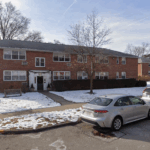
At five homes across the Peoria, Illinois area — houses built in 1957, 1950, 1955, 1971, and 1951 — that trust was broken. Not through bad luck. Through a deliberate, years-long failure to maintain the most basic legal requirements for working around lead-based paint.
The federal government has known since at least 1992 that up to three million American children under the age of six were being poisoned by lead dust from deteriorating or disturbed paint inside older homes. Congress put the number into the law itself: three million children. The damage lead does to a developing brain does not announce itself immediately. It shows up later, in report cards, in behavioral referrals, in reading scores that never quite catch up, in a child who struggles to sit still in class and cannot understand why.
The rules CT Gabbert violated were designed with that specific child in mind. The requirement to hand a homeowner a lead hazard information pamphlet exists because the people living in those houses deserve to know what disrupting a painted wall might release into their air. The requirement to have a certified renovator on every job exists because someone who has completed proper training knows how to contain dust, how to set up plastic sheeting, how to wet surfaces before sanding, how to clean up when the work is done. The recordkeeping requirements exist so that years later, if a child shows elevated blood lead levels, someone can go back and prove — or fail to prove — that safe procedures were actually followed.
CT Gabbert produced none of that documentation. Not a single record across five jobs proving a certified renovator was assigned to the project. Not one record showing workers received on-the-job lead safety training. Not a single post-renovation cleaning verification confirming lead dust was contained and cleaned up before the family moved back into the kitchen. Not once. Not at any of the five houses.
The penalty here is $48,414. That amount, spread across five families and years of violations, works out to less than $10,000 per household for the risk they absorbed. A remediation contractor hired to professionally clean up a lead-contaminated home after a botched renovation can charge that much before lunch. A single blood lead test, followed by chelation therapy for a child with elevated levels, costs more than that. A year of special education services triggered by lead-induced learning delays can cost a school district tens of thousands of dollars per student. The fine covers the government’s paperwork. It does not reach the families.
“The ingestion of household dust containing lead from deteriorating or abraded lead-based paint is the most common cause of lead poisoning in children.” The law says it plainly. CT Gabbert’s workers disturbed painted surfaces in five pre-1978 homes without certification, without trained oversight, and without a single record to show it was done safely.
There is also the question of the workers themselves. The people sent into those homes to remove cabinets, tear out walls, strip siding, and gut bathrooms — were they told about the lead risk? Were they given respirators? Were they trained in containment procedures? The EPA’s findings say CT Gabbert failed to ensure that renovation workers were either certified renovators or had been trained by a certified renovator. What that means in plain language: the people doing the physical work of disturbing lead-painted surfaces may have had no formal knowledge that lead dust was a danger to them at all.
CT Gabbert’s EPA firm certification lapsed in June 2020. The company then took on job after job, from July 2020 through December 2022, before finally renewing its certification in May 2023. That is almost exactly three years of uncertified work. Three years is long enough for a toddler who was present during one of those kitchen demolitions to reach school age.
Straight from the Federal Record: 21 Violations in Their Own Words
The following are direct quotations from the EPA’s Consent Agreement and Final Order, Docket No. TSCA-05-2025-0017, signed March 19, 2025. These are not summaries or allegations; they are the terms CT Gabbert agreed to without contesting.
Count 1 — Firm Operating Without Valid Certification (Paragraph 39) “Respondent failed to obtain recertification until May 8, 2023 (NAT-28745-3), almost three years after its initial certification expired.”
- CT Gabbert’s EPA firm certification (NAT-28745-2) expired on June 29, 2020. The company did not renew until May 8, 2023. All five documented renovation jobs were performed inside that three-year window.
- Federal regulations under 40 C.F.R. § 745.89(b)(1)(iii) explicitly prohibit firms from performing renovations if their certification expires and has not been renewed. CT Gabbert performed work anyway.
- This constitutes one violation of 40 C.F.R. §§ 745.89(b)(1)(iii) and 745.87(a), covering all five renovation projects as a single count.
Counts 2–6 — Failure to Provide Lead Hazard Pamphlet and Obtain Acknowledgment (Paragraph 44) “For each of the five renovations described in Paragraph 29, above, Respondent failed to obtain from each owner the written acknowledgement that the respective owner had received the pamphlet or obtain a certificate of mailing at least seven days prior to the contracted renovations.”
- The law requires contractors to hand homeowners a lead hazard information pamphlet before work begins on any pre-1978 home, and then obtain a signed confirmation that the homeowner received it. This is a basic informed-consent requirement. CT Gabbert skipped it at all five addresses.
- No homeowner across any of the five jobs received the required pamphlet confirmation. This results in five separate violations, one per household, under 40 C.F.R. § 745.84(a)(1).
Counts 7–11 — Failure to Retain Compliance Records (Paragraph 48) “Respondent failed to retain all records necessary to demonstrate compliance with 40 C.F.R. Part 745, Subpart E for a period of three years following completion of each renovation by failing to retain the following records: (a) Documentation that a certified renovator was assigned to the renovation project; (b) Documentation that a certified renovator provided on-the-job training for workers used on the project; (c) Documentation that a certified renovator performed or directed workers who performed all of the tasks described in 40 C.F.R. § 745.85(a); and (d) Documentation that a certified renovator performed the post-renovation cleaning verification.”
- This is the most operationally revealing violation. A firm that follows the rules would have these records automatically, because safe practices generate documentation as a byproduct. The absence of all four record types across all five jobs means either the records were never made or the procedures were never performed.
- Post-renovation cleaning verification is the last checkpoint confirming that lead dust was contained and cleaned before residents re-entered the work area. No record of this verification exists for any of the five job sites. This results in five separate violations.
Counts 12–16 — Workers Not Certified or Trained (Paragraph 52) “Respondent performed or directed to perform renovations as described in Paragraph 29, above, and did not ensure that all individuals performing renovation activities on behalf of the firm were either certified renovators or had been trained by a certified renovator.”
- Federal regulation 40 C.F.R. § 745.89(d)(1) requires that every person physically performing renovation work either hold a renovator certification or have been trained by someone who does. CT Gabbert failed this requirement at all five job sites, resulting in five violations.
- This means the workers doing the actual demolition — tearing out walls, removing cabinets, stripping siding — may never have been told about lead exposure risks or taught how to prevent dust from spreading through the home.
Counts 17–21 — No Certified Renovator Assigned to or Overseeing Jobs (Paragraph 56) “Respondent performed or directed to perform renovations as described in Paragraph 29, above, and did not ensure that a certified renovator was assigned to the renovations and discharged all of the certified renovator responsibilities.”
- Beyond whether workers were trained, the law also requires a certified renovator to be formally assigned to each job and to personally discharge specific oversight responsibilities. CT Gabbert failed to ensure this at all five sites, generating five additional violations.
- Combined with the worker-training failures in Counts 12–16, this means that neither the person overseeing the project nor the people doing the physical work were operating under any certified lead-safety supervision at any of the five homes.
Civil Penalty Determination (Paragraph 58) “Pursuant to Section 16(a) of TSCA, 15 U.S.C. § 2615(a), Complainant determined that an appropriate civil penalty to settle this action is $48,414. In determining the penalty amount, Complainant considered the nature, circumstances, extent, and gravity of the violations alleged and, with respect to Respondent, ability to pay, effect on ability to continue to do business, any history of prior such violations, the degree of culpability, and such other factors as justice may require.”
- The maximum per-violation per-day fine under TSCA is $48,512. The EPA settled 21 violations for a total of $48,414 — barely more than the ceiling for a single violation on a single day. The penalty calculation factored in CT Gabbert’s ability to pay and the potential effect on its ability to keep operating.
- CT Gabbert “neither admits nor denies the factual allegations” under the settlement terms. The company agreed to pay and agreed to comply going forward, but the consent agreement structure means no formal legal finding of guilt was entered. This is standard for EPA civil penalty settlements.
Three Years Operating in the Dark
From the moment CT Gabbert’s certification expired to the day the EPA filed the penalty order, the timeline reveals how long an uncertified contractor can operate before regulators catch up.
Who Pays When a Contractor Skips Lead Safety
Public Health
The health stakes of lead paint violations are not theoretical. The federal statute CT Gabbert violated was written specifically because lead poisoning was already afflicting millions of children when Congress acted in 1992.
- Congress documented that up to 3,000,000 children under age six were affected by low-level lead poisoning at the time the Residential Lead-Based Paint Hazard Reduction Act was passed. Lead dust from disturbed paint in pre-1978 homes was identified as the most common cause.
- Lead poisoning at low levels causes IQ deficiencies, reading and learning disabilities, impaired hearing, reduced attention span, hyperactivity, and behavioral problems in children. These effects are irreversible. There is no treatment that restores the neurological damage once it occurs.
- CT Gabbert performed kitchen and bathroom demolitions, exterior siding removal, and full wall teardowns inside homes built between 1950 and 1971. These are exactly the kinds of high-disturbance activities most likely to generate lead dust from deteriorating paint. No post-renovation cleaning verification was performed or recorded at any of the five sites.
- Workers who physically performed the demolition work at all five sites were not documented as certified renovators or as having received lead safety training. They were exposed to any lead dust generated by their own work without any confirmed protective measures in place.
- The five homes span three Illinois communities: Peoria, Washington, and Bartonville. Each is a residential neighborhood where families, including children, live immediately adjacent to or within the renovated structures.
Economic Inequality
Lead safety violations impose costs that fall almost entirely on working-class homeowners, their children, their school districts, and the public health system. The contractor who cuts corners rarely bears those downstream costs.
- The five homes where CT Gabbert worked were single-family residences in mid-sized Illinois communities. Families who hire local remodeling contractors for kitchen and bathroom renovations are typically working- or middle-class homeowners who have no way to independently verify a contractor’s EPA certification status before signing a contract.
- Remediation of a lead-contaminated home after improper renovation can cost thousands to tens of thousands of dollars. None of the $48,414 fine paid by CT Gabbert goes to the homeowners or covers the cost of testing or remediation at the five affected properties.
- Children with elevated blood lead levels frequently require special education services, behavioral interventions, and ongoing medical monitoring. These costs are absorbed by families, school districts, and Medicaid, not by the contractors whose work may have contributed to the exposure.
- The workers CT Gabbert sent into lead-risk renovation sites without certification or training bear an economic burden as well. Workers exposed to lead without proper respiratory protection face long-term health risks including kidney damage, hypertension, and neurological effects, costs they will carry personally through lost work capacity and medical expenses.
- The penalty structure itself encodes an inequality. The maximum per-violation fine is $48,512. The EPA settled 21 violations for $48,414 total, citing CT Gabbert’s ability to pay and its need to continue operating. The families in those homes received no comparable consideration for their capacity to absorb lead exposure risk.
What Homeowners Should Have Gotten vs. What CT Gabbert Delivered
The Price They Put on the Risk
The maximum daily fine for a single TSCA lead safety violation is $48,512. CT Gabbert paid $48,414 total, for 21 violations, across five homes, over nearly three years of uncertified work.
Who to Contact, What to Watch, and How to Push Back
CT Gabbert has paid its fine and certified to the EPA that it is now complying with lead renovation regulations. The consent agreement does not require remediation at the five affected properties, does not mandate notification to homeowners, and does not affect any additional right EPA or the Department of Justice might have to pursue other legal action. The following entities are the relevant points of accountability.
The Responsible Party
- CT Gabbert Remodeling & Construction, Inc. — 1323 S.W. Adams Street, Peoria, Illinois 61602. Contact email documented in the case: Chuck@ctgabbert.com. Docket No. TSCA-05-2025-0017.
Regulatory Watchlist
- U.S. EPA Region 5 — Enforcement and Compliance Assurance Division: The office that brought this case. TSCA lead safety enforcement contacts for this docket: Brewster.Brandon@epa.gov and podell.jacob@epa.gov.
- U.S. EPA Renovation, Repair and Painting (RRP) Program: The federal program governing lead-safe certification for contractors. Homeowners can verify a firm’s certification status through EPA’s online registry before signing any contract.
- Illinois EPA: State-level environmental agency with authority over local contamination issues and complementary enforcement jurisdiction alongside the federal EPA.
- Illinois Department of Public Health (IDPH): The state agency responsible for childhood lead poisoning surveillance, blood lead testing programs, and investigation of elevated blood lead level cases in children.
- OSHA (Occupational Safety and Health Administration): Federal agency with jurisdiction over worker lead exposure during construction activities, separate from TSCA enforcement. Workers exposed to lead dust without proper controls can file a complaint directly with OSHA.
What You Can Do Right Now
- If you live in a pre-1978 home and have had recent renovation work: Request that the contractor provide documentation that a certified renovator was assigned to your project and that post-renovation cleaning verification was completed. You are legally entitled to this documentation.
- Check contractor certification status before hiring: The EPA’s RRP certification lookup is publicly accessible. A firm’s certification number and expiration date are a matter of public record. Ask for it and verify it before any contract is signed.
- Request blood lead testing for children: Any child under six who lives in a home where renovation work has been done should have blood lead levels tested by a pediatrician. The test is routine and covered by most insurance. Early detection is the only form of mitigation available once exposure has occurred.
- Report suspected violations directly to the EPA: If you suspect a contractor operating in your area is performing work in pre-1978 homes without RRP certification, you can file a complaint with EPA Region 5 directly. Your report can trigger an inspection.
- Support local housing advocacy organizations: Groups working on housing justice in older American cities organize specifically around lead paint remediation, healthy homes standards, and holding landlords and contractors accountable. Find and fund the one operating in your community.
- Demand stronger penalty structures from your federal representatives: The EPA’s authority to settle 21 violations for less than the cost of one day’s maximum fine reflects a policy choice about how seriously to take lead safety enforcement. That choice is made by Congress and the executive branch. It can be changed.
The source document for this investigation is attached below.
You can read this docket in the EPA’s website: https://yosemite.epa.gov/OA/RHC/EPAAdmin.nsf/Filings/04CA1D86542181DB85258C53006E84B3/$File/TSCA-05-2025-0017_CAFO_CTGabbertRemodeling&ConstructionInc_PeoriaIL_20PGS.pdf
Explore by category
Antitrust
Monopolies and anti-competition tactics used to crush rivals.
View Cases →Product Safety Violations
When companies sell dangerous goods, consumers pay the price.
View Cases →Environmental Violations
Pollution, ecological collapse, and unchecked greed.
View Cases →Labor Exploitation
Wage theft, worker abuse, and unsafe conditions.
View Cases →Data Breaches & Privacy
Misuse and mishandling of personal information.
View Cases →Financial Fraud & Corruption
Lies, scams, and executive impunity that distort markets.
View Cases →Intellectual Property
IP theft that punishes originality and rewards copying.
View Cases →Misleading Marketing
False claims that waste money and bury critical safety info.
View Cases →