$2,963 Is the Price of Your Child’s Brain
Filed: July 16, 2025 | EPA Region 5 | Source: Consent Agreement and Final Order, TSCA-05-2025-0023A construction company in rural Minnesota disturbed lead paint in 7 homes built before 1978, kept zero required safety records for any of them, and walked away paying $2,963 (roughly what a family of four spends on groceries in six weeks) to settle the case.
Seven Homes. Zero Safety Records. One Tiny Fine.
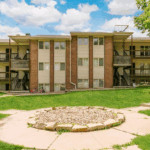
Between 2020 and 2023, Phillip Kruger Construction, LLC, based in Lakefield, Minnesota, completed door, window, and siding replacement jobs at seven houses. Every single one of those houses was built before 1978. Every single one of them is legally classified as “target housing” under federal law, meaning the law assumes lead-based paint is present and requires specific safety protocols before a single nail is pulled.
Federal regulations under the EPA’s Renovation, Repair and Painting (RRP) Rule exist precisely because disturbing old painted surfaces releases lead dust, and lead dust is not a minor inconvenience. It is a neurotoxin. When the EPA sent an information request to Kruger Construction on August 29, 2023, the company eventually responded with contracts for all seven jobs. That is all it could provide.
There were no records proving a certified renovator was assigned to any job. No records of on-the-job safety training. No documentation that post-renovation cleaning verification was ever performed. Nothing showing the required pamphlet, “Renovate Right,” was distributed to homeowners at two of the properties. The company either destroyed these records, never created them, or never followed the rules at all. The EPA document does not specify which.
The Homes That Were Disturbed
Timeline of Renovation Work at Target Housing (2020–2023)
The EPA complaint was triggered on August 24, 2023, when a third party filed a complaint about Kruger Construction’s practices. This was not a proactive inspection. The agency only started asking questions because someone on the outside raised an alarm. That distinction matters: without that complaint, these violations may have gone entirely unchecked.
What a $2,963 Fine Cannot Buy Back
Congress was direct about why these rules exist. When it passed the Residential Lead-Based Paint Hazard Reduction Act in 1992, it put the findings right in the law: lead poisoning was widespread among American children, afflicting as many as 3,000,000 children under age six at the time. At low levels, lead poisoning causes intelligence deficiencies, reading and learning disabilities, impaired hearing, reduced attention span, hyperactivity, and behavior problems. These are not speculative future risks. These are documented outcomes.
The homes where Kruger Construction ripped out doors, windows, and siding were built in 1895, 1904, 1915, 1915, 1919, 1936, and 1950. Every year of paint layered on those surfaces, from the day they were built until lead paint was banned in 1978, is a potential source of toxic dust. Pulling out a window frame from a house built in 1895 without proper containment does not produce a little dust. It produces a cloud of pulverized lead-laden paint that settles on floors, countertops, and children’s toys. The required post-renovation cleaning verification exists specifically to confirm that dust has been cleaned up to safe levels. Kruger Construction provided no evidence this was ever done at two of the properties where it was specifically required.
“The ingestion of household dust containing lead from deteriorating or abraded lead-based paint is the most common cause of lead poisoning in children.”
The families living in these homes trusted that the company tearing apart their walls and windows knew what it was doing and was following the law. That trust was misplaced. These were not wealthy homeowners hiring premium contractors with extensive compliance teams. These are small-town addresses in Lakefield and Jackson, Minnesota, rural communities where homeowners typically have limited resources and limited ability to independently verify whether a contractor is certified or compliant. The power imbalance between a homeowner and a contractor they’ve hired is enormous, and federal safety rules exist precisely to fill that gap.
The “Renovate Right” pamphlet that Kruger Construction failed to provide to at least two homeowners is not a bureaucratic formality. It is a federal document designed to give families the information they need to protect their children during a renovation. It tells parents to keep children and pregnant women out of the work area, to avoid tracking dust through the house, and to look out for symptoms of lead exposure. Two families never received it. They went through a renovation of their pre-1978 home without being informed of a single one of these precautions. Whatever happened during those jobs, those families were kept in the dark.
The Invisible Victims Never Named in the Settlement
The consent agreement and final order names one party as the respondent: Phillip Kruger Construction, LLC. The homeowners are identified only by street addresses. The children who may have been present in those homes during or after the renovations are not mentioned anywhere in the document. They are invisible to the legal process. A $2,963 fine (roughly what you’d pay for a basic dental procedure without insurance) settles the government’s claim. It does nothing for any child who ingested lead dust from a job that was done without a certified renovator, without verified cleanup, and without the required safety documentation.
Lead poisoning has no cure. The neurological damage it causes in children is permanent. If a child in one of these seven homes absorbed elevated levels of lead from dust disturbed during Kruger Construction’s work, no settlement, no fine, and no federal order will undo that. The child may struggle in school. May be diagnosed with attention disorders. May face a lifetime of compounding disadvantages that trace back to a window replacement job in a small Minnesota town. The company paid less than $3,000. The child pays forever.
Straight From the Document: The Quotes That Tell the Whole Story
These are direct quotes from the EPA’s Consent Agreement and Final Order, filed July 16, 2025. Read them carefully.
“Respondent admits the jurisdictional allegations in this CAFO and neither admits nor denies the factual allegations in this CAFO.”
Consent Agreement and Final Order, Paragraph 7 — Jurisdiction and Waiver of Right to Hearing
“Congress found, among other things, that low-level lead poisoning was widespread among American children, afflicting as many as 3,000,000 children under age six; at low levels, lead poisoning in children causes intelligence quotient deficiencies, reading and learning disabilities, impaired hearing, reduced attention span, hyperactivity, and behavior problems.”
Consent Agreement and Final Order, Paragraph 9 — Statutory and Regulatory Background
“Respondent provided contracts for the seven (7) renovations identified in Paragraph 27, above, but did not provide any records necessary to demonstrate compliance with work practice standards in 40 C.F.R. § 745.85.”
Consent Agreement and Final Order, Paragraph 29 — Factual Allegations
“EPA conducted an analysis of Respondent’s financial information and determined Respondent has a limited ability to pay. Consequently, in accordance with applicable laws, EPA determined that the Assessed Penalty is an appropriate amount to settle this action.”
Consent Agreement and Final Order, Paragraph 39 — Civil Penalty
“The civil penalty of up to $48,512 per violation for each day of violation… [Complainant] determined that an appropriate civil penalty to settle this action is $2,963.”
Consent Agreement and Final Order, Paragraphs 23 and 38 — Penalty Authority vs. Assessed Penalty
“This CAFO constitutes a ‘prior such violation’ as that term is used in EPA’s Interim Final Consolidated Enforcement Response and Penalty Policy… to determine Respondent’s ‘history of prior such violations.'”
Consent Agreement and Final Order, Paragraph 49 — General Provisions
That last quote is significant. By signing this agreement, Kruger Construction now has an official, documented history of lead paint violations. Any future violations will be assessed under a higher penalty tier. Whether the EPA will actually enforce that remains to be seen.
The Maximum Fine vs. The Actual Fine: A Study in Legal Generosity
Maximum Possible Fine vs. Fine Actually Assessed (Per the EPA’s Own Authority)
The EPA’s own authority allows fines of up to $48,512 per violation per day ($48,512 per day is more than the median American household earns in an entire year, which is roughly $40,000 to $45,000 depending on the year). The agency cited 11 violations across multiple counts. The total assessed penalty was $2,963 (about what you’d spend on a weekend trip for a family of four). The justification: “limited ability to pay.”
This Is Bigger Than One Company in One Small Town
Public Health: The Poison That Stays
Lead is a heavy metal with no safe level of exposure in children, according to the Centers for Disease Control and Prevention. The EPA’s own founding documents for the RRP rule state clearly: the most common source of childhood lead poisoning is household dust from deteriorating or disturbed lead-based paint. Every renovation Kruger Construction performed involved exactly the kind of work that releases that dust, pulling out windows, replacing doors, disturbing painted siding on homes built as far back as 1895.
The federal rules that Kruger Construction violated were not designed to protect contractors from paperwork. They were designed to protect children’s brains. Certified renovators are required to use specific containment practices, ensure worksites are properly sealed, and perform post-renovation cleaning verification to confirm lead dust levels have returned to safe thresholds. None of this was documented for any of the seven homes. The absence of documentation does not mean these steps were taken. Given that the company also failed to provide evidence that a certified renovator was ever even assigned to any job, the assumption that safety protocols were followed in their absence requires extraordinary faith in a company that kept no records whatsoever.
The source document notes that Congress found lead poisoning at low levels causes “intelligence quotient deficiencies, reading and learning disabilities, impaired hearing, reduced attention span, hyperactivity, and behavior problems” in children under six. Rural Minnesota families in Lakefield and Jackson who hired this company for home renovations had no way of knowing that the contractor they trusted to fix their windows and doors may have released neurotoxic dust into the air their children breathed and the floors their children played on.
Economic Inequality: Who Gets Protected and Who Gets Left Behind
The homes in this case are not in wealthy suburbs. They are in Lakefield and Jackson, Minnesota, small rural communities where many residents have limited incomes and limited consumer power. Pre-1978 housing stock is disproportionately concentrated in lower-income communities, because older, cheaper housing is what lower-income families can afford. This is the same demographic that environmental justice research consistently identifies as bearing the greatest burden of lead exposure. The families most likely to live in these homes are the ones least likely to have the resources to get their children tested for lead poisoning, least likely to have health insurance that covers the follow-up care, and least likely to be able to afford the educational support a child with lead-induced learning disabilities will need.
The EPA’s penalty calculation explicitly reduced the fine because Kruger Construction demonstrated “limited ability to pay.” This is a legally permitted consideration. The law allows it. But consider what it means in practice: a contractor operates in a low-income rural market, takes on work in pre-1978 homes, skips every required safety precaution, keeps no required records, and because the business is small enough, pays a fine that amounts to less than the cost of one compliant lead-paint renovation job. The economic structure of enforcement means that smaller bad actors in lower-income markets face proportionally lower consequences, even when their violations affect the most economically vulnerable families.
A family whose child suffers lead poisoning from a botched renovation faces years of medical costs, educational interventions, and lost earning potential for that child across a lifetime. The contractor who caused the exposure paid $2,963 (roughly six weeks of groceries for a typical American family) and certified in the agreement that it is now in compliance. The asymmetry between corporate cost and family cost is staggering, and it is not accidental. It is baked into the enforcement framework.
You can visit this link to view that above PDF from the EPA’s website: https://yosemite.epa.gov/oa/rhc/epaadmin.nsf/0dd3240cfc502a018525756e0050f57b/0927f07f64d92dcc85258cc9007f6ed3!OpenDocument
Explore by category
Antitrust
Monopolies and anti-competition tactics used to crush rivals.
View Cases →Product Safety Violations
When companies sell dangerous goods, consumers pay the price.
View Cases →Environmental Violations
Pollution, ecological collapse, and unchecked greed.
View Cases →Labor Exploitation
Wage theft, worker abuse, and unsafe conditions.
View Cases →Data Breaches & Privacy
Misuse and mishandling of personal information.
View Cases →Financial Fraud & Corruption
Lies, scams, and executive impunity that distort markets.
View Cases →Intellectual Property
IP theft that punishes originality and rewards copying.
View Cases →Misleading Marketing
False claims that waste money and bury critical safety info.
View Cases →