
TL;DR
- Two Reno-area real estate development companies, Nevada Tri Partners, LLC and Damonte Ranch Commerce Center, LLC, violated the federal Clean Water Act by unlawfully impacting a protected waterway.
- The U.S. EPA finalized a penalty of just $25,971 (roughly what a minimum-wage worker earns in a full year of labor) against these developers on July 1, 2025.
- These companies hired a white-shoe law firm, WilmerHale, to negotiate the settlement, a firm that bills clients far more per hour than the entire penalty they paid.
- The federal government, the agency charged with protecting America’s water, accepted this settlement without any public outcry or congressional intervention.
- A protected public waterway was legally traded away for the price of a used car.
The penalty math vs. what this land deal was worth is buried in The “Cost of a Life” Metric section. The number will make you furious.
Two Nevada property developers destroyed a federally protected waterway and walked away paying less than a year’s rent for a one-bedroom apartment in the city they’re busy developing.
A Protected Waterway. A Construction Crew. A $25K Exit Ramp.
Nevada Tri Partners, LLC and Damonte Ranch Commerce Center, LLC are property developers operating in the Reno, Nevada area. Together, these two entities violated the Clean Water Act, the federal law passed in 1972 specifically to protect the nation’s waters from exactly this kind of damage.
The U.S. Environmental Protection Agency’s Region 9 office, based in San Francisco, pursued the case and ultimately agreed to a Consent Agreement and Final Order signed and entered on July 1, 2025. That order required the developers to pay a civil penalty of $25,971 (roughly the annual take-home pay of a full-time minimum wage worker in Nevada, who earns about $25,920 a year at $12.50 per hour for 40 hours a week).
The EPA did not pursue criminal charges. The agency did not demand restoration of the waterway. The agency negotiated, signed, and finalized a settlement that let two commercial real estate developers off the hook for the legal cost of a decent used car.
The Lawyers Who Made It Happen
The developers retained WilmerHale, formally known as Wilmer Cutler Pickering Hale and Dorr LLP, one of the most powerful corporate law firms in the United States. Their representative, Peggy Otum, handled the case from WilmerHale’s San Francisco office at 50 California Street. Top-tier corporate attorneys at firms like WilmerHale routinely bill between $800 and $1,500 per hour.
That means the legal fees the developers almost certainly paid to negotiate this settlement likely exceeded the penalty itself. The developers paid more to make this go away than they paid to the American public for destroying a public resource.
The EPA was represented by Rich Campbell, an Assistant Regional Counsel in the Water Section. One federal attorney versus the legal machinery of WilmerHale. The outcome speaks for itself.
Who Paid What: Penalty vs. Estimated Legal Costs vs. A Worker’s Annual Wage
The Non-Financial Ledger: What $25,971 Actually Cost the Rest of Us
Money penalties exist to deter future harm. When a company destroys a protected waterway and pays a penalty smaller than a year’s worth of minimum wage labor, the deterrence effect is zero. The fine becomes a line item in a development budget. It becomes the cost of doing business. The message this settlement sends to every other property developer in the Nevada basin and across the American West is simple and devastating: if you need to violate the Clean Water Act to push a commercial development forward, the federal government will charge you roughly what it costs to lease a mid-range pickup truck for a year.
The waterway these developers impacted was protected precisely because it serves the public. Clean Water Act protections exist for streams, wetlands, and waterways because these systems do irreplaceable work. They filter runoff. They recharge groundwater supplies. They provide habitat for wildlife and plant life that supports the broader ecological web. They are public infrastructure, built by nature over thousands of years, owned by no corporation, and governed by law on behalf of everyone. Nevada Tri Partners and Damonte Ranch Commerce Center treated that public infrastructure as a cost-benefit calculation. The benefit was commercial development profit. The cost was $25,971.
Consider who lives downstream. The Reno metropolitan area is in a high desert environment where water is not abundant. The Truckee River watershed, the primary water system for the region, is already under stress from population growth, climate change, and historic overuse. Every protected waterway that feeds or connects to this system matters in ways that a $25,971 fine cannot begin to address. The people who depend on that water, who fish in it, who let their kids wade in it, who need it clean to survive, received a settlement check made out to the U.S. Treasury. None of that money restores what was lost.
There is also a dignity issue here that goes beyond the dollars. The Clean Water Act was passed in 1972 after American rivers were literally catching fire. The Cuyahoga River in Ohio burned. Lake Erie was declared dead. The public demanded protection. Congress passed a law. And for decades, that law represented a promise: corporations cannot simply treat shared water resources as private waste receptacles or development obstacles. That promise erodes every time a settlement like this one gets signed and stamped by a federal judicial officer and filed away. The developers got their clean slate. The waterway got a fine that amounts to a rounding error on a commercial real estate deal.
Legal Receipts: The Document They Filed and Signed
The following are direct, verbatim statements from the official U.S. EPA Consent Agreement and Final Order filed July 1, 2025.
“It is Hereby Ordered that this Consent Agreement and Final Order (U.S. EPA Docket No. CWA-09-2025-0059) be entered and that Respondents shall pay a civil penalty in the amount of Twenty-Five Thousand and Nine Hundred and Seventy-One Dollars ($25,971.00) in accordance with the terms of this Consent Agreement and Final Order.” Final Order, U.S. EPA Region IX, Signed by Regional Judicial Officer Steven Jawgiel, July 1, 2025, 11:18 AM Pacific Time
“In re: Nevada Tri Partners, LLC and Damonte Ranch Commerce Center, LLC, Docket No. CWA-09-2025-0059” Caption of the Consent Agreement and Final Order, U.S. EPA Region IX
“I certify that the original of the fully executed Consent Agreement and Final Order in the matter of Nevada Tri Partners, LLC, and Damonte Ranch Commerce Center, LLC (CWA-09-2025-0059) has been filed with Regional Hearing Clerk, U.S. EPA, Region IX, 75 Hawthorne Street, San Francisco, CA 94105, and that a true and correct copy of the same was served on the parties, via electronic mail.” Certificate of Service, signed by Ponly Tu, Regional Hearing Clerk, U.S. EPA Region IX, July 1, 2025, 4:23 PM Pacific Time
“RESPONDENT: Peggy Otum, Wilmer Cutler Pickering Hale and Dorr LLP, 50 California Street, Suite 3600, San Francisco, CA 94111” Certificate of Service, identifying the developers’ legal representative, U.S. EPA Region IX, CWA-09-2025-0059
“COMPLAINANT: Rich Campbell, Assistant Regional Counsel, U.S. EPA – Region IX, Water Section IV (ORC-2-4), 75 Hawthorne Street, San Francisco, CA 94105” Certificate of Service, identifying the federal government’s counsel, U.S. EPA Region IX, CWA-09-2025-0059
Societal Impact Mapping: The Damage That Doesn’t Show Up in the Settlement
Environmental Degradation
The Clean Water Act exists to protect “waters of the United States,” a legal classification that covers streams, rivers, wetlands, and other water bodies that support aquatic ecosystems and public water supplies. When Nevada Tri Partners and Damonte Ranch Commerce Center violated this law, they impacted a designated protected waterway in the Reno area, a desert region where water systems are finite and fragile.
Commercial development activity near or within waterways introduces sediment, chemical runoff, altered hydrology, and physical destruction of riparian buffers. These buffers, the vegetation and soil systems at water’s edge, are what keep waterways clean, cool, and functional for fish, birds, amphibians, and the downstream human communities that depend on the same water table. Destroying or degrading them does not produce a harm that lasts only until the check clears. The ecological debt accumulates for years or decades.
A penalty of $25,971 (roughly the cost of a single year’s lease on a mid-sized commercial vehicle) covers none of this restoration. The source document contains no mention of any required remediation, replanting, habitat restoration, or ecological mitigation. The order requires payment. It requires nothing else.
Public Health
Reno and surrounding Washoe County draw their water supply from a limited desert watershed. Waterway degradation in this context carries direct public health implications. Sediment and chemical contamination of tributary systems flows downstream into the broader water supply chain. Wetland destruction eliminates natural filtration capacity that municipalities would otherwise need to replicate using expensive engineering infrastructure, costs passed on to ratepayers and taxpayers, not to the developers who caused the damage.
The residents most exposed to these risks are disproportionately working-class and lower-income households who cannot afford filtration systems, who rent in areas without political influence over development approvals, and who have no seat at the table when a consent agreement gets quietly finalized between a federal agency and a white-shoe law firm in San Francisco.
Economic Inequality
Nevada Tri Partners and Damonte Ranch Commerce Center are commercial real estate developers. The Damonte Ranch area of south Reno is an active commercial and residential development corridor. These are not small operations stumbling into environmental violations by accident. These are organizations with legal counsel at WilmerHale, one of the most expensive law firms in the country, coordinating a federal regulatory resolution.
The settlement amount of $25,971 (roughly what a Nevada worker earning minimum wage grosses in an entire year of full-time employment) represents the full financial accountability these companies face for this violation. Meanwhile, the commercial value of the development enabled by this violation, land cleared, permits advanced, construction timelines kept, almost certainly runs into the millions of dollars. The math is not ambiguous. Violating the Clean Water Act was economically rational for these developers. The penalty cost less than their lawyers.
Timeline: From Violation to Signed Order
The “Cost of a Life” Metric: What the Government Said This Waterway Is Worth
To be direct: the federal government of the United States assigned a dollar value to a federally protected public waterway. That value is $25,971. A waterway that filters water, supports habitat, protects downstream communities, and belongs to the public, received the same legal accounting as a moderately equipped secondhand pickup truck.
The developers hired WilmerHale. WilmerHale billed them. The EPA’s lone water attorney accepted the settlement. A Regional Judicial Officer signed it at 11:18 AM on a Tuesday. The Regional Hearing Clerk certified service at 4:23 PM the same day. A protected public waterway was transacted in less than five business hours.
What Now: Who Answers for This and What You Can Do
The Entities Responsible
- Nevada Tri Partners, LLC — Respondent; commercial real estate developer, Reno area, Nevada
- Damonte Ranch Commerce Center, LLC — Respondent; commercial real estate developer, Damonte Ranch corridor, Reno, Nevada
Their Legal Team
- Peggy Otum of WilmerHale, San Francisco — negotiated the settlement on behalf of the developers
Regulatory Watchlist: Agencies That Should Be Doing More
- U.S. EPA Region IX (San Francisco) — responsible for enforcing the Clean Water Act in Nevada. Ask why this penalty was accepted.
- U.S. Army Corps of Engineers — shares jurisdiction over waters of the United States under Clean Water Act Section 404. Ask whether a permit was ever sought.
- Nevada Division of Environmental Protection (NDEP) — state-level regulator. Ask whether state enforcement has been initiated separately.
- Washoe County Regional Planning — the local agency approving commercial development in the Damonte Ranch area. Ask whether environmental compliance was a condition of approval.
What You Can Actually Do Right Now
File a public records request with U.S. EPA Region IX for the full Consent Agreement and supporting investigation documents. Contact Washoe County commissioners and demand that future commercial development permits in the Reno basin require independent environmental monitoring as a condition of approval. Connect with local water advocacy organizations like the Truckee River Fund or Great Basin Water Network, organizations doing direct community organizing around water rights in Nevada. Show up to public comment periods on commercial development projects in your watershed. The developers count on your absence.
The source document for this investigation is attached below.
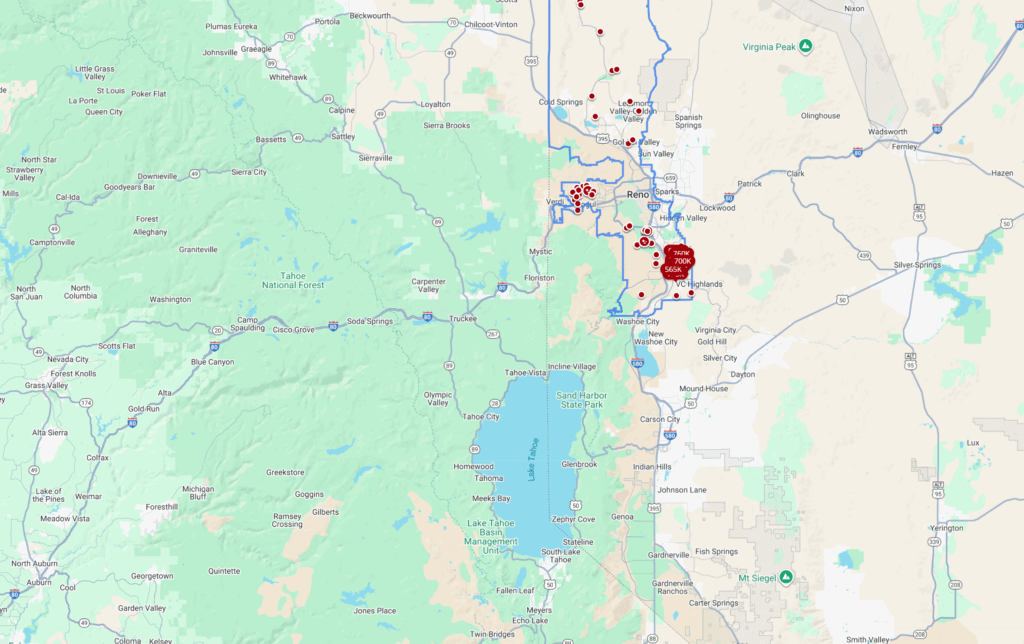
You can read this 12 pager on the destruction of this public waterway by visiting the EPA’s website: https://www.epa.gov/system/files/documents/2025-05/cwa-09-2025-0059-nv-tri-partners-damonte-ranch-commerce-center-cafo-2025-05-14.pdf
Explore by category
Antitrust
Monopolies and anti-competition tactics used to crush rivals.
View Cases →Product Safety Violations
When companies sell dangerous goods, consumers pay the price.
View Cases →Environmental Violations
Pollution, ecological collapse, and unchecked greed.
View Cases →Labor Exploitation
Wage theft, worker abuse, and unsafe conditions.
View Cases →Data Breaches & Privacy
Misuse and mishandling of personal information.
View Cases →Financial Fraud & Corruption
Lies, scams, and executive impunity that distort markets.
View Cases →Intellectual Property
IP theft that punishes originality and rewards copying.
View Cases →Misleading Marketing
False claims that waste money and bury critical safety info.
View Cases →Related posts:
 Denali Water Solutions’ Sludge Dilemma
 Scattered Acres, Inc. polluted our waterways with literal shit.
 Litman Excavating’s pollution shows how profit-maximization undermines public health and ecological stability
 Portland Vancouver Junction Railroad Only Paid A $14K Fine After Deliberately Polluted Washington’s Waterways
