Clean Air Act Enforcement • Oxnard, California • 2025
$8,280 Fine. 11 Violations. A Town Full of People Who Had No Idea.
E.F. Oxnard, LLC ran an anhydrous ammonia facility with crumbling pipes, missing safety signs, broken emergency plans, and zero proper inspections. The EPA fined them less than the cost of a used car.
E.F. Oxnard, LLC stored a chemical capable of mass casualties, let its safety systems deteriorate across 11 documented failure points, and the federal government decided the appropriate punishment was $8,280 (about the same as two months of rent for a working-class family in Ventura County).
What Actually Happened at 550 Diaz Avenue
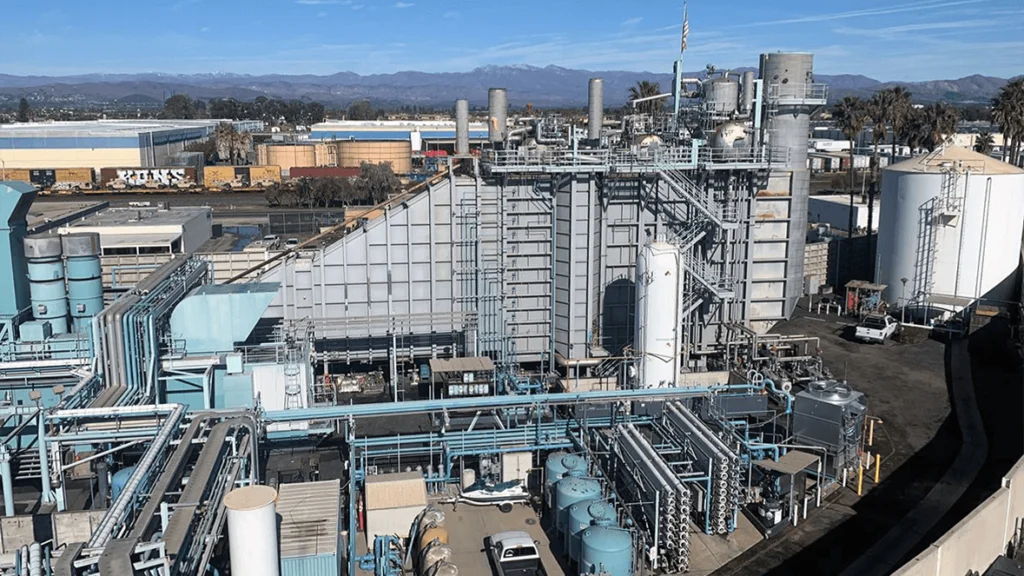
On February 5, 2025, EPA Region 9 inspectors walked into the E.F. Oxnard, LLC facility at 550 Diaz Avenue in Oxnard, California. What they found was a facility operating an anhydrous ammonia system with a level of negligence that reads like a checklist of how to cause an industrial disaster.
Anhydrous ammonia is not a low-stakes chemical. It is a colorless, suffocating gas that causes severe chemical burns to the eyes, lungs, and skin at high concentrations. At industrial scale, a release can create a toxic cloud that travels far beyond the facility fence line. Oxnard is a densely populated city of over 200,000 people.
The inspection produced eleven documented “Areas of Concern,” each one a violation of Section 112(r)(7) of the Clean Air Act, the section of federal law specifically designed to prevent chemical disasters. These were not paperwork technicalities. They were physical, operational failures in the systems designed to contain, monitor, and respond to a potential ammonia catastrophe.
— EPA Inspection Finding, Area of Concern 2
Eleven Ways They Gambled With People’s Lives
The violations covered almost every layer of a safe chemical operation. Warning placards were not maintained. Ammonia piping had degraded beyond acceptable engineering standards. Pipe supports, the physical structures holding those pressurized ammonia lines in place, were also found deficient.
Ammonia piping labels were missing or incorrect, meaning workers responding to an emergency would not have been able to quickly identify what was in the line they were handling. Pressure relief valves, which are designed to vent excess pressure before a tank ruptures, were discharging in the wrong direction. This is a direct physical threat to anyone working nearby when those valves activate.
The facility’s 2024 Process Hazard Analysis (PHA), the formal safety review required by law, failed to evaluate all possible engineering and administrative controls or the consequences of system failures. In plain terms: the company’s own official safety analysis was incomplete. They did not fully think through what could go wrong, and even if they had, their written operating procedures for the ammonia injection system were absent entirely.
Operating procedures for two separate years (2020 and 2023) were found to be not current and not accurate. The ammonia storage tank had not been inspected in accordance with manufacturer recommendations. The ammonia piping had not undergone metal thickness testing as required. And perhaps most alarming of all: the facility’s Emergency Response Plan and Emergency Action Plan contained no functional mechanism to notify the National Response Center if ammonia was released into the air.
The Non-Financial Ledger: What Money Can’t Cover
The $8,280 settlement number tells one story. The story of the people inside and around that facility tells another one entirely, and nobody in the settlement agreement bothered to write it down.
Consider the workers at 550 Diaz Avenue who showed up every shift to a facility where the pressure relief valves on the anhydrous ammonia system were discharging in the wrong direction. These are safety devices that activate automatically when pressure inside a system gets too high. When they activate, they release ammonia gas. The direction they discharge into determines whether that gas hits open sky or the face of a maintenance worker doing their job fifteen feet away. The EPA’s inspection confirmed this was wrong. The workers presumably had no idea, because the facility also failed to maintain the warning placards that would have told them what was in the system in the first place.
The piping that carries anhydrous ammonia through the facility was found to be in violation of good engineering practices. The pipe supports holding those lines up were also found deficient. Metal thickness testing, the process that checks whether pipes are thinning from corrosion and at risk of rupturing, had not been conducted as required. These are not abstract bureaucratic failures. These are the physical conditions that precede an ammonia release. The workers who spent their days within arm’s reach of those pipes had no professional right to expect that their employer was cutting corners this aggressively. But the company cut them anyway.
Then there is the community of Oxnard itself. Over 200,000 people live in this city. Oxnard sits in Ventura County’s agricultural belt, and its population skews heavily working-class and Latino. These are not people with lobbyists in Sacramento or lawyers on retainer. They are people who live close to industrial facilities because that is where the affordable housing is. They trusted that federal law required facilities like E.F. Oxnard, LLC to maintain emergency response plans that would alert authorities in the event of a chemical release. They trusted this because the Clean Air Act actually does require it. That trust was misplaced. The facility’s Emergency Response Plan and Emergency Action Plan contained no functional mechanism to notify the National Response Center. If ammonia had escaped the facility, the people of Oxnard may not have found out through official channels until it was already on them.
Anhydrous ammonia at high concentrations causes immediate damage to the respiratory tract, the eyes, and the skin. Exposure to 300 parts per million for less than thirty minutes can be life-threatening. An industrial release does not give people time to understand what is happening before the damage begins. The failure to have a working notification mechanism in the emergency response plan is not a paperwork violation. It is the removal of the one early-warning system that might give a family time to get inside, close the windows, or evacuate. E.F. Oxnard, LLC removed that protection, and the EPA charged them $8,280 (roughly what it costs to replace the engine in a mid-range pickup truck) for all of it combined.
The operating procedures for the ammonia systems were found to be inaccurate and outdated for 2020 and 2023. That is a minimum of two full years during which workers operating these systems were potentially following procedures that did not accurately describe what the system actually did or required. If something had gone wrong during a routine operation in either of those years, the people responding would have been working from a map that did not match the territory. The human cost of that kind of corporate negligence rarely appears in settlement agreements because settlement agreements are not written for the people most at risk. They are written to close the case.
Legal Receipts: The Document Speaks for Itself
“The Facility failed to ensure the pressure relief valves discharged in a direction consistent with recognized and generally accepted good engineering practices, in violation of Section 112(r)(7) of the Clean Air Act and 40 C.F.R. § 68.65(d)(2).” EPA Alleged Violation #5 — Area of Concern 5, February 5, 2025 Inspection Report
“The Facility failed to ensure appropriate mechanisms to notify the National Reporting Center (NRC) in its Emergency Response Plan and Emergency Action Plan in the event of a release, in violation of Section 112(r)(7) of the Clean Air Act and 40 C.F.R. § 68.90(b)(3).” EPA Alleged Violation #11 — Area of Concern 11, February 5, 2025 Inspection Report
“The Facility failed to evaluate all possible engineering and administrative controls and consequences of failure in its 2024 PHA, in violation of Section 112(r)(7) of the Clean Air Act and 40 C.F.R. § 68.67(c)(3) and (4).” EPA Alleged Violation #6 — Area of Concern 6, February 5, 2025 Inspection Report
“The Facility failed to conduct ammonia piping metal thickness testing consistent with applicable manufacturers recommendations and good engineering practices, in violation of Section 112(r)(7) of the Clean Air Act and 40 C.F.R. § 68.73(d)(3).” EPA Alleged Violation #10 — Area of Concern 10, February 5, 2025 Inspection Report
“The parties enter into this ESA in order to settle the violations described above for the total penalty amount of $8,280.” Settlement Terms — EPA Expedited Settlement Agreement, Signed August 20–27, 2025
The Fine vs. The Risk: A Number That Insults Your Intelligence
The EPA settled eleven violations of federal chemical disaster prevention law for $8,280 (roughly the cost of a used 2015 Honda Civic with 120,000 miles on it). To understand how absurd that number is, it helps to see it next to some reference points.
The Clean Air Act’s chemical accident prevention rules under Section 112(r) authorize substantial penalties per violation per day. The EPA chose to resolve all eleven violations, covering physical infrastructure, safety systems, documentation failures, hazard analysis deficiencies, and the missing emergency notification mechanism, for a combined total of $8,280 (less than the average American spends on groceries in ten months).
This is an expedited settlement, meaning the agency used a fast-track administrative process rather than full enforcement proceedings. The use of expedited settlements is discretionary. The EPA chose this path. The fine that resulted is the direct product of that choice.
Societal Impact Mapping: Who Bears the Cost
Public Health
Anhydrous ammonia is classified as a regulated substance under the Clean Air Act’s Risk Management Program precisely because of its potential to cause mass casualties in a community release event. The threshold quantity that triggers federal oversight is 10,000 pounds; facilities operating at or above that level are required to implement all the safeguards that E.F. Oxnard, LLC failed to maintain.
The specific failures documented here compound each other. Corroded piping under deficient supports creates structural risk of a release. Missing labels mean workers cannot quickly identify the hazard. Pressure relief valves pointed in the wrong direction mean a controlled pressure event could immediately injure whoever is nearby. No emergency notification mechanism means a release could spread into the surrounding residential area before any official alert goes out. These are not isolated failures; they form a cascade that leads directly to community exposure.
Oxnard’s population is majority Latino (approximately 74%), with significant numbers of farmworkers, warehouse workers, and industrial workers who live close to the city’s industrial corridor. These communities already carry disproportionate environmental health burdens. A chemical release at a facility that could not notify the National Response Center would land hardest on people who have the least access to immediate medical care and the fewest resources to evacuate on short notice.
The operating procedures that governed how workers interacted with the ammonia systems were found to be inaccurate for at least two separate years. Workers following incorrect procedures during a pressure event or a routine maintenance task face heightened risk of exposure. The company’s failure to keep those documents current placed its own workforce in measurable danger. The settlement agreement records that danger and prices it at $8,280 (less than what most Americans spend on a single semester of community college).
Economic Inequality
Facilities that store hazardous chemicals at industrial scale are not evenly distributed across American communities. They concentrate in working-class neighborhoods, in cities with large immigrant populations, in places where land is cheap and political power is thin. Oxnard is all three. The placement of industrial facilities like E.F. Oxnard, LLC in communities of color is a documented pattern in environmental justice research, and the enforcement response these communities receive from federal regulators is, in many documented cases, weaker than what wealthier, whiter communities receive for equivalent violations.
The $8,280 fine functions as a cost-benefit calculation for the company. If maintaining anhydrous ammonia safety systems to federal standards costs more than $8,280, the rational economic outcome of this settlement is that non-compliance is cheaper than compliance. The fine is not a deterrent; it is a line item. The community of Oxnard, which had no seat at the table when this settlement was negotiated, absorbs the externalized risk so that the company can externalize the cost of safety as well.
The workers at this facility are the first financial victims of this negligence before any chemical event even occurs. Unsafe working conditions depress wages, increase turnover, generate unreported injuries, and create psychological stress that compounds over a career. None of that appears in this settlement agreement. The agreement concerns itself exclusively with the civil penalty and the correction of documented violations. The workers’ experience of operating in a facility with eleven simultaneous safety failures is simply not accounted for in this system.
The “Cost of a Life” Metric
What Now: Names, Watchlists, and Next Steps
The People Who Signed This Agreement
David Nelson, Plant Manager, E.F. Oxnard, LLC signed the settlement agreement on August 20, 2025. He is the identified responsible party at the facility level. His email address is listed in the official EPA service record as David.Nelson@efoxnard.com.
Amy C. Miller-Bowen, Director, Enforcement and Compliance Assurance Division, EPA Region 9 signed on behalf of the EPA on August 27, 2025. She authorized the expedited settlement and the $8,280 penalty figure.
What You Can Do Right Now
If you live in or near Oxnard: contact Ventura County Air Pollution Control District and ask them to conduct their own independent inspection of E.F. Oxnard, LLC at 550 Diaz Avenue. Federal enforcement is one layer. Local enforcement is another. Use both.
Connect with Centro por Justicia y Dignidad, Communities for a Better Environment, and the Oxnard Environmental Justice Coalition, organizations already doing on-the-ground work in Ventura County’s industrial corridors. Mutual aid and local organizing have produced stronger facility-level accountability than federal settlements in dozens of communities. You do not need to wait for the EPA to act. The neighborhood already knows what’s at stake.
File a public comment with EPA Region 9 demanding that chemical facility enforcement cases in environmental justice communities receive full administrative proceedings rather than expedited settlements that cap penalties below the deterrence threshold. Their public comment contact is online at epa.gov/region9. Make them answer for $752 per violation.
The source document for this investigation is attached below.