Penske’s Ammonia Gamble: How a Corporate Logistics Giant Ran an Illegal Chemical Time Bomb Above Indiana Families
What $161,000 Doesn’t Pay For
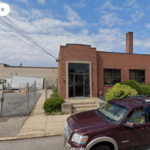
Shelbyville, Indiana is a working-class city of about 20,000 people in Shelby County. It is the kind of town where people work warehouse and logistics jobs because those are the jobs available. Some of those people worked inside a Penske-operated distribution center at 4301 County Rd 125 W, a facility that quietly held over five tons of anhydrous ammonia.
Anhydrous ammonia is not a chemical that gives you a warning and a chance to leave. At low concentrations it burns your eyes and throat. At higher concentrations it destroys lung tissue and causes chemical asphyxiation. At the levels stored inside this facility, a catastrophic release would produce a toxic cloud large enough to reach every home, school, and business sitting inside the worst-case release endpoint. The EPA’s own filing confirms those public receptors exist and are at risk.
The workers in that building, the people in nearby neighborhoods, none of them knew that the safety analysis supposed to protect them had been conducted without a single certified expert in the methodology being used. They didn’t know that the team writing up the risks to their health had skipped the section asking what actually happens to a human body when the safety controls fail. They had no reason to know that the ventilation system was substandard, or that the machinery room was being called electrically “non-hazardous” on the basis of that deficient ventilation. They showed up, they did their jobs, and they trusted that someone with legal obligations and financial resources had done theirs.
Penske Logistics LLC is a subsidiary of Penske Corporation, one of the largest privately held transportation and logistics companies in the United States. The resources to run a compliant safety program were not the obstacle here. The violations documented in this consent agreement are not the result of a small operation that didn’t know the rules existed. Penske has operated under OSHA’s Process Safety Management standard because its ammonia inventory exceeded the federal threshold for highly hazardous chemicals. The rules applied. The rules were ignored.
The settlement asks Penske to pay $161,421. It does not ask Penske to admit what it did. It does not require any reform of how it handles chemical safety at its other facilities. It does not compensate a single worker who operated inside that building without the protections the law required. The company is now out of the facility entirely, which means the only consequence it carries forward is a line on an enforcement record and a check written to the U.S. Treasury.
The people of Shelbyville carry something different forward: the knowledge that for years, the emergency plan meant to save their lives was missing the section on how to actually shut the system down.
Straight From the Filing: What the Documents Say
The following are direct, verbatim quotes from EPA Docket No. CAA-05-2024-0013, the Consent Agreement and Final Order filed January 12, 2024. These are the agency’s own words, not paraphrase.
“The RMP Documents included a ventilation system design summarized in the ‘Ventilation Records 9-9-2021.xlsx’ file; the ventilation system design demonstrates that the current ventilation system at the Facility did not meet the required design code standards.”
“The Facility machinery room electrical classification provided in the RMP Documents states that the classification is based on the environment being ‘non-hazardous.’ The machinery room at the Facility may only be considered ‘non-hazardous’ provided that the ventilation system conforms with the required design code standards.”
- Penske classified its own machinery room as electrically safe (non-hazardous) using a legal justification that required adequate ventilation. The ventilation did not meet code. The classification was therefore invalid.
- An incorrect electrical classification in an anhydrous ammonia machinery room is not a paperwork error. Ammonia vapor is flammable in air concentrations between 15% and 28%. An electrical ignition source in an improperly classified room, combined with an ammonia leak, creates the conditions for an explosion.
- Penske maintained this incorrect classification in its own Risk Management Plan documentation, the very document it is legally required to submit to the EPA to demonstrate it is operating safely.
“In the 2017 PHA, Penske did not address the following requirements: Engineering and administrative controls applicable to the hazards and their interrelationships such as appropriate application of detection methodologies to provide early warning of releases; and A qualitative evaluation of a range of the possible safety and health effects of failure of controls.”
- A Process Hazard Analysis (PHA) is the foundational document for chemical accident prevention. Its purpose is to systematically identify everything that could go wrong and what happens to people and equipment if it does. Penske’s 2017 PHA skipped two of the most critical sections.
- The section on “detection methodologies to provide early warning of releases” is specifically how you answer the question: will anyone know the ammonia is leaking before it reaches a dangerous concentration? Penske’s analysis left that question unaddressed.
- The section on “safety and health effects of failure of controls” is where you document what happens to human beings if the safety systems stop working. Penske’s team did not do this analysis. This was the analysis that existed to protect workers and surrounding residents.
“Penske did not include in the 2017 PHA at least one employee who is knowledgeable in the ‘What-If’ methodology.”
- Federal regulations require that the safety analysis team include at least one person certified in the specific analytical method being used. Penske chose the “What-If” methodology and then ran the analysis without anyone on the team who was qualified in that method.
- This means the conclusions of the 2017 safety analysis were produced by people who were not qualified to validate them. The document that was supposed to certify the facility was safe was generated by an unqualified team.
“During the September 2021 inspection, Penske could not provide EPA with documentation of completing the 2017 PHA recommendations.”
- The 2017 analysis produced only two recommendations: replace pipe labels on the roof, and complete a fire drill with the local fire department. These were the minimum corrective actions identified by Penske’s own (already flawed) safety review.
- When EPA inspectors arrived four years later in September 2021, Penske could not prove it had done either. The company later provided an updated document in November 2021 claiming the pipe labels were replaced in August 2020 and the fire drill happened in July 2020, but this documentation was only produced after EPA asked the question.
“These written operating procedures did not address steps for emergency shutdown.”
- Emergency shutdown procedures are what workers follow when the system begins to malfunction. They are the documented, step-by-step actions that prevent a partial malfunction from becoming a full catastrophic release. Penske’s operating procedures, reviewed during the September 2021 inspection, did not contain them.
- Federal regulations require these procedures precisely because an ammonia refrigeration system under stress does not give operators unlimited time to improvise. Without written procedures, workers facing an emergency were operating without instructions.
- This sentence, drawn directly from the filing, is the EPA’s legal way of saying: if the worst happens at this facility, people outside the fence get hurt. That determination is what triggers the higher-level “Program 3” safety requirements Penske repeatedly failed to meet.
- Program 3 is the most stringent tier of the EPA’s Chemical Accident Prevention Provisions. The entire framework of requirements Penske violated exists specifically because a release from this facility would not stay inside the facility.
The Scale of the Violations
Source: EPA Docket No. CAA-05-2024-0013, Civil Penalty section, paragraphs 31 and 67
Who Pays When Corporations Cut Corners on Chemical Safety
Environmental Degradation
Anhydrous ammonia is toxic to aquatic ecosystems and can cause severe localized environmental damage if released. The EPA’s own regulatory framework identifies it as a substance that “may reasonably be anticipated to cause death, injury, or serious adverse effects to human health or the environment.”
- The Shelbyville facility maintained a maximum inventory exceeding 10,000 pounds of anhydrous ammonia, the federal threshold quantity at which a release is considered capable of off-site environmental harm. A worst-case release from this facility would not stay contained to the industrial property.
- The facility’s ventilation system failed to meet required design code standards. A ventilation failure or inadequate air exchange in an ammonia refrigeration room is a documented precursor to ammonia accumulation and uncontrolled release into the surrounding air and potentially into nearby drainage or soil.
- Because no adequate Process Hazard Analysis was completed, Penske never formally evaluated what detection systems would provide early warning of a release. Without proper leak detection planning, a slow leak could go undetected long enough to cause environmental contamination beyond the building perimeter.
Public Health
The EPA’s filing explicitly confirms that members of the public live and spend time within the danger zone of a worst-case ammonia release from this facility. That confirmation is not hypothetical; it is the legal trigger for the highest level of safety requirements.
- Anhydrous ammonia exposure at high concentrations causes severe respiratory damage, chemical burns to the eyes and skin, and is potentially fatal. The public receptors confirmed to be within the worst-case release endpoint include people who had no knowledge of the risk they faced.
- Penske failed to conduct a qualitative evaluation of the health effects of control failures in its 2017 Process Hazard Analysis. This means the human health consequences of a system malfunction were never formally documented or incorporated into emergency planning at the facility level.
- The facility’s written operating procedures contained no emergency shutdown steps, meaning workers inside the building faced a scenario in which they had training obligations but no written protocol to follow during an active release event.
- The facility’s machinery room was incorrectly classified as electrically non-hazardous, despite the ventilation system not meeting code. This misclassification meant electrical safety decisions were made based on a false assumption about the air quality in a room containing ammonia refrigeration equipment.
Economic Inequality
The communities that bear the greatest risk from corporate chemical safety failures are consistently working-class communities. The people who work in logistics warehouses and live near industrial distribution centers are not the people who set the safety budget.
- Shelbyville, Indiana is a working-class city where warehouse and logistics employment is a primary economic driver. Workers in this sector typically do not have union representation, legal counsel on retainer, or independent access to information about the chemical hazards in their workplace.
- The $161,421 penalty Penske agreed to pay is a rounding error for a subsidiary of Penske Corporation, one of the largest privately held transportation conglomerates in the United States. The fine creates no meaningful financial deterrent against future non-compliance at facilities where the cost of full compliance is weighed against the probability of an EPA inspection.
- Because Penske no longer operates the facility, no additional compliance investment was required as part of this settlement. The company paid the fine, walked away, and carries no obligation to improve chemical safety practices at its other operating locations as a condition of this consent agreement.
- The EPA and Attorney General jointly determined that an administrative penalty action covering a longer period of violations was appropriate, meaning these violations extended beyond the standard 12-month lookback window. A longer violation window resulted in the same $161,421 fine, not a larger one reflecting the extended harm.
What the Settlement Actually Means in Dollar Terms
Who to Pressure, What to Watch, and How to Fight Back
Penske no longer operates this specific facility, but the same company, the same management structure, and the same corporate decision-making apparatus operates logistics and transportation facilities across the United States. This enforcement record is now part of Penske Logistics LLC’s compliance history under federal law.
Corporate Leadership
- The consent agreement was signed on behalf of Penske Logistics LLC by its representative at email address mike.costanza@penske.com, designated as the respondent contact. Specific executive names and titles beyond this are [REDACTED – Not in Source].
- Penske Logistics LLC is a subsidiary of Penske Corporation. Any accountability effort targeting chemical safety practices should be directed at the parent company’s executive leadership and board, whose identities are [REDACTED – Not in Source] from this document but are publicly available through corporate filings.
Regulatory Watchlist
- EPA Region 5 (Chicago): The enforcement authority that brought this action. Its Air Enforcement and Compliance Assurance Branch can be contacted at R5airenforcement@epa.gov. Demand they conduct follow-up inspections at other Penske facilities operating under similar ammonia refrigeration processes.
- OSHA Process Safety Management Division: The same ammonia threshold that triggered EPA’s Program 3 requirements also triggers OSHA’s PSM standard at 29 CFR 1910.119. OSHA has independent enforcement authority to inspect Penske facilities operating with hazardous chemicals above threshold quantities.
- U.S. Department of Justice: The Attorney General’s office jointly authorized this extended enforcement action. DOJ has the authority to pursue criminal sanctions for CAA violations that are not resolved through administrative penalty, per paragraph 75 of the consent agreement.
- Indiana Department of Environmental Management (IDEM): State environmental agencies retain independent authority to investigate and enforce state-level chemical safety regulations. IDEM can act independently of federal settlements.
- Local Emergency Planning Committee (LEPC) for Shelby County: Federal law requires facilities with hazardous chemicals above threshold to coordinate emergency planning with their local LEPC. Residents can attend LEPC meetings, request copies of facility emergency plans, and demand accountability from the committee charged with protecting their community.
Mutual Aid and Grassroots Resistance
- Know your local right-to-know rights. Under the Emergency Planning and Community Right-to-Know Act (EPCRA), any facility storing hazardous chemicals above threshold quantities must report that information. Your local LEPC holds these records. Request them. Share them. Know what is stored in your neighborhood.
- Connect warehouse workers to advocacy organizations. Workers inside facilities like the Shelbyville distribution center are the first people at risk from a chemical release and the last people to receive safety information. Organizations focused on warehouse worker rights and occupational safety can help workers understand what legal protections they are entitled to and how to report unsafe conditions to OSHA without retaliation.
- Demand corporate accountability at the municipal level. Local governments that grant operating permits, tax incentives, or zoning approvals to logistics corporations can attach conditions to those approvals. Community members can attend city council and county commission meetings and demand that chemical safety compliance history be part of any local business deal with Penske or similarly situated corporations.
- File a public comment on EPA rulemaking. The consent agreement references a then-proposed amendment to the Chemical Accident Prevention Provisions (87 Fed. Reg. 53556, August 31, 2022). Follow the EPA’s rulemaking docket and submit public comments demanding stronger enforcement penalties and mandatory third-party audits for repeat or egregious chemical safety violators.
- Share this enforcement record. This consent agreement is a public document. The docket number is CAA-05-2024-0013. Share it with journalists, local elected officials, labor organizers, and anyone in a community near a Penske facility who deserves to know this company’s enforcement history.
The source document for this investigation is attached below.
EPA’s source on this story: https://yosemite.epa.gov/OA/RHC/EPAAdmin.nsf/Filings/A1ADD86AF914117F85258AA20052A3EC/$File/CAA-05-2024-0013_CAFO_PenskeLogisticsLLC_ShelbyvilleIndiana_19PGS.pdf
Explore by category
Antitrust
Monopolies and anti-competition tactics used to crush rivals.
View Cases →Product Safety Violations
When companies sell dangerous goods, consumers pay the price.
View Cases →Environmental Violations
Pollution, ecological collapse, and unchecked greed.
View Cases →Labor Exploitation
Wage theft, worker abuse, and unsafe conditions.
View Cases →Data Breaches & Privacy
Misuse and mishandling of personal information.
View Cases →Financial Fraud & Corruption
Lies, scams, and executive impunity that distort markets.
View Cases →Intellectual Property
IP theft that punishes originality and rewards copying.
View Cases →Misleading Marketing
False claims that waste money and bury critical safety info.
View Cases →