
Environmental Enforcement • Madison, Illinois • Clean Air Act Violation
527 Times They Let Poison Drift: Westwood Lands and Two Years of Dirty Air
The Non-Financial Ledger: What $75,000 Doesn’t Cover
Madison, Illinois sits in Madison County, directly adjacent to Granite City, one of the most industrially dense corridors in the American Midwest. The people who live there are not wealthy. They are not powerful. They are close enough to the slag piles that they can hear the crushers and see the dust on a bad day. And for two years, from August 2021 to August 2023, they breathed the consequences of a company that couldn’t be bothered to point a water cannon at its own operations 448 times.
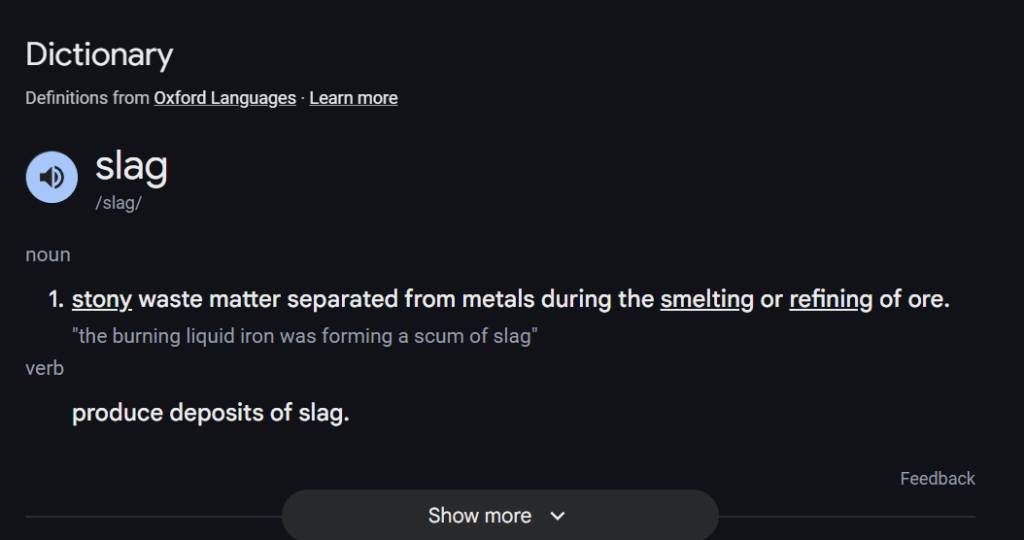
Slag is the waste byproduct left over from metal smelting. Processing it into usable aggregate material kicks up particulate matter: fine dust that carries heavy metals and mineral compounds. There is no safe threshold for this kind of chronic, ground-level exposure. It settles on yards. It gets into heating and cooling systems. Children play outside in it. Elderly neighbors with compromised lungs breathe it. People with asthma manage their day around it. None of these people were notified when Westwood Lands skipped their mandated dust suppression. None of them had a seat at the table when the EPA and the company’s lawyers negotiated this settlement. None of them receive a dime of that $75,000.
The operating program Westwood Lands was required to follow, called the Fugitive Particulate Operating Program, existed specifically because the facility’s operations are known to generate visible dust clouds that travel off-site. The program required daily visible emissions observations, corrective actions when dust was spotted, and consistent use of the water cannon. These are not exotic or expensive measures. A water cannon is a hose. The company had one. They just didn’t use it when they were supposed to, hundreds of times, over two years.
Then the baghouse filters, the industrial equivalent of the air purifiers that remove fine particles from the exhaust of the crushing and conveying equipment, were allowed to fall into disrepair. They ran outside their normal pressure range. The company knew they needed fixing. The company didn’t keep spare filters in stock. From May to August 2023, the facility continued running production through equipment that couldn’t clean what it was supposed to clean. The community outside the fence line was the downstream recipient of that decision.
There is no line item in this consent agreement for the person who developed a cough they couldn’t shake in the summer of 2022. There is no compensation for the family whose asthmatic child had more bad days during the period these violations were accumulating. There is no acknowledgment, anywhere in this 18-page legal document, that real people live within range of that dust. The EPA’s settlement is framed entirely as a matter between a corporation and a regulatory agency. The community is a backdrop. The $75,000 goes to the federal government, not to Madison, Illinois.
Legal Receipts: What the Document Actually Says
The following quotes come directly from the EPA Consent Agreement and Final Order, Docket No. CAA-05-2025-0023, filed April 17, 2025. These are not paraphrases. These are the admissions and findings on record.
“From August 11, 2021, to August 1, 2023, Westwood Lands, Inc. did not utilize its water cannon to reduce visible emissions from front-end loader material movements as required by its FPOP on 71 occasions.”
- This proves the company observed visible dust being generated by front-end loader operations and failed to activate the suppression system designed to control it, on 71 separate, documented occasions over nearly two years.
- This is a specific, tracked, recordable failure. The company’s own monitoring logs provided the evidence. They were watching it happen and not acting.
“From August 11, 2021, to August 10, 2023, Westwood Lands, Inc. did not utilize its water cannon as required by its FPOP on 448 occasions.”
- This is the core violation count. 448 occasions over a two-year window means the water cannon, the primary dust suppression tool, was not run on average more than four times per week when it was required.
- This is a systemic operational failure, not an accident or an oversight. A pattern of 448 violations is a management choice, made repeatedly, over 730 days.
“From May 8, 2023, to August 30, 2023, Westwood Lands, Inc. operated its emissions units while at least one of the baghouses was in need of repair; and from May 8, 2023, to March 20, 2024, Westwood Lands, Inc. failed to maintain an adequate inventory of clean bags for the baghouses.”
- The company ran production through broken pollution control equipment for over three months, from May through August 2023, while simultaneously lacking the spare parts needed to fix those filters.
- Keeping spare filter bags in stock is one of the minimum maintenance requirements explicitly listed in Illinois Administrative Code 212.324(f). The company failed to meet the legal floor, not a best-practice standard.
- The failure to stock spare bags extended from May 2023 all the way to March 2024, meaning the company had ten full months during which it could not promptly repair its own pollution control equipment even if it wanted to.
“On May 17, 2023, Westwood Lands, Inc. operated the baghouses outside of their normal pressure drop range.”
- Pressure drop is a direct indicator of whether a baghouse filter is functioning correctly. Operating outside the normal range means the filter is either clogged or has failed, and is passing unfiltered particulate matter into the exhaust stream.
- This condition was observed by EPA inspectors on the day of the inspection, May 17, 2023, meaning the company had not caught or corrected this malfunction before federal agents walked through the door.
“Respondent admits to the stipulated facts stated in Section D of this CAFO and neither admits nor denies the allegations stated in Section E of this CAFO.”
- The company admitted to the operational context of the violations (they run the facility, they have baghouses, they are subject to the rules) while refusing to formally admit to the specific violation counts.
- This is standard corporate legal strategy: accept the settlement and the fine without creating an admission that could be used in future civil litigation by affected community members.
Societal Impact Mapping: Who Actually Pays
Public Health
The particulate matter released by a slag processing facility running without adequate dust suppression is not abstract. It is a documented category of air pollutant with specific, quantified health consequences.
- Slag processing generates fine and coarse particulate matter (PM10 and PM2.5) that penetrates deep into the respiratory system. Chronic low-level exposure is linked to increased rates of asthma attacks, chronic bronchitis, reduced lung function, and cardiovascular disease. The communities around Granite City already carry an elevated industrial pollution burden from surrounding heavy industry.
- The facility’s Fugitive Particulate Operating Program existed precisely because regulators determined that without active suppression, this facility’s operations would generate off-site dust at levels requiring control. On the 448 occasions the water cannon was skipped and the 71 occasions front-end loader dust was left unsuppressed, particulate matter was released without that mandated control in place.
- Baghouse filters are designed to capture particulate matter from crusher and conveyor exhaust before it exits into the atmosphere. Operating those filters outside their normal pressure range from May 8 to August 30, 2023, means fine particles that would have been captured were instead discharged. This failure ran for over three months while the community around the fence line had no notice it was happening.
- The populations most vulnerable to particulate exposure, children with developing lungs, elderly residents with reduced respiratory capacity, people already managing asthma or COPD, live in the residential areas adjacent to Granite City industrial facilities. They bear the highest health burden from these failures and receive no part of the settlement.
Economic Inequality
The economic structure of this enforcement outcome is a direct transfer of burden from the corporation to the community.
- A $75,000 penalty for two-plus years of documented, repeated violations is not a deterrent. It is a cost of doing business. For context, the Clean Air Act authorizes penalties of up to $124,426 per day per violation, per the CAFO itself. Even one violation at that rate exceeds the entire settlement amount.
- The residents of Madison and Granite City cannot opt out of breathing the air near this facility. Workers and community members without the financial means to relocate to less-polluted zip codes absorb the health costs, the medical expenses, the missed workdays, and the reduced quality of life that result from chronic particulate exposure. Westwood Lands absorbs $75,000 and continues operating.
- Environmental enforcement penalties in the United States are frequently calculated using economic benefit analysis: what did the violator gain by not complying? If Westwood Lands saved money by not running water suppression 519 times, by not stocking replacement filter bags, and by not repairing equipment promptly, the $75,000 settlement may not even fully offset that economic benefit. The community pays the difference with its health.
- The consent agreement explicitly states that penalties paid under this agreement are not deductible for federal tax purposes. This provision exists because penalties used to be deductible, meaning corporations could offset fines against their tax bill. That loophole was closed. But the broader structural reality remains: the company’s leadership faces no personal liability, no criminal exposure, and no community restitution obligation under this settlement.
What the Rules Required vs. What Actually Happened
The gap between the operating program Westwood Lands filed with regulators and what they actually did is the entire story of this enforcement action.
The “Cost of a Life” Metric
The settlement penalty is the headline number. Below is what it actually translates to when measured against the scale and duration of the violations.
Total civil penalty assessed for 519+ documented dust suppression failures and 10+ months of broken pollution control equipment running without repairs or spare parts.
Averaged across the two-year primary violation period (August 2021 to August 2023), this penalty equals approximately $102.74 per day of violations. The Clean Air Act authorizes penalties of up to $124,426 per day per violation.
What Westwood Lands paid per documented water cannon failure. For 448 instances of failing to run legally required dust suppression, the per-incident cost of getting caught was $141.
The avoided cost of actually running the water cannon on those 448 occasions likely exceeded the fine. Non-compliance was financially rational under this penalty structure.
What Now: Accountability Has an Address
The Consent Agreement is a legal settlement, not an end to the matter. Westwood Lands remains subject to future enforcement, and the regulatory infrastructure to demand accountability exists if people use it.
Who Runs This
- Westwood Lands, Inc., Respondent. Address of record: 4 Caine Drive, Madison, Illinois. The facility is a slag processing operation subject to ongoing Clean Air Act obligations under FESOP No. 15110015.
- The CAFO is binding on Westwood Lands and its officers, directors, authorized representatives, successors, and assigns, per paragraph 61 of the agreement. Any future owner or management team inherits these compliance obligations and this enforcement history.
- The company’s representative contact for this proceeding was served at dewatson@cecinc.com, indicating engagement through CEC, an environmental consulting firm. Individual company executive names are not disclosed in the public document.
Watchlist: Regulatory Bodies with Jurisdiction
- EPA Region 5 (Chicago): The primary enforcement authority for this case. Any future violations at this facility will be tracked against this CAFO as prior enforcement history, which increases penalty exposure. Contact: R5airenforcement@epa.gov. The case officer of record is David Duckett, Office of Regional Counsel.
- Illinois Environmental Protection Agency (IEPA): Issued the Federally Enforceable State Operating Permit (FESOP No. 15110015) that governs this facility. The IEPA received a copy of the Notice of Violation and has co-regulatory jurisdiction over the state-level requirements incorporated into the SIP. IEPA can accept public complaints about air quality from Madison County residents.
- U.S. Department of Justice (DOJ): Jointly determined with the EPA that administrative (rather than criminal) proceedings were appropriate for this case. If Westwood Lands violates the CAFO terms, the EPA can refer the matter back to DOJ for civil action in federal district court with penalties up to $124,426 per day per violation.
- EPA Office of Inspector General (OIG): Accepts tips and complaints about whether EPA enforcement actions are adequate and whether settlements properly reflect the scale of violations. If community members believe the $75,000 penalty was insufficient relative to the harm caused, this is the avenue for that challenge.
What Communities Can Do Right Now
- File air quality complaints directly with IEPA. Visible dust events near the Westwood Lands facility at 4 Caine Drive, Madison, Illinois, can be reported to the IEPA complaint hotline. Documented complaints create a paper trail that strengthens future enforcement cases and can trigger inspections independent of EPA’s schedule.
- Request the FESOP and all public records for this facility. FESOP No. 15110015 is a public document. The permit, all amendments, and all inspection records can be requested from the IEPA under Illinois’ Freedom of Information Act. These records tell you what limits the company is supposed to be meeting every day.
- Connect with local environmental justice organizations in Madison County. Groups working in the Metro East Illinois and St. Louis region have tracked industrial pollution in Granite City and surrounding areas for years. Mutual aid and organizing start with knowing who your neighbors are and building shared documentation of what you’re all experiencing.
- Monitor EPA’s enforcement database. EPA’s ECHO (Enforcement and Compliance History Online) database is public and searchable by facility. Westwood Lands’ compliance history, including this enforcement action, will appear there. Setting up regular checks on this facility’s record costs nothing and gives community members the same information regulators have.
- Contact your Madison County Board representative and Illinois state legislators. State legislators can request IEPA briefings on facility compliance in their districts. County board members can request air quality monitoring data for the Granite City area. These are public officials with constituents in the affected area; making them aware this case exists is part of how political accountability gets built.
The source document for this investigation is attached below.
You can see the Consent Agreement and Final Order on the EPA’s website: https://yosemite.epa.gov/oa/rhc/epaadmin.nsf/Filings/ECA0BA70E96E123185258C7000631362/$File/CAA-05-2025-0023_CAFO_WestwoodLandsInc_MadisonIllinois_18PGS.pdf
Explore by category
Antitrust
Monopolies and anti-competition tactics used to crush rivals.
View Cases →Product Safety Violations
When companies sell dangerous goods, consumers pay the price.
View Cases →Environmental Violations
Pollution, ecological collapse, and unchecked greed.
View Cases →Labor Exploitation
Wage theft, worker abuse, and unsafe conditions.
View Cases →Data Breaches & Privacy
Misuse and mishandling of personal information.
View Cases →Financial Fraud & Corruption
Lies, scams, and executive impunity that distort markets.
View Cases →Intellectual Property
IP theft that punishes originality and rewards copying.
View Cases →Misleading Marketing
False claims that waste money and bury critical safety info.
View Cases →Related posts:
 A Knight-mare on Clean Air Street | Red Knight Transportation L.L.C.
 Metalico Youngstown: Was a $25,000 Fine Enough for Years of Potential Air Pollution?
 The EPA found a toxic landfill dump in Sacramento. Here’s what you need to know.
 Thoroughbred Diesel fined $1.25M by the EPA for selling defeat devices.
