Home Rescue?
Lead Hazard Left Behind.
A South Carolina renovation company worked inside a pre-1978 home without ever telling the EPA it existed. The federal government caught them mid-job.
A company that literally branded itself a “Home Rescue” sent workers into a house that could contain lead paint without ever once registering with the EPA, and when federal inspectors caught them doing it, the entire consequence amounted to $670 (roughly the cost of one month of car insurance for a working-class family).
Caught Mid-Job: What the Inspector Found
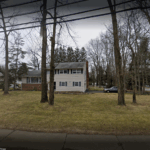
On June 4, 2024, a federal EPA inspector showed up at 409 Townes Street, Greenville, South Carolina 29601. Goin’ South Home Rescue was actively working inside the property at that very moment. The home was built before 1978, which under federal law automatically classifies it as “target housing,” meaning it carries a legal presumption of potential lead-based paint hazards.
The inspector asked a simple question: show us your EPA firm certification for lead-safe renovation work. The company could not produce it. Not just on the day of the inspection. The EPA documents confirm Kym Petrie, LLC was “unable to provide records to the inspector documenting that prior to offering to perform, and performing renovation work at the Property, Respondent had applied for or obtained ‘firm certification.'” They had never applied. They had never obtained it.
Federal law under the Toxic Substances Control Act (TSCA), specifically 40 C.F.R. §§ 745.81(a)(2)(ii) and 745.89(a)(1), requires any firm performing paid renovation work on pre-1978 housing to hold EPA certification. This rule exists because renovation work that disturbs painted surfaces, including sanding, scraping, window repair, wall removal, and surface restoration, releases lead dust. Lead dust is a neurotoxin with no safe level of exposure for children.
EPA Consent Agreement, Finding of Fact No. 16
The Rule Is Not Complicated. They Just Skipped It.
The EPA’s Renovation, Repair, and Painting Rule is one of the most straightforward compliance requirements in environmental law. A firm that does paid renovation work on pre-1978 homes submits an application and gets certified. That is it. The certification process exists specifically to ensure workers know how to contain lead dust, protect occupants, and clean up properly after the job.
Goin’ South Home Rescue skipped the application entirely. The EPA’s enforcement documents do not allege a lapsed certification, an expired certification, or a paperwork error. They allege the company never sought certification at all. The company was working for compensation, which triggers the full legal requirement, and at no point in the company’s operating history prior to this enforcement action had it complied with the rule.
The Timeline: From Job Site to Federal Order
Timeline of events: EPA inspection to final enforcement order. The gap between the inspection and the signed consent agreement spans over a year.
The Non-Financial Ledger
What $670 Cannot Cover
Lead poisoning does not look like a dramatic emergency. It looks like a kid who seems a little slower to pick up new words. A child who gets frustrated more easily. A teenager who struggles in school and nobody can explain why. By the time the damage is visible, it has already been done inside the developing brain, and it is permanent. There is no cure for lead poisoning. There is no reversing the neurological damage once it occurs. Every federal protection around lead in renovations exists because the medical community has been unambiguous: there is no safe blood lead level in children.
When a renovation firm disturbs painted surfaces in a pre-1978 home without lead-safe certification, it is not just cutting a bureaucratic corner. Workers who are uncertified have not been trained in the specific containment procedures that prevent lead dust from spreading through a home’s HVAC system, settling into carpet fibers, coating countertops, or embedding in soil around the property’s foundation. Uncertified renovation work turns a family’s home into a contamination zone and the family has no way of knowing it happened.
The residents of 409 Townes Street, Greenville, South Carolina, have no named role in this enforcement document. They are referenced only as the location of a violation. Whether children lived there, whether a pregnant person was inside during the renovation, whether the family was low-income and chose this contractor because they offered the most affordable bid: none of that is in the record. The federal enforcement apparatus processed this as a paperwork violation. It assessed the same kind of penalty you might receive for a minor traffic infraction, and it moved on.
The company’s name, “Goin’ South Home Rescue,” implies a mission of restoration. It implies trust. Homeowners and renters who hire a firm called “Home Rescue” are putting their safety and their family’s safety in that company’s hands. The betrayal embedded in this case is the gap between the brand promise and the reality: a company that marketed itself as a rescuer sent uncertified workers into a potentially lead-contaminated home and collected payment for it. The residents were given no warning, no lead-safe work plan, and no documentation that federal rules were even supposed to apply. That is not a paperwork gap. That is a failure of the most basic duty of care owed to the people whose homes you enter for money.
Legal Receipts: Straight From the Documents
What the Federal Record Actually Says
“Respondent is, and was at all times relevant to this CAFO, a ‘firm’ that performs ‘renovations’ for compensation as those terms are defined at 40 C.F.R. § 745.83.”
EPA Consent Agreement, Finding of Fact No. 13. The company was doing paid work. The rule applied. They ignored it.
“At the time of the inspection, and subsequent to the inspection, Respondent was unable to provide records to the inspector documenting that prior to offering to perform, and performing renovation work at the Property, Respondent had applied for or obtained ‘firm certification’ as required by 40 C.F.R. §§ 745.81(a)(2)(ii) and 745.89(a)(1).”
EPA Consent Agreement, Finding of Fact No. 16. Even after the inspection, after being caught, the company still could not produce a certification because none existed.
“Respondent failed to apply to the EPA and obtain ‘firm certification’ to perform, offer, or claim to perform renovations for compensation, in violation of 40 C.F.R. §§ 745.81(a)(2)(ii) and 745.89(a)(1).”
EPA Consent Agreement, Alleged Violations, Section V, No. 17. This is the federal government’s formal accusation, settled without a fight.
“[Respondent] neither admits nor denies the factual allegations set forth in Section IV (Findings of Facts) of this CAFO.”
EPA Consent Agreement, Stipulations, Section VI, No. 19(b). The company settled without ever being forced to admit what it did.
“Respondent consents to the payment of a civil penalty… in the amount of SIX HUNDRED AND SEVENTY DOLLARS ($670.00), which is to be paid within thirty (30) days of the Effective Date of this CAFO.”
EPA Consent Agreement, Terms of Payment, Section VII, No. 22. $670 (roughly what a part-time worker earns in a single week at minimum wage) is the total price for federal lead safety violations in a family’s home.
The Numbers: Putting $670 in Context
The $670 penalty paid by Goin’ South Home Rescue compared to everyday costs and the maximum TSCA statutory penalty. The law allowed for penalties of over $44,000 per violation per day. They paid $670 total.
Societal Impact Mapping
Public Health: Lead Paint Is Not a Historical Problem
The federal government classified pre-1978 homes as “target housing” for a reason. The United States banned lead-based paint for residential use in 1978, but the CDC estimates that approximately 24 million homes in America still contain deteriorated lead paint or lead-contaminated dust. Greenville, South Carolina, like many mid-sized Southern cities, contains a significant stock of older housing, much of it occupied by working-class and lower-income families who have fewer options to move when a renovation goes wrong.
The EPA’s Renovation, Repair, and Painting Rule, the exact rule Goin’ South Home Rescue violated, was designed to close the gap between “old house with lead paint” and “family unknowingly exposed during renovation.” Certified firms are required to use lead-safe work practices: plastic sheeting, HEPA vacuums, wet-wiping methods, and post-renovation cleaning verification. Without those practices, renovation activities like sanding floors, scraping window frames, or tearing out walls can send lead dust concentrations to levels hundreds of times above what the CDC considers a level of concern for children. The dust settles invisibly. Families breathe it. Children play on floors coated with it.
Lead exposure in children causes irreversible damage to the developing brain and nervous system, including lowered IQ, shortened attention span, increased impulsive behavior, and hearing loss. At higher levels, it causes seizures, coma, and death. The people most likely to live in pre-1978 target housing are also the people least likely to have health insurance coverage robust enough to fund the neurological evaluations, blood testing, and long-term developmental support that lead exposure requires. The $670 fine against Goin’ South Home Rescue does not fund a single blood lead level test for the residents of 409 Townes Street.
Economic Inequality: The Affordability Trap
Older housing is cheaper housing. The people living in pre-1978 homes are disproportionately low-income families, elderly residents on fixed incomes, and communities of color, groups that have historically been steered toward older, more affordable housing stock through decades of discriminatory lending and redlining. When those families hire a renovation contractor, they are often choosing the most affordable option available. Uncertified firms frequently undercut certified competitors on price precisely because they are skipping the compliance costs.
This creates a perverse market dynamic: the families most at risk from lead exposure are the most likely to hire the contractors least equipped to protect them. Certified lead-safe renovation firms carry training costs, certification fees, and compliance overhead. A firm that skips all of that can offer lower bids. Lower-income clients, operating under real financial pressure, choose the lower bid. The regulatory failure does not fall equally across income levels. It concentrates in the communities that already carry the highest burden of environmental health harm.
The $670 (less than one month of a low-income family’s utility bills in many Southern states) penalty assessed in this case does nothing to correct that market distortion. It does not make the certified firms more price-competitive. It does not compensate any resident for increased health risk. It does not fund community testing or notification programs. It simply closes a government file.
The Cost of a Life: Running the Numbers
What Now: Who to Watch and What to Do
The People and Entities Accountable
Kym Petrie, Owner signed the consent agreement on June 25, 2025, as the sole identified principal of Kym Petrie, LLC d/b/a Goin’ South Home Rescue, based at 708 Augusta Street, Greenville, SC 29605. The company certifies in the agreement that it is “currently in compliance with all relevant requirements” and that all violations “have been corrected,” but no independent verification mechanism is described in the document.
Regulatory Watchlist
- U.S. EPA Region 4 (Atlanta, GA): Lead-safe renovation enforcement for the southeastern United States, including South Carolina. This is the agency that caught this violation and should be tracking recidivism.
- EPA’s Renovation, Repair, and Painting Program: The national certification database where consumers can verify whether a renovation firm is actually certified before hiring them.
- South Carolina Department of Health and Environmental Control (SCDHEC): State-level environmental and public health oversight that runs parallel to federal EPA enforcement.
- Greenville County Building Inspections Office: Local oversight of residential renovation permits and contractor compliance within Greenville city limits.
Check Before You Hire. Seriously.
The EPA maintains a public database of certified renovation firms at epa.gov. Before any contractor enters your pre-1978 home for paid work, look them up. If they are not in the database, they are not certified. You have the right to demand proof of certification before work begins. You also have the right to report uncertified firms directly to your EPA Regional Office. For Greenville residents, that is EPA Region 4 in Atlanta.
If you rent in an older home and your landlord is hiring renovation contractors, you have legal rights under the federal Renovation, Repair, and Painting Rule to receive a lead hazard information pamphlet before work begins. Your landlord is required to distribute it. If they do not, that is a federal violation you can report. Community organizations like local tenant unions, neighborhood legal aid offices, and environmental justice groups can help you document violations and connect with enforcement resources without cost.
At the grassroots level: share EPA’s lead certification lookup tool with neighbors, especially in older neighborhoods. Mutual aid networks can post the tool at community boards, laundromats, and local social media groups. The families most at risk are the least likely to know these protections exist. Spreading that information is free, immediate, and directly protective of children’s health in your community.
The source document for this investigation is attached below.

The EPA’s source for this story can be found by visiting this link: https://yosemite.epa.gov/OA/RHC/EPAAdmin.nsf/Filings/CB31401608CE3EEA85258CF4006F4414/$File/Kym%20Petrie,%20LLC%20dba%20Goin%E2%80%99%20South%20Home%20Rescue%20CAFO%208-28-25%20TSCA-04-2025-6108(b).pdf
Kym’s Instagram can be found at https://www.instagram.com/goinsouth_/ please do not leave any hateful comments on her pictures
Explore by category
Antitrust
Monopolies and anti-competition tactics used to crush rivals.
View Cases →Product Safety Violations
When companies sell dangerous goods, consumers pay the price.
View Cases →Environmental Violations
Pollution, ecological collapse, and unchecked greed.
View Cases →Labor Exploitation
Wage theft, worker abuse, and unsafe conditions.
View Cases →Data Breaches & Privacy
Misuse and mishandling of personal information.
View Cases →Financial Fraud & Corruption
Lies, scams, and executive impunity that distort markets.
View Cases →Intellectual Property
IP theft that punishes originality and rewards copying.
View Cases →Misleading Marketing
False claims that waste money and bury critical safety info.
View Cases →