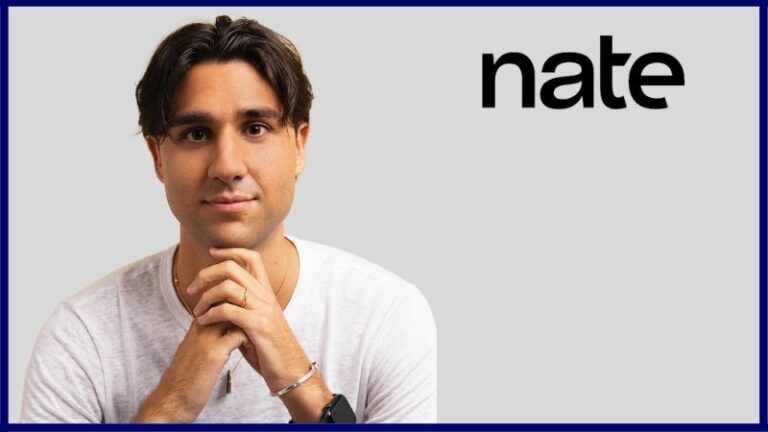
Nate Inc. CEO Alberto Saniger Charged with $42M AI Investment Fraud
Alberto Saniger falsely claimed his shopping app used artificial intelligence to automate purchases while secretly relying on manual workers in the Philippines, defrauding investors of over $42 million before the company collapsed.
Alberto Saniger, founder and CEO of Nate Inc., allegedly orchestrated a years-long securities fraud scheme from 2019 through 2022. He raised over $42 million by falsely telling investors his mobile shopping app used advanced artificial intelligence and neural networks to automatically complete purchases. In reality, virtually all orders were manually processed by overseas contract workers. When a June 2022 news report exposed the deception, the company collapsed, leaving investors with tens of millions in losses while Saniger had already pocketed $3 million from selling his own shares.
This case reveals how AI hype can mask fundamental fraud in the startup world.
The Allegations: A Breakdown
| 01 | Saniger falsely told investors during the 2019-2020 Seed Round that the Nate app used artificial intelligence to complete purchases, when in reality virtually all orders required manual processing by contract workers primarily located in the Philippines. | high |
| 02 | In February 2020, Saniger claimed to Investor A that the app’s automation success rate ranged from 93% to over 99%, a statement contradicted by evidence that virtually all orders at that time were manually completed by human workers. | high |
| 03 | During the Series A Round in spring 2021, Saniger distributed pitch decks claiming Nate’s neural networks could understand HTML and transact on websites like consumers do, despite knowing the company still lacked working AI and relied on manual processing. | high |
| 04 | Saniger directed engineers to be on standby during investor product demonstrations to manually process orders behind the scenes, creating the false appearance that the app automatically completed purchases through AI. | high |
| 05 | Saniger provided engineers with a VIP list of potential investor email addresses so their orders could be manually prioritized and completed quickly, falsely suggesting the app functioned autonomously for these key prospects. | high |
| 06 | Saniger instructed automation engineering teams not to report on the actual status of AI development to other Nate employees, deliberately keeping most staff unaware that the claimed technology did not exist. | medium |
| 07 | Even after the Series A Round closed in June 2021, a Nate automation employee confirmed to Saniger in a Slack message on June 11, 2021 that the automation rate was essentially zero, yet Saniger continued pursuing additional funding. | high |
| 08 | When Nate eventually deployed automated bots in fall 2021 after the Series A Round, these tools were far less sophisticated than the advanced AI and neural networks Saniger had repeatedly described to investors. | medium |
| 01 | Despite multiple fundraising rounds involving substantial capital and numerous sophisticated investors, Saniger allegedly operated for over three years without his false AI claims being detected or challenged by regulators. | medium |
| 02 | The alleged fraud only came to light after a June 2022 news article in The Information publicly questioned Nate’s AI claims, not through proactive regulatory oversight or internal company whistleblowing. | medium |
| 03 | Venture capital investors conducting due diligence failed to detect the deception despite directly asking about automation rates and receiving detailed but allegedly false responses from Saniger. | medium |
| 04 | The SEC filed its enforcement action in April 2025, more than two years after Nate dissolved in January 2023, highlighting the delayed nature of regulatory accountability in private securities fraud cases. | low |
| 01 | Saniger personally sold approximately $3 million of his own Nate shares to Investor D in June 2021 during the Series A Round, a time when he knew the app still relied heavily on manual processing rather than the AI he was promoting. | high |
| 02 | Saniger raised over $42 million across two major funding rounds by consistently overstating the technological capabilities of his company, prioritizing capital acquisition over truthful disclosure. | high |
| 03 | The company’s pitch materials described Nate as a digital assistant able to transact online without human intervention and as the first non-human executive assistant, claims designed to maximize investor interest despite being false. | high |
| 04 | Saniger continued soliciting investments for a planned Series B offering even after June 2021 when internal communications confirmed the automation rate was essentially zero, demonstrating persistent pursuit of capital despite known misrepresentations. | high |
| 01 | Investors lost substantially all of their investments totaling tens of millions of dollars when Nate dissolved in January 2023 without returning any funds to shareholders. | high |
| 02 | Investor A invested $4 million in the Seed Round in April 2020 and an additional $5.4 million in the Series A Round, decisions heavily influenced by Saniger’s false representations about AI capabilities, and received nothing back. | high |
| 03 | Investor B invested $4 million in March 2020 based on Saniger’s claims that Nate used neural networks to process purchases in only 10 seconds, and has not received any money back to date. | high |
| 04 | The Series A Round raised approximately $34 million in total from multiple investors including Investors C and D, all of whom suffered complete losses when the company collapsed following the exposure of its AI claims. | high |
| 05 | After The Information published its article casting doubt on Nate’s AI claims in June 2022, the company became unable to complete its planned Series B offering, leading directly to the cessation of operations. | medium |
| 06 | Saniger dissolved Nate in January 2023 through a California Assignment for the Benefit of Creditors, a formal process that left investors with no recovery despite their tens of millions in capital contributions. | high |
| 01 | Saniger terminated all of Nate’s employees in January 2023 when the company ceased operations, leaving workers jobless after the fraud was exposed and funding dried up. | medium |
| 02 | The company relied on contract workers primarily located in the Philippines to manually complete virtually all purchase orders placed through the app, work that was misrepresented to investors as being performed by advanced AI. | medium |
| 03 | Saniger deliberately kept most Nate employees in the dark about the true status of AI development by instructing automation engineering groups not to report on this information to other staff members. | medium |
| 04 | Engineers were required to be on standby during investor demonstrations and to manually process VIP investor orders to maintain the false appearance of AI functionality, making them unwitting participants in the deception. | low |
| 01 | Saniger controlled all aspects of Nate’s business and oversaw engineering teams, receiving regular updates that the company had yet to develop working AI, yet continued making false claims to investors throughout the relevant period. | high |
| 02 | When Investor A specifically asked in February 2020 about the failure rate in terms of when a human needs to get involved, Saniger responded with fabricated automation success statistics rather than disclosing the truth about manual processing. | high |
| 03 | Saniger approved and controlled the content of pitch decks used in both funding rounds, materials that falsely described the app as using intelligent automation and neural networks that could understand HTML. | high |
| 04 | The alleged fraud continued for over three years from spring 2019 through at least December 2022, during which time Saniger had multiple opportunities to correct his misrepresentations but instead perpetuated them. | high |
| 05 | Even after being informed on June 11, 2021 via Slack that Nate’s automation rate was essentially zero, Saniger failed to correct prior misrepresentations to Series A investors who had just invested based on AI claims. | high |
| 01 | Saniger orchestrated product demonstrations where engineers worked behind the scenes to manually complete test purchases, deliberately creating the false impression that AI was automatically processing the orders. | high |
| 02 | The Seed Round Pitch Deck described Nate as the first non-human executive assistant that can buy anything, anywhere, a claim designed to excite investors despite the reality of manual processing by human workers. | high |
| 03 | The Series A Pitch Deck specifically claimed that Nate’s neural networks understand HTML and transact on websites in the same way consumers do, using technical language to suggest sophisticated capabilities that did not exist. | high |
| 04 | Saniger provided engineers with email addresses of VIP potential investors so their orders would receive priority manual processing, ensuring these key prospects experienced quick service that falsely appeared to be automated. | medium |
| 05 | Before launching the app to the general public in July 2020, Nate made it available to certain users including potential Seed Round investors, allowing Saniger to control early experiences and shape perceptions. | medium |
| 01 | Saniger sold $3 million of his personal Nate stock to Investor D in June 2021, personally profiting from the inflated company valuation created by his alleged misrepresentations about AI capabilities. | high |
| 02 | While Saniger secured his $3 million from the stock sale during the Series A Round, the investors who purchased shares in that same round later lost tens of millions of dollars when the company collapsed. | high |
| 03 | The contrast between Saniger’s personal enrichment and complete investor losses illustrates how founders can monetize perceived value even when that value is built on alleged fraud and misrepresentation. | high |
| 04 | Saniger controlled information flow within the company and to investors, using his position of authority and superior knowledge to perpetuate a false narrative that benefited him financially. | medium |
| 01 | The Nate case represents an alleged multi-year securities fraud scheme where a CEO systematically deceived investors about core technological capabilities to raise over $42 million, resulting in complete losses for those investors. | high |
| 02 | The SEC is seeking permanent injunctions preventing Saniger from future securities violations and from participating in security offerings, along with disgorgement of ill-gotten gains, civil penalties, and an officer and director bar. | medium |
| 03 | This case serves as a warning that bold claims about revolutionary AI technology require independent verification, as sophisticated pitch materials and demonstrations can mask fundamental deception. | medium |
| 04 | The collapse of Nate following public scrutiny demonstrates that investor losses from startup fraud are often total and unrecoverable, with founders having already extracted personal wealth before the truth emerges. | high |
Timeline of Events
Direct Quotes from the Legal Record
“Saniger marketed Nate as a mobile shopping application that used artificial intelligence to complete users’ purchases across a variety of retail platforms. While soliciting investors, Saniger touted the app’s purported reliance on AI, including machine learning and neural networks, to process transactions. But as Saniger knew or recklessly disregarded, the Nate app did not use AI to complete purchases.”
💡 This establishes the central lie that Saniger allegedly told investors for years while raising over $42 million.
“Saniger told one investor that the app’s automation rate was above 90% when in fact virtually all orders entered on the app at that time had to be placed manually, behind the scenes, by contract workers in the Philippines and elsewhere.”
💡 This shows Saniger allegedly provided specific false statistics to investors conducting due diligence.
“Saniger misrepresented to Series A investors that the Nate app functioned based on AI, including neural networks that understand HTML and transact on websites in the same way consumers do.”
💡 This technical claim was designed to impress sophisticated investors with advanced AI capabilities that did not exist.
“As a Nate automation employee confirmed for Saniger in a June 11, 2021 Slack message, Nate’s automation rate was essentially zero.”
💡 This internal communication proves Saniger knew the automation rate was zero right after closing the Series A Round where he claimed AI functionality.
“During the Relevant Period, Nate also conducted product demonstrations for investors that made it falsely appear that the app was automatically completing purchases, when in fact, at Saniger’s direction, Nate engineers and others worked behind the scenes to manually process the orders.”
💡 This reveals how Saniger allegedly directed employees to actively deceive investors during demonstrations.
“Saniger also provided Nate engineers with the email addresses for a VIP list of potential investors so that any orders later placed by those investors could be promptly completed through the manual involvement of Nate workers. This was similarly designed to give potential investors the false impression that the Nate app was functioning as claimed and autonomously completing the investors’ online purchases.”
💡 This shows premeditated deception targeting the most important investor prospects with fake automation.
“Saniger personally profited from his fraud, including by selling approximately $3 million of his own Nate shares to a Series A investor in June of 2021.”
💡 This demonstrates Saniger personally enriched himself from the fraud while investors later lost everything.
“Saniger instructed the automation engineering groups that they were not to report on the status of AI development to other Nate employees. As a result, most Nate employees lacked visibility into the status of the company’s AI technology.”
💡 This reveals deliberate compartmentalization to hide the truth from most company employees.
“Saniger also provided Investor A with written materials in the form of a pitch deck describing Nate as a digital assistant able to transact online without human intervention and as the first non-human executive assistant that can buy anything, anywhere.”
💡 The marketing materials explicitly promised no human intervention when the entire operation depended on manual human labor.
“After a news report cast doubts on Nate’s claimed use of AI in June 2022, Saniger failed to complete a Series B round, and the company ceased operations. Nate formally dissolved in January 2023, leaving investors with losses of substantially all their investments, totaling tens of millions of dollars.”
💡 This outcome shows investors lost essentially everything when the truth emerged, while Saniger had already extracted personal wealth.
“Based on Saniger’s communications with Nate’s engineering teams, he knew or recklessly disregarded, that, contrary to his representations to Seed Round investors, the Nate app did not use AI to complete purchases on the app and instead required manual processing for all transactions.”
💡 This establishes Saniger’s knowledge of the falsity of his claims through direct communications with engineers.
“By virtue of updates Saniger received from Nate’s engineering teams, Saniger was aware that, at the time of the Series A Round, Nate still lacked a working AI model for the app and continued to rely on manual processing of transactions. Nevertheless, Saniger falsely represented to prospective Series A investors that the app was using AI technology.”
💡 This shows the fraud continued and escalated into the larger Series A Round despite Saniger’s clear knowledge of the truth.
Frequently Asked Questions
You can read a press release about this illegal controversy on the Department of Justice’s website: https://www.justice.gov/usao-sdny/pr/tech-ceo-charged-artificial-intelligence-investment-fraud-scheme
The SEC also has a press release about this scumbag Alberto: https://www.sec.gov/enforcement-litigation/litigation-releases/lr-26282
Explore by category
Antitrust
Monopolies and anti-competition tactics used to crush rivals.
View Cases →Product Safety Violations
When companies sell dangerous goods, consumers pay the price.
View Cases →Environmental Violations
Pollution, ecological collapse, and unchecked greed.
View Cases →Labor Exploitation
Wage theft, worker abuse, and unsafe conditions.
View Cases →Data Breaches & Privacy
Misuse and mishandling of personal information.
View Cases →Financial Fraud & Corruption
Lies, scams, and executive impunity that distort markets.
View Cases →Intellectual Property
IP theft that punishes originality and rewards copying.
View Cases →Misleading Marketing
False claims that waste money and bury critical safety info.
View Cases →