$24 Per Poison Device: North Coast Diesel Sold 2,497 Defeat Devices and Paid a Fine Smaller Than a Used Car
The Non-Financial Ledger: What the Fine Doesn’t Cover
There is no line item in EPA Docket CAA-05-2025-0005 for the kid with asthma who lives three blocks from a truck route. There is no settlement credit for the grandmother whose COPD got worse the same year North Coast Diesel was selling its third hundred defeat devices. The federal consent agreement names a dollar figure. It does not name a single victim.
Defeat devices do one thing with extraordinary efficiency: they turn off the pollution controls that engineers spent decades designing so the rest of us could breathe. The Exhaust Gas Recirculation system, the Diesel Particulate Filter, the Selective Catalytic Reduction system. These are not bureaucratic inconveniences. They are the difference between a diesel truck that pumps out nitrogen oxides and fine particulate matter at legal levels, and one that dumps pollutants at rates that can be ten, twenty, or forty times higher. When a tuner or an EGR delete kit hits the road, those excess emissions do not stay with the truck. They drift into neighborhoods. They settle into lungs.
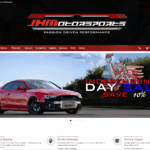
NCD sold 2,497 of these devices over roughly 46 months. That is not a rounding error. That is a catalog. Tunes, tuners, exhaust kits, EGR block plates, advertised and shipped through an e-commerce storefront to customers across the United States. Every customer who bought one and installed it on a truck put a rolling pollution violation on public roads. Not for a day. For years. The Clean Air Act does not have an expiration date on these harms.
The people who bear the cost of this are not in the room when the consent agreement gets signed. They are in emergency rooms, in pediatric pulmonology waiting areas, in houses near freight corridors, in communities that have learned to stop fighting every diesel truck that rolls through because what’s the point. The regulatory process that concluded with a $60,000 fine does not record their names. This section does.
Tyler Brancifort, the owner of NCD LLC, signed the consent agreement on April 21, 2025. He certified that the defeat devices were removed from NCD’s own vehicles and that the company had stopped selling. The EPA took that certification at face value and closed the civil penalty case. What cannot be closed: the particulate matter already in the air, the NOx already deposited into the regional atmosphere, the cumulative lung burden carried by people who never consented to being the exhaust recipients of 2,497 tuning jobs.
The settlement requires NCD to send a notification letter to every customer who purchased a defeat device. Those letters are written in the passive, legalistic voice of compliance. They do not say: we knew what these devices do, we sold them anyway, and we are sorry. They say: we entered into a settlement with the EPA. That is the full extent of accountability the settlement demands in human terms.
The Paper Trail: A Chronology of Violation and Settlement
From first illegal sale to final order, this case spans over five years. The enforcement action itself took 19 months from the EPA’s Information Request to the signed Final Order.
Between the first sale in January 2020 and the final order in May 2025, NCD’s defeat devices were on public roads for over five years. The EPA’s enforcement clock didn’t start ticking until October 2023, three and a half years into the violation period.
- NCD submitted its own invoice data confirming 2,497 sales spanning January 2020 to October 2023. The company essentially handed the EPA its own case file.
- The EPA issued the Finding of Violation on March 4, 2024, and held a conference with NCD on April 19, 2024. Within that same conference, NCD certified it had already removed defeat devices from its own fleet.
- The gap between the April 2024 conference and the May 2025 final order is approximately 13 months. The consent agreement was filed with the Regional Hearing Clerk on May 16, 2025, by EPA Region 5.
Legal Receipts: What the Government’s Own Documents Admit
Every quote below is pulled verbatim from EPA Docket CAA-05-2025-0005, the Consent Agreement and Final Order filed May 16, 2025. No paraphrasing. No editorializing. Just what the federal government put in writing.
“The information submitted by NCD indicates that between January 1, 2020, and October 16, 2023, NCD sold, offered to sell, and/or caused the sale of approximately 2,497 defeat devices which included tunes, tuners, exhaust kits, and EGR block plates.”
- NCD itself provided the invoice data that confirmed 2,497 sales. This was not discovered through independent investigation. The company handed the EPA the number.
- The product categories are specific: tunes (ECM reprogramming to disable emission controls), tuners (hardware devices that alter engine management), exhaust kits (pipe replacements that remove DPF systems), and EGR block plates (physical hardware that blocks the Exhaust Gas Recirculation port, preventing the NOx-reduction loop from functioning).
- The phrase “caused the sale of” in addition to “sold” suggests NCD may have facilitated transactions through third parties, expanding the actual distribution footprint beyond direct retail.
“NCD knew or should have known that such part or component was being offered for sale or installed for such use or put to such use.”
“EPA finds that NCD manufactured, sold, offered to sell, and/or caused the sale of parts or components, intended for use with, or as part of, a motor vehicle or motor vehicle engine, where a principal effect of the part or component was to bypass, defeat or render inoperative elements of design that control emissions, such as the EGR, DPF, SCR, catalyst, OBD systems and/or other elements of design on motor vehicles and motor vehicle engines, and NCD knew or should have known that such part or component was being offered for sale or installed for such use or put to such use.”
- The phrase “principal effect” is legally significant. It means the primary function of these products is to destroy emission controls. These are not dual-use items sold for a legitimate purpose that happen to have a side effect. Their main job is to defeat pollution law.
- The document lists EGR, DPF, SCR, catalyst, and OBD systems as specifically targeted. These are the five main pillars of modern diesel emissions control. NCD’s product catalog targeted all of them.
- The “knew or should have known” standard is intentional. The law does not require proof of bad faith. Running a diesel performance shop and selling products called “EGR delete kits” is legally sufficient notice that you know what you are selling.
“Respondent agrees to pay a civil penalty in the amount of $60,000 (Assessed Penalty) within thirty (30) days after the date the Final Order ratifying this Agreement is filed with the Regional Hearing Clerk. EPA conducted an analysis of Respondent’s financial information and determined Respondent has a limited ability to pay. Consequently, in accordance with applicable law, EPA determined that the Assessed Penalty is an appropriate amount to settle this action.”
- The EPA explicitly confirmed it analyzed NCD’s finances and concluded the company cannot pay more. The $60,000 figure is not a negotiated compromise between two strong parties. It is a floor set by the company’s financial condition.
- This creates an inherent perverse incentive in the enforcement system: a smaller operation that runs a high-volume defeat device business faces a smaller fine precisely because the business is small. The law’s maximum penalties assume larger corporate defendants.
- The settlement resolves only federal civil penalties for the violations specifically alleged. The CAFO explicitly preserves EPA’s right to seek criminal sanctions under CAA § 113(c) and to take future enforcement action for any new violations.
“The provisions of this CAFO shall apply to and be binding upon Respondent and its officers, directors, employees, successors, and assigns (including but not limited to Tyler Brancifort, owner of NCD, LLC/North Coast Diesel Performance).”
- Tyler Brancifort is named by full name in a binding federal enforcement order. His compliance history under the Clean Air Act now attaches to him personally, not just to the NCD LLC corporate entity.
- If Brancifort opens a new business and resumes selling defeat devices, the EPA can cite this CAFO as a prior enforcement action in any subsequent case. The corporate structure does not provide a clean slate.
- The phrase “successors and assigns” also means that if NCD LLC is sold or transferred, the new owner takes on the obligations of this CAFO, including the prohibition on selling defeat devices.
“Any violation of this CAFO may result in a civil judicial action for an injunction or civil penalties of up to $5,761 per part or component, as provided in Section 205(a) of the CAA, 42 U.S.C. § 7524(a), and 40 C.F.R. § 19.4, as well as criminal sanctions as provided in Section 113(c) of the CAA, 42 U.S.C. § 7413(c).”
- The EPA could have assessed up to $5,761 per defeat device sold. Across 2,497 devices, the maximum theoretical exposure was $14,386,417. The actual settlement was $60,000. The ratio is approximately 240 to 1.
- Any future violation of the CAFO itself is subject to the full per-component penalty, not the reduced “ability to pay” rate. The next time costs more.
- Criminal sanctions under CAA § 113(c) include the possibility of imprisonment. This case was resolved administratively without referral for criminal prosecution.
What the Industry Claims vs. What Federal Law Establishes
The defeat device aftermarket relies on a set of persistent claims to justify the products it sells. Federal regulators and the text of the CAA answer each of them directly.
Anatomy of a Defeat Device: What NCD Actually Sold and What It Destroys
The four product categories in the NCD invoice data are not random parts. Each one targets a specific layer of the diesel emissions control stack. Here is what each one does.
Societal Impact Mapping: Who Pays When Emission Controls Are Destroyed
The consent agreement resolves NCD’s federal civil liability. It does nothing to address the diffuse, ongoing harm deposited into the air, into lungs, and into the economic bottom of communities near freight corridors by 2,497 trucks with deliberately disabled pollution controls.
Public Health
Diesel exhaust with defeated emission controls generates two categories of pollutants at elevated concentrations: nitrogen oxides (NOx) and fine particulate matter (PM2.5). Both have documented, well-established health consequences.
- NOx reacts in the atmosphere to form ground-level ozone and secondary particulate matter. Ozone exposure triggers asthma attacks, reduces lung function in children, and increases emergency department visits. The EPA’s own congressional mandate, cited in the CAFO, notes that “the increasing use of motor vehicles has resulted in mounting dangers to the public health and welfare.” Defeat devices directly undermine the regulatory response to that documented danger.
- PM2.5 penetrates deep into the lungs and enters the bloodstream. Long-term exposure is linked to cardiovascular disease, stroke, lung cancer, and premature death. Diesel engines running without DPF systems produce unfiltered PM at rates that make the EPA’s emission standards meaningless in practice.
- The communities most exposed to freight diesel pollution are disproportionately low-income and communities of color, who live near highways, distribution centers, and port corridors because those neighborhoods are cheaper. The defeat device market concentrates its harm in exactly the places where health outcomes are already worst and where residents have the least political power to push back.
- Children and the elderly are disproportionately harmed by NOx and PM exposure. Pediatric asthma rates correlate with proximity to heavy diesel traffic. Nothing in NCD’s settlement requires it to pay for a single pediatric asthma inhaler, contribute to a single air quality monitoring program, or fund a single health study in the communities its customers drove through.
“Congress found that ‘the increasing use of motor vehicles has resulted in mounting dangers to the public health and welfare.’ Defeat devices dismantle the regulatory apparatus built to answer that finding, one truck at a time.”
Economic Inequality
- The Clean Air Act’s emission standards represent enormous public investment. Decades of research, rulemaking, legal battles, and infrastructure spending by federal, state, and local governments produced the technology stack that NCD’s products were designed to destroy. Every defeat device sold erodes the return on that public investment without the seller bearing any of its cost.
- States and municipalities that operate vehicle inspection and maintenance programs spend taxpayer money on emission testing infrastructure that defeat device tuners are specifically engineered to fool. Where OBD-based inspection systems exist, a defeat tune that suppresses fault codes allows a non-compliant truck to pass inspection. The public pays for the testing; the seller profits from defeating it.
- The $60,000 fine collected by the EPA does not fund any remediation, air quality program, or community health service. It goes to the federal Treasury as a civil penalty. The communities that absorbed the excess emissions from 2,497 trucks see none of it.
- Workers in the commercial trucking sector who comply with emission standards face higher operating costs for compliant vehicles and equipment. Operators who use defeat devices undercut them on operating expenses, creating a market advantage built on breaking environmental law. Compliance is expensive. Cheating is cheap. The enforcement gap sustains that asymmetry.
- The “limited ability to pay” reduction in NCD’s fine is itself a symptom of economic inequality in enforcement. Large corporate defendants with legal teams and lobbying power negotiate penalties in a different league than small operators. But small operators who run high-volume defeat device operations cause real harm. The penalty structure does not scale to the harm caused; it scales to the defendant’s balance sheet.
The “Cost of a Life” Metric: The Math That Should Make You Furious
To put $60,000 in context: according to NCD’s own invoice data, 2,497 defeat devices were sold over roughly 46 months. At $24 per device, the fine per unit is less than what most diesel shops charge for a single hour of labor. The deterrence value of a penalty this small against the revenue generated by selling 2,497 defeat devices is, at best, unclear.
- The EPA explicitly noted it reduced the fine due to NCD’s “limited ability to pay.” This is a legal accommodation under applicable penalty policy, but it means the company’s financial condition determined the environmental accountability outcome, not the scale or duration of the violation.
- The consent agreement does not require any supplemental environmental project (SEP), community benefit payment, air quality offset, or health mitigation fund. The only money changing hands is the $60,000 going to the federal Treasury.
- Future violations of the CAFO carry the full $5,761 per-component maximum, with no “ability to pay” accommodation available in a repeat-offense civil judicial action. The next fine, if it comes, will be larger. The question is whether the first fine was large enough to ensure the next one is never needed.
What Now? Who to Watch and What to Do
The consent agreement is final. The penalty is set. Tyler Brancifort has certified compliance. What comes next depends on who is watching and whether anyone forces accountability beyond the minimum required by the settlement.
Who Is Bound by This Order
- Tyler Brancifort, Owner, NCD LLC / North Coast Diesel Performance — Named directly and personally in CAFO Paragraph 50. His compliance history attaches to any future business entity he owns or operates.
- NCD LLC as a corporate entity — Including all successors, assigns, officers, directors, and employees. If the business is sold or restructured, the new entity inherits these obligations.
What NCD Is Required to Do (Active Obligations)
- Within 14 days of signing: Remove all defeat device advertising from its website and social media platforms.
- Within 14 days of signing: Post the EPA settlement announcement on its website homepage and all social media accounts. The announcement must remain posted for at least 60 days.
- Within 30 days of signing: Notify every customer who purchased a defeat device, in writing, by certified mail or e-mail with return receipt requested.
- All vehicles and engines owned or operated by NCD must remain at factory ECM settings with no defeat devices installed.
- Pay $60,000 within 30 days of the Final Order filing date. Late payment triggers interest, a 10% quarterly penalty, and potential referral to the IRS for offset against tax refunds.
Regulatory Watchlist
- U.S. EPA Region 5 Air Enforcement and Compliance Assurance Branch — The office that brought this case. Contact: R5airenforcement@epa.gov. If NCD resumes selling defeat devices, this is the enforcement body with existing jurisdiction and case history.
- EPA Office of Enforcement and Compliance Assurance (OECA) — National oversight of CAA enforcement. The national defeat device campaign is an active OECA priority. New complaints about defeat device sellers can be submitted through EPA’s enforcement tip line.
- U.S. Department of Justice, Environment and Natural Resources Division — The Attorney General is authorized under the CAFO to bring civil judicial action to recover unpaid penalties. Criminal referrals for CAA violations also route through DOJ.
- Connecticut Department of Energy and Environmental Protection (DEEP) — State environmental agency with independent authority to enforce Connecticut air quality laws. The federal settlement does not preclude state enforcement action.
- Internal Revenue Service — The CAFO requires EPA to file IRS Form 1098-F on this settlement. The IRS can administratively offset any unpaid portion of the penalty against NCD’s federal tax refunds.
What You Can Do
- File a tip with EPA Region 5 if you have evidence that NCD or any other defeat device seller has resumed operations after signing a consent agreement. Document dates, product names, and purchase receipts. Contact R5airenforcement@epa.gov.
- Support community air quality monitoring organizations in freight corridors and urban areas near highway infrastructure. Groups like the Clean Air Task Force, the Sierra Club’s Beyond Diesel campaign, and local environmental justice organizations track diesel emissions enforcement and can amplify pressure on regulators to pursue maximum penalties.
- Demand stronger penalty scaling from your federal representatives. The “limited ability to pay” accommodation is a policy choice embedded in EPA enforcement guidelines, not a hard legal requirement in every case. Congressional oversight of EPA penalty policies and pressure to fund SEP (Supplemental Environmental Project) requirements in consent agreements are actionable policy targets.
- Talk to your neighbors near freight routes. Diesel exhaust harm is most concentrated in specific corridors. Local organizing around municipal anti-idling ordinances, truck route restrictions, and community benefit agreements with logistics companies is where the most immediate harm reduction happens, since federal enforcement moves slowly and under-resources the problem.
The source document for this investigation is attached below.
NCD LLC has a Facebook page which count can be found here: https://www.facebook.com/NorthCoastDieselPerformance/
Tyler B. / NCD LLC’s phone number is 860-807-6007