
122,800 Gallons, One Creek, Zero Containment
Filed: November 24, 2025 | EPA Docket No. CWA-07-2024-0046The Non-Financial Ledger
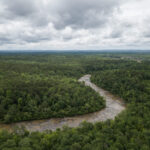
Cow Creek is a real, perennial stream, which means it flows year-round. It is connected to the Arkansas River, one of the major river systems crossing the central United States. People fish in these waters. Do people who catch those fish eat those fish? Who knows! Probably shouldn’t though! Also! People even have properties on these banks. Wildlife depends on the basin. The creek does not know that the companies upstream decided their safety paperwork was optional.
For at least nine years, from August 28, 2016 through the 2023 inspection, a facility holding over one hundred thousand gallons of oil sat upstream from that creek without the structural protections the law requires. No secondary containment sized for the largest single container. No certified analysis confirming the facility did or did not pose a substantial harm risk if it spilled. No vehicle warning signs around exposed above-ground piping that trucks and equipment routinely passed. The machinery that could have shielded that creek was never built or maintained to standard.
Think about what an oil spill into Cow Creek would have meant. Oil in a perennial stream does not stay still. It moves downstream. It coats the surface. It suffocates benthic organisms, the insects and invertebrates at the base of the food web. It contaminates the sediment for years. It can reach the Arkansas River. The federal government recognized all of this when it wrote the Clean Water Act and the SPCC regulations. The companies signed paperwork saying they understood their obligations. The EPA inspection in 2019 showed they were not meeting those obligations. And still, years passed.
There is also the matter of the workers at the facility. They handled oil products as part of their daily jobs. The SPCC regulations require that oil-handling personnel be trained on spill prevention and that the facility conduct regular discharge briefings. The EPA found those trainings were not being conducted as required. The people working closest to those tanks, the ones who would have been first on scene in a spill, were not given the preparation the law mandated. Their safety, not just the creek’s, was part of what went unaddressed.
The companies paid $40,422. That amount cannot be mapped onto what a spill into a navigable waterway would have cost in cleanup, ecological damage, and loss to the communities downstream. The fine reflects what the government was willing to accept in settlement, not the value of what was at risk.
Legal Receipts
Every quote below comes verbatim from the EPA Complaint and Consent Agreement/Final Order, Docket No. CWA-07-2024-0046, filed November 24, 2025.
The Respondents have been out of compliance with 40 C.F.R. Part 112 since at least August 28, 2016.
- This is the EPA’s own legal finding establishing the start date of non-compliance. The facility was violating federal oil spill prevention regulations for at least nine years before the final order was filed.
- The date August 28, 2016, is the date the original deficient SPCC plan was put into use. No compliant amendments were ever made to that plan until the eve of the May 2023 inspection.
The Revision indicated that sometime in July of 2021, Respondent had replaced the bulk tank area’s steel tanks with polyethylene tanks, along with other technical changes. No amendments were made to the Plan from approximately August 28, 2016, until the date of the Revision.
- This is the infrastructure concealment. In July 2021, the companies replaced the material composition of their bulk storage tanks, a physical change that the SPCC regulations explicitly require to trigger a plan review and amendment. They did not do so.
- The “Revision” referenced was handed to EPA inspectors on May 9, 2023, the day before the scheduled EPA inspection. The EPA’s own documentation establishes this timing, meaning the companies updated their paperwork in direct anticipation of regulatory scrutiny, not out of genuine compliance.
A discharge from the Facility would flow to Cow Creek, which is a perennial stream with continuous flow. Cow Creek is connected to the Arkansas River, which is a traditionally navigable water.
- This establishes legal and physical connectivity between the Hutchinson facility and a federally protected navigable waterway. A spill would not have been a local incident. It would have entered the interstate waterway system.
- The phrase “traditionally navigable water” carries specific federal legal weight under the Clean Water Act. It places full federal jurisdiction and penalty authority over any discharge from this facility into that watershed.
Respondents neither admit nor deny the factual allegations asserted above by the EPA.
- This is the standard consent agreement language. The companies paid $40,422, waived all hearing and appeal rights, and accepted a binding Federal Order, while officially neither confirming nor denying that any of the eleven violations actually happened.
- This framing protects the companies from the documented violations being used as admissions in any future civil litigation by downstream landowners, municipalities, or affected communities.
“Facility staff provided a revised SPCC plan to EPA representatives on the day of the May 10, 2023, inspection, and informed EPA that they had received the Revision the day before the inspection.”
Societal Impact Mapping
Environmental Degradation
The physical environment around Cow Creek and the downstream Arkansas River basin carried the entire weight of this company’s compliance failures.
- The facility held approximately 122,800 gallons of oil. The EPA’s own regulations classify any discharge from this facility as potentially harmful to public health and welfare, given the volume and proximity to Cow Creek, a perennial stream with continuous flow.
- The facility lacked secondary containment structures sized for the capacity of its largest single container, per violations of 40 C.F.R. § 112.8(c)(2). Secondary containment is the last structural barrier between a tank failure and an environmental release. Its absence meant any significant leak or rupture would have discharged directly into the surrounding ground and drainage.
- The companies made significant physical changes to tank infrastructure in July 2021, replacing steel tanks with polyethylene tanks, without updating their environmental compliance plan. This left regulators and emergency responders working from an outdated map of the facility’s hazards for at least two years.
- Cow Creek flows into the Arkansas River, a traditionally navigable water under federal law. Oil contamination in connected waterway systems does not respect municipal or state boundaries; it moves with the current, affecting ecology and water quality for every community downstream.
Public Health
The public health consequences of a major oil spill from this facility would have reached well beyond the facility fence line.
- The facility failed to train oil-handling personnel as required under 40 C.F.R. § 112.7(f)(1). Workers who routinely handled petroleum products were not given the legally required instruction on spill prevention protocols, meaning a preventable incident could have escalated due to untrained first response from the people on site.
- The facility failed to conduct discharge briefings as required by 40 C.F.R. § 112.7(f)(3). These briefings exist to keep workers and supervisors current on spill risks and response procedures. Their absence created an ongoing information gap about active hazards at the facility.
- The facility did not warn vehicles entering the site about aboveground piping that could be endangered, in violation of 40 C.F.R. § 112.8(d)(5). A vehicle strike on unprotected aboveground oil piping is one of the most common triggers of industrial oil releases. No signs meant no warning for truck drivers, delivery personnel, or contractors.
- The facility also failed to complete a Certification of the Applicability of the Substantial Harm Criteria under 40 C.F.R. § 112.20(e). This certification is how the EPA determines whether a facility needs an even more robust emergency response plan. By never completing it, the companies allowed the question of how catastrophic their spill risk actually was to go unanswered.
Economic Inequality
The economic math of this enforcement action reflects a well-established pattern: environmental risk is borne by communities, and the cost of getting caught is priced into doing business.
- The total civil penalty was $40,422. A facility storing 122,800 gallons of petroleum products, operating in violation of federal regulations for at least nine years, settled with the federal government for a sum that a mid-sized oil distribution business could absorb in a single quarter without meaningful disruption.
- The communities adjacent to Cow Creek and the Arkansas River corridor, the people whose drinking water, fisheries, and property values would have been destroyed by a major oil release, received no compensation, no remediation funds, and no direct notice under this consent agreement.
- The four respondent entities are limited liability companies and corporations organized under Kansas state law. The LLC structure limits personal liability for the owners and operators, meaning that even the $40,422 penalty is insulated from any individual’s personal assets. The environment takes the full risk. The corporate structure limits the downside.
- By neither admitting nor denying the violations, the companies also protected themselves from those settlement facts being used in future civil suits by downstream property owners, municipalities, or state agencies. Communities get no legal leverage from this order.
The “Cost of a Life” Metric
What Now?
The Final Order is filed and the companies have accepted the terms, but compliance enforcement is not self-executing. These are the people, agencies, and actions that matter from here.
Corporate Leadership Named in the Order
- William M. Jones III, General Manager (GM): signed the consent agreement as the authorized representative for all four respondent entities, Ramsey Oil L.L.C., Crossfaith Ventures L.C., Ramsey Oil Hutchinson Inc., and Eagle Crest Properties L.C. One person controlled the compliance decisions for all four companies.
- Trae Jones, General Manager (trae.jones@ramseyoil.com): named as the direct corporate contact for the respondents in the Certificate of Service and Electronic Service sections of the order.
Regulatory Watchlist
- U.S. EPA Region 7 (Lenexa, Kansas): the enforcement authority that filed and resolved this action. Contact them to verify ongoing compliance with the terms of the Final Order, including the payment of $40,422 within 30 days of the effective date.
- EPA Enforcement and Compliance Assurance Division: the division within EPA Region 7 responsible for monitoring adherence to this CAFO. David Cozad, Director, signed the order on the EPA’s behalf.
- Kansas Department of Health and Environment (KDHE): the state agency with concurrent authority over water quality in Kansas waterways, including Cow Creek and the Arkansas River. State agencies can pursue independent enforcement actions if federal penalties are deemed insufficient.
- U.S. Department of Justice: the EPA may refer non-payment or continued violations to the DOJ for civil action in U.S. District Court for the District of Kansas. The CAFO explicitly preserves this right.
What You Can Do
- Request the full inspection reports. File a Freedom of Information Act (FOIA) request with EPA Region 7 for the December 2019 and May 2023 inspection reports referenced in this order. They are public documents. Read what the inspectors saw with their own eyes and compare it to what the companies certified in their plan.
- Contact your Kansas state legislators. Demand they press KDHE to conduct an independent follow-up inspection of the Hutchinson facility, verify current SPCC plan compliance, and publicly report whether the eleven violations have been fully remediated.
- Support local watershed groups. Organizations that monitor Cow Creek and the Arkansas River basin do the on-the-ground work that regulators cannot do continuously. Find your regional watershed coalition and contribute time or funds to water quality monitoring programs.
- Attend Hutchinson city council and county commission meetings. Ask elected officials on the record what they knew about the compliance history of this facility, what notification, if any, residents near Cow Creek received, and what local emergency plans exist for an oil spill from the 1101 W. 4th Avenue facility.
- Connect with environmental justice organizations in Kansas. Groups like Kansas Appleseed and the Sierra Club’s Kansas chapter track industrial facility violations and can amplify community pressure on both the companies and the state and federal agencies responsible for oversight.
“The EPA reserves the right to enforce the terms of this CAFO by initiating a judicial or administrative action pursuant to Section 311 of the CWA, and to seek penalties against Respondents or to seek any other remedy allowed by law.”
The source document for this investigation is attached below.
Related posts:
 How Lima Refining Company’s Alleged Negligence Exposed an Ohio Town to Benzene.
 They were only fined $4,500 for dumping 2,300 gallons of oil into local waterways
 University of Maryland Hospital Was Only Fined $13.7k For Toxic Waste Mismanagement
 The Environmental Impact of Kugler Oil’s Anhydrous Ammonia Leaks
