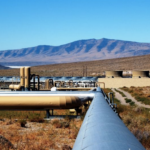
A Year of Hazardous Silence in Garden City
The Non-Financial Ledger
For almost 365 days, the people of Garden City, Kansas, were kept in the dark. They lived, worked, and raised their families next to Reeve Agri-Energy’s ethanol plant, unaware of the full cocktail of toxic chemicals being handled just down the road. This isn’t just about a missed deadline or a clerical error. This is about the deliberate withholding of information that is fundamental to a community’s sense of safety and self-determination. The law that was broken has “Community Right-to-Know” right in its name. It exists as a promise: that you will be told what dangers you live with, so you can prepare, protest, or protect your loved ones accordingly.
Reeve Agri-Energy’s failure to report its use of Hexane, Acetaldehyde, and Methanol is a profound betrayal of that promise. For an entire year, first responders in Garden City were operating with incomplete information. If a fire, a leak, or an explosion had occurred at that facility, firefighters and paramedics would have arrived on scene without the full picture of the chemical hazards they were running into. This isn’t a theoretical risk. It’s the exact scenario the law was written to prevent. Every day that the company remained silent, it gambled with the lives of the people paid to protect its community.
Consider the quiet anxiety this plants in a neighborhood. Every strange smell, every unexplained cough, every siren in the distance becomes a source of suspicion. Without official data, rumor and fear fill the vacuum. The trust between a community and its industrial neighbors is fragile. It is built on the assumption of transparency and good faith. By concealing its use of these toxic chemicals, Reeve Agri-Energy treated the public’s right to know as an administrative burden to be ignored, not a sacred trust to be honored. The EPA’s fine of $19,919 doesn’t restore that trust; it puts a laughably low price tag on its destruction.
The damage here cannot be measured in dollars. It is measured in the erosion of public safety and the violation of a fundamental right. It’s the theft of knowledge and agency from a whole town. It’s the arrogance of a corporation deciding that its paperwork problems are more important than a community’s peace of mind. The company wasn’t just late with a form; it was derelict in its duty as a corporate citizen. It operated for a year under a veil of secrecy, and when caught, paid a fine that amounts to a rounding error on a corporate ledger. Meanwhile, the residents of Garden City are left to wonder what else they haven’t been told.
Societal Impact Mapping
Environmental Degradation
The three unreported chemicals—Hexane, Acetaldehyde, and Methanol—pose distinct threats to the local environment. Hexane is a solvent and a component of gasoline, known to be a persistent air pollutant. When released, it contributes to the formation of ground-level ozone, or smog, which can damage crops, trees, and other vegetation. It is particularly harmful to aquatic life if it enters waterways. For a year, the total amount of this chemical being manufactured, processed, or otherwise used at the Reeve Agri-Energy facility was an official black box, preventing any accurate assessment of its environmental footprint in the region.
Acetaldehyde and methanol are also significant environmental concerns. Acetaldehyde is a volatile organic compound (VOC) that contributes to smog formation. It can be toxic to aquatic organisms. Methanol, or wood alcohol, is biodegradable, but large releases can deplete the oxygen in water bodies, leading to fish kills. The failure to report means that for the entire 2021 calendar year, state and federal regulators, along with local environmental groups, had an incomplete data set. They could not accurately model air quality, track pollution sources, or hold the company accountable for its full impact on the ecosystem around Garden City. The law requires this data for a reason: to build a cumulative picture of industrial pollution. Reeve Agri-Energy left a year-long hole in that picture.
The failure to timely submit a Form R report for hexane is a violation of Section 313(a) of EPCRA, 42 U.S.C. § 11023(a), and 40 C.F.R. § 372.30.
Public Health
The public health implications of this reporting failure are serious. Hexane is a known neurotoxin. Chronic exposure can cause damage to the nervous system, leading to weakness, tingling, and numbness in the extremities. Acetaldehyde is classified as a probable human carcinogen. It is also an irritant to the skin, eyes, and respiratory tract. Methanol is toxic if ingested, inhaled, or absorbed through the skin, and can cause blindness or death. These are not benign substances. They are industrial chemicals with documented risks to human health.
The Emergency Planning and Community Right-to-Know Act was specifically designed to arm communities and emergency planners with knowledge about these risks. By failing to file its Toxic Release Inventory (TRI) forms, Reeve Agri-Energy denied this critical information to the people of Garden City. Local health officials, doctors, and residents had no way of knowing the quantities of these specific chemicals being handled in their community. This data is vital for studying potential cancer clusters, respiratory illness rates, and other public health trends that may be linked to industrial pollution. The company’s year of silence created a data gap that can never be truly filled, leaving residents with lingering questions about their health and exposure.
Economic Inequality
The settlement in this case is a textbook example of economic inequality in the justice system. For a corporation like Reeve Agri-Energy, a penalty of $19,919 for a year-long violation of federal law is not a punishment. It is a minor cost of doing business. The maximum civil penalty for such violations can be up to $67,544 per day. A year of non-compliance for three separate chemicals could have resulted in a fine well into the millions. The negotiated penalty of less than twenty thousand dollars signals to other corporations that the consequences for withholding vital safety information from the public are negligible.
This creates a two-tiered system of accountability. An ordinary person facing penalties for breaking federal law would not be met with such leniency. Yet a corporation, after being pursued by the EPA for information, gets to settle the matter for a token amount. This reinforces the public’s frustration that corporations operate under a different set of rules. The penalty does not reflect the gravity of the violation—the denial of a community’s right to know about hazardous chemicals for an entire year. It reflects a system where corporate non-compliance is simply a line item on a budget, while the potential costs in public health and environmental safety are borne by the community.
The Cost of a Secret
This is the amount Reeve Agri-Energy, Inc. agreed to pay for failing to inform a community about its use of three distinct toxic chemicals for nearly 12 months. This figure does not represent the potential harm caused or the value of the public’s trust. It is simply the negotiated cost of a settlement, a fraction of the maximum potential penalty, allowing the corporation to close the books on its violation.
Legal Receipts
Respondent is Reeve Agri-Energy, Inc., a company registered and authorized to do business in the State of Kansas. Respondent owns and operates a fuel-grade ethanol manufacturing facility at 5665 S. Old Highway 83, in Garden City, Kansas (“Respondent’s facility”).
Factual Allegations, Paragraph 5
Hexane, acetaldehyde, and methanol are listed chemicals pursuant to 40 C.F.R. § 372.65 and therefore each is a “toxic chemical” within the meaning of 40 C.F.R. § 372.3.
Factual Allegations, Paragraph 21
Respondent failed to file a Form R report for hexane with the Administrator of EPA and the State of Kansas for reporting year 2021 by the July 1, 2022, deadline. Respondent filed the Form R report on or about June 30, 2023.
Count 1, Paragraph 28
Respondent failed to file a Form R report for acetaldehyde with the Administrator of EPA and the State of Kansas for reporting year 2021 by the July 1, 2022, deadline. Respondent filed the Form R report on or about June 30, 2023.
Count 2, Paragraph 33
Respondent failed to file a Form R report for methanol with the Administrator of EPA and the State of Kansas for reporting year 2021 by the July 1, 2022, deadline. Respondent filed the Form R report on or about June 30, 2023.
Count 3, Paragraph 38
Respondent agrees that, in settlement of the claims alleged herein, Respondent shall pay a civil penalty of nineteen thousand nine hundred nineteen Dollars ($19,919).
Penalty Payment, Paragraph 45
What Now?
The company responsible for this violation has been identified, and the regulatory body has acted. The settlement, however, underscores the need for continued vigilance from the public. The systems in place are slow, and the penalties are often insufficient to compel true corporate responsibility.
Corporate Actors
- Reeve Agri-Energy, Inc.
- Corporate Role: General Manager
Regulatory Watchlist
- U.S. Environmental Protection Agency (EPA), Region 7
Resistance and Mutual Aid
This case is a reminder that federal laws like EPCRA are only as strong as their enforcement and the public’s attention. The most effective power resides at the local level. Communities can organize to monitor industrial facilities in their own backyards. Demand transparency from your local emergency planning committees (LEPCs). Support local journalism that investigates these facilities. Build networks of mutual aid that can respond to environmental and health crises when corporations and the government fail to protect you. The law gives you a right to know; grassroots organizing is how you enforce it.
Please fact check me by visiting the EPA’s website on the consent agreement with Reeve Agri-Energy. And don’t just fact check me and leave it at that neither, fact check all the articles you see written by everybody out there! It’s too easy with generative AI for people to publish random slop filled with fake news. At least right now, you know that my articles are legit stories with EPA backing: https://yosemite.epa.gov/OA/RHC/EPAAdmin.nsf/Filings/19C6B4AAE8606DC085258AB4005DCF80/$File/Reeve%20Agri-Energy%20Consent%20Agreement%20and%20Final%20Order.pdf
This company is located at 5665 S OLD HWY 83, Garden City, Kansas 67846, US . They can be contacted by calling 620-275-0234
Explore by category
Antitrust
Monopolies and anti-competition tactics used to crush rivals.
View Cases →Product Safety Violations
When companies sell dangerous goods, consumers pay the price.
View Cases →Environmental Violations
Pollution, ecological collapse, and unchecked greed.
View Cases →Labor Exploitation
Wage theft, worker abuse, and unsafe conditions.
View Cases →Data Breaches & Privacy
Misuse and mishandling of personal information.
View Cases →Financial Fraud & Corruption
Lies, scams, and executive impunity that distort markets.
View Cases →Intellectual Property
IP theft that punishes originality and rewards copying.
View Cases →Misleading Marketing
False claims that waste money and bury critical safety info.
View Cases →