A pool chemical company in Missouri kept an unlabeled bulk tank of pesticide on-site, with no lockable shutoff valve and no complete safety documentation on hand — and the federal government’s response was a fine smaller than what most Americans earn in a year.
Pesticide, No Label, No Lock, No Excuse
A Pool Company That Handles Industrial Chemicals and Skipped the Rules
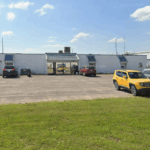
Westport Pools, LLC operates under the trade name Landmark Aquatic out of 156 Weldon Parkway in Maryland Heights, Missouri. On paper, it is a pool services company. In federal regulatory terms, it is classified as a pesticide producer establishment and a bulk repackager, meaning it takes industrial pesticide products from a registered manufacturer, repackages them into containers, and sells or distributes them to others.
The pesticide at the center of this case is Vertex Concentrate, registered under EPA registration number 9616-8 by a company called Hawkins, Inc. Landmark Aquatic and Hawkins had a formal repackaging agreement — a contract that gives Landmark the legal authority to repackage and distribute this chemical. That contract comes with strict federal obligations. Landmark Aquatic failed to meet them.
On January 23, 2025, a representative from the Missouri Department of Agriculture, acting on behalf of the EPA, conducted a routine compliance inspection of Landmark Aquatic’s facility. What the inspector found was a company operating with four distinct federal violations of the Federal Insecticide, Fungicide, and Rodenticide Act (FIFRA).
Four Violations. One Inspection. Zero Excuses.
Count 1 Landmark Aquatic kept a bulk tank of Vertex Concentrate at its facility with no label on it. Federal law under FIFRA Section 12(a)(1)(E) makes it unlawful to distribute or sell any pesticide that is misbranded. Every pesticide product is required by law to bear a label with specific safety and usage information. This tank had none.
Count 2 The repackaging agreement between Landmark Aquatic and Hawkins, Inc. was incomplete. It was missing the registrant’s written residue removal procedure and written description of acceptable containers for Vertex Concentrate. These documents exist specifically to tell the repackager how to safely handle, clean, and contain the chemical. Without them, the repackager is operating blind.
Count 3 The bulk tank of Vertex Concentrate did not have a lockable shutoff valve. Federal regulation 40 C.F.R. § 165.45(f)(2) explicitly requires every stationary container of liquid pesticide to have a shutoff valve capable of being locked closed. This requirement exists to prevent accidental release, unauthorized access, and environmental contamination. Landmark Aquatic skipped it.
Count 4 Landmark Aquatic filed its mandatory 2024 annual production report on July 30, 2025, nearly five months after the federal deadline of March 1, 2025. Pesticide producers are required to file this report every year, even if they produced nothing that year. The report exists so federal regulators can track what chemicals are being produced and distributed across the country. Landmark Aquatic blew past that deadline entirely.
Timeline: From Deadline Missed to Case Closed
The Non-Financial Ledger
What the Fine Doesn’t Count
When a company handles industrial chemical pesticides, the workers inside that facility are the first people exposed to risk. The whole reason federal law requires a label on every pesticide container is brutally simple: if something goes wrong, the label tells you what you are dealing with and how to respond. When Landmark Aquatic kept an unlabeled bulk tank of Vertex Concentrate on its premises, it removed that lifeline from every employee, inspector, and first responder who set foot in that building.
Think about what that means in practice. If a worker at that facility accidentally contacted the chemical in that unlabeled tank, they would have no immediate information about what it was, what hazards it posed, or what first aid to apply. If an emergency responder arrived at the scene of a spill, they would be working blind. The label is the floor of occupational safety, and Landmark Aquatic removed it.
The missing residue removal procedure compounds this. Federal rules require that a repackager hold a written document from the original registrant describing the proper procedure for cleaning out a refillable container before it gets refilled with more pesticide. That document exists because pesticide residue left in a container can react unpredictably with new product, degrade container integrity, or create contamination. Landmark Aquatic did not have it. Every container refilled at that facility without that procedure represented an uncontrolled risk.
The missing lockable shutoff valve on the bulk tank is the third layer of human exposure risk. That legal requirement exists to ensure that a large container of liquid pesticide cannot be accidentally drained by equipment malfunction, cannot be tampered with, and cannot release its contents into the surrounding environment through an unsecured valve. The rule is not a bureaucratic formality. It is a physical barrier between a tank full of industrial chemical and the ground, the drainage system, and the watershed beneath the facility. Landmark Aquatic did not install it.
The late annual report violation carries a different kind of harm. Federal pesticide reporting requirements are how the EPA tracks what chemicals are circulating in the country, in what quantities, and from which facilities. When producers miss these deadlines, the regulatory picture becomes incomplete. Enforcement and emergency planning rely on accurate data. Landmark Aquatic blew past the March 1 deadline by nearly five months, filing on July 30, 2025. During those five months, the facility was an unknown quantity in the federal tracking system.
Legal Receipts
Straight From the Government Document — In Their Own Words
“The EPA inspection revealed that Respondent repackaged a product that contained Vertex Concentrate at the facility… Respondent violated Section 12(a)(1)(E) of FIFRA by having a distribution bulk tank that was not labeled.” — Consent Agreement and Final Order, Count 1, Paragraphs 40–42
“The EPA inspection revealed that the repackaging agreement between Hawkins, Inc. and Respondent failed to contain the registrant’s written refilling residue removal procedure and written description of acceptable containers for the Vertex Concentrate pesticide product.” — Consent Agreement and Final Order, Count 2, Paragraph 45
“The EPA inspection revealed that the bulk tank of Vertex Concentrate did not have a lockable shutoff valve.” — Consent Agreement and Final Order, Count 3, Paragraph 49
“Respondent filed its annual report on July 30, 2025… Respondent violated [federal law] and 40 C.F.R. § 167.85(d) by not filing its 2024 annual report on or before March 1, 2025.” — Consent Agreement and Final Order, Count 4, Paragraphs 54–55
“Respondent neither admits nor denies the specific factual allegations stated herein.” — Consent Agreement and Final Order, Paragraph 56(b) — The company paid the fine and denied nothing and admitted nothing.
Maximum Possible Penalty Per Violation vs. What Landmark Aquatic Actually Paid (4 Violations)
Societal Impact Mapping
Environmental Degradation: An Unsecured Pesticide Tank Is an Environmental Incident Waiting to Happen
The legal requirement for a lockable shutoff valve on a stationary bulk pesticide container is not a technicality. Federal regulation 40 C.F.R. § 165.45(f)(2)(iii) mandates it because an unsecured valve on a tank holding liquid pesticide is a direct pathway from that chemical to the surrounding environment. Maryland Heights, Missouri sits within the Missouri River watershed. An uncontrolled release from an unlocked bulk pesticide tank at a commercial facility in this area has the potential to reach storm drains, soil, and waterways.
FIFRA defines “pesticide” broadly as any substance intended for preventing, destroying, repelling, or mitigating a pest. That category includes chemicals designed specifically to kill living organisms. When those chemicals reach aquatic environments, the consequences cascade: insect populations collapse, fish face acute and chronic toxic exposure, and the organisms that depend on those fish lose their food source. The EPA did not find that a spill occurred at Landmark Aquatic’s facility. The point is that the absence of the required safety hardware meant the infrastructure to prevent one did not exist.
The missing residue removal procedure adds another dimension. Federal rules requiring that procedure exist because residue left in refillable containers from previous fills can be incompatible with new product batches, can degrade container materials, and can lead to contaminated product reaching end users. Without written documentation from the registrant on how to safely clear that residue, Landmark Aquatic had no standardized protocol for ensuring its containers were safe before refill. Every container leaving that facility under those conditions was a question mark.
Public Health: The Label Exists Because People Need to Know What They’re Handling
The EPA’s labeling requirement under FIFRA is one of the oldest occupational and public health protections in federal environmental law. Congress first enacted FIFRA in 1947 and strengthened it substantially in 1972 specifically because pesticide products pose direct risks to human health when handled improperly. The entire labeling regime exists to put hazard information, first aid instructions, and proper handling procedures in the hands of the people who need them most: the workers who handle the product daily.
Landmark Aquatic kept an unlabeled bulk tank of Vertex Concentrate on site. Vertex Concentrate is a registered pesticide product. At the time of the January 23, 2025 inspection, any worker at that facility interacting with that tank was doing so without mandatory safety information. The document does not describe a worker injury. It describes the conditions under which one becomes far more likely.
Beyond the immediate facility, Vertex Concentrate is a pool treatment chemical distributed to customers. The incomplete repackaging agreement, which lacked the residue removal procedure and the acceptable container specifications, means that Landmark Aquatic’s repackaging process lacked the documentation baseline to ensure product integrity. Pool chemicals distributed in improperly cleaned or non-specified containers can carry contamination risks to the end users: the families and children who swim in the pools Landmark Aquatic services.
Economic Inequality: A $21,984 Fine Is a Cost of Doing Business, Not a Deterrent
The maximum civil penalty allowed under FIFRA, adjusted for inflation and updated as of January 8, 2025, is $24,885 per violation. Landmark Aquatic committed four violations. The mathematical ceiling on what the EPA could have assessed is $99,540 (roughly the cost of a new mid-size car and enough left over to pay a month of rent for several families). The agency settled for $21,984 (roughly what a full-time minimum-wage worker earns in a year of labor), less than a quarter of the maximum.
This is the structural logic of corporate environmental enforcement in America. Small penalties, negotiated down from already-modest maximums, function as a predictable cost that businesses factor into operations rather than as a genuine deterrent against cutting corners. A company that saves money by skipping a lockable valve, failing to maintain complete safety documentation, and missing reporting deadlines faces a fine that the business can absorb without material impact. The cost of compliance gets compared against the cost of the penalty, and compliance loses.
Working people who live near facilities like this one do not get to negotiate their exposure down. They do not sign a consent agreement accepting a mitigated risk in exchange for a small payment. They breathe the air, drink the water, and live with the consequences of inadequate industrial oversight. The fine the EPA assessed here amounts to about five months of rent for one family in the St. Louis area. That is the price the federal government placed on four separate safety violations at a facility handling industrial pesticide chemicals.
The Cost of a Life Metric
What Now?
Who to Watch. What to Demand. How to Push Back.
The consent agreement names the following corporate contact at Landmark Aquatic: Matt Borie, Landmark Aquatics, 156 Weldon Parkway, Maryland Heights, Missouri 63043. The company was represented in this settlement by Evan Neustater of Greenberg Traurig, LLP, a major corporate law firm based in Washington, D.C. The EPA official who signed the enforcement action on the government’s side is David Cozad, Director, Enforcement and Compliance Assurance Division, EPA Region 7.
Regulatory Watchlist: These Are the Bodies That Are Supposed to Stop This
Federal pesticide enforcement for Missouri
Conducted the January 2025 inspection
Worker safety at chemical handling facilities
National FIFRA enforcement oversight
The One Thing That Changes This
This settlement is public record. Share it. The consent agreement explicitly states that EPA reserves the right to take enforcement action for any additional violations discovered. If you are a worker at or near a facility like this one and you see safety violations, OSHA’s whistleblower protection program exists to protect you when you report them. If you are in the Maryland Heights community and you want to track what chemicals are permitted, stored, and distributed near you, the EPA’s Envirofacts public database and Toxic Release Inventory are publicly searchable. Local environmental justice groups in the St. Louis metro area are organizing around exactly these issues. Find them. Join them. The fine the federal government collected here does not protect your neighborhood. You and your neighbors do that together.
The source document for this investigation is attached below.
You can fact check this article by looking at this link from the EPA’s website: https://yosemite.epa.gov/oa/rhc/epaadmin.nsf/Filings/24382CC8A74A458585258D47006DF8E6/$File/Westport%20Pools%20Consent%20Agreement%20and%20Final%20Order.pdf