The IPO Laundromat: How Two Brokerages Turned Chinese Nano‑Caps Into a Fraud Factory
TL;DR >:3 From 2021 through 2023, both Boustead Securities and Sutter Securities ran a joint investment banking operation that underwrote about 30 public offerings for tiny Chinese companies. They opened accounts for “issuer-referred” foreign customers who looked like nominees, ignored blatant inconsistencies, failed to file suspicious activity reports, hid $1.25 million in underwriting fees, and let employees use WhatsApp and WeChat with zero oversight. The firms’ CEO, Keith Moore (whom I attached a picture of down below), was also their anti‑money laundering officer. He approved accounts with impossible finances and never investigated the red flags.
👇 Scroll to see the timeline of a compliance meltdown along with what you can do about it.
A Business Model Built on Blindness
When a brokerage firm underwrites an IPO, it has a legal duty to know its customers. Boustead and Sutter did the opposite. According to FINRA’s 70‑page complaint, these two California‑based firms (which share an office, ownership, and a CEO) made a specialty out of bringing micro‑cap Chinese issuers to U.S. markets — and then stuffing the aftermarket with “investors” referred directly by those same issuers. 🧾 The firms never met these customers. Many were students or unemployed people who claimed net worths in the millions, funded by unnamed “parents” or “spouses.”
The result was predictable: extreme price spikes on listing day, followed by collapses that wiped out retail investors. Genius Group Limited (GNS) opened at $15.11, hit $36.75 intraday, and closed at $30.50. A week later it was $6.07. By December 2022 it traded below 40 cents. Boustead underwrote that deal. Moore was aware of the volatility — and the firm did nothing.
Regulatory Capture and Loopholes: When AML Programs Are Just Paper
Both firms had anti‑money laundering policies on paper. They required due diligence, verification of income, and investigation of red flags. In practice, the procedures were hollow. The complaint states that Boustead’s and Sutter’s AML policies failed to identify even basic red flags like nearly identical customer profiles, customers with uncorroborated financials, and investment amounts wildly disproportionate to reported income. Moore, as AML Compliance Officer, was unaware of any particular AML risks associated with blocks of issuer‑referred customers — despite FINRA issuing Regulatory Notice 21‑03 that explicitly warned about exactly this scheme.
FINRA had sounded the alarm repeatedly. In February 2021, the regulator highlighted “multiple new customers opening accounts … introduced by the same individual” as a red flag of fraud. In November 2022, another notice flagged “nominee accounts” opened to invest in small‑cap IPOs and place manipulative orders. Boustead and Sutter ignored every warning. Their AML programs were not tailored to the risks of foreign micro‑cap offerings. They were generic templates that allowed the firms to claim compliance while facilitating exactly the conduct the rules were meant to stop.
Profit‑Maximization at All Costs: Underwriting Fees First, Investor Protection Never
The firms’ investment banking business generated the majority of their revenue. Boustead’s head of investment banking, identified as “Boustead Representative 1,” actively encouraged issuers to refer customers who would provide “aftermarket support” — code for placing buy orders to prop up the stock price. The complaint details how, before the FCUV uplisting in August 2021, the representative participated in calls with the issuer and issuer‑referred customers to coordinate aftermarket buying. Thirty‑one such customers placed orders to buy shares at prices above the IPO price before they even knew their allocation. The firm’s head trader maintained a spreadsheet tracking these orders to “see if FCUV produces” the support. Moore received that spreadsheet. Nobody filed a suspicious activity report.
When Boustead’s clearing firm repeatedly rejected account applications due to red flags — inconsistent employment, impossible net worth, missing source of funds — Boustead executives pressured the clearing firm to prioritize the accounts because the deal was “right around the corner.” They even altered account forms with new information from intermediaries without requiring customers to re‑sign. The clearing firm finally warned Boustead that “this needs to get better or I am going to have to make changes.” It didn’t get better.
The Economic Fallout: Pump‑and‑Dump Consequences for Ordinary Investors
When micro‑cap IPOs are manipulated, the losses land on retail traders, pension funds, and anyone holding the bag after the artificial spike. The FCUV offering is a case study: the issuer told Boustead that issuer‑referred customers would invest $1.8 million in aftermarket trading at predetermined prices above the $5 listing price. Those customers placed layered limit orders at $5.50, $6.00, $6.50, and $7.50. The firms entered the orders, shares were purchased at inflated prices, and the inevitable decline followed. The complaint does not quantify total investor losses, but the pattern is unmistakable: insiders and nominees cash out while the public absorbs the crash. This is wealth transfer from everyday people to sophisticated operators exploiting regulatory blind spots.
Meanwhile, Boustead pocketed fees that were never disclosed. In the Jiuzi Holdings (JZXN) IPO, Boustead disclosed $1.82 million in underwriting compensation. But on the same day as the closing, the issuer signed a letter acknowledging an additional $1.25 million “advisory fee” due to Boustead. That money was wired to Boustead’s parent company. Neither FINRA nor investors were told. It’s a classic hidden markup — profit maximization at the expense of transparency.
The Employees Who Were Set Up to Fail
While this case is not about wage theft, it reveals how the firms’ leadership hung rank‑and‑file employees out to dry. The Boustead Principal, who also served as Sutter’s CCO, was assigned to review Sutter’s daily trade blotter for suspicious activity — a task he performed for only 10‑15 minutes per day despite hundreds or thousands of trades. He never received any training on how to spot manipulation. Boustead, meanwhile, had no principal reviewing its trade blotter at all. The complaint states that “Boustead’s customers were able to place trades in their accounts directly without any supervisory oversight.” This is not just a regulatory failure; it’s a dereliction that puts junior staff at legal risk while executives insulate themselves.
The PR Machine: Hiding Behind “Advisory Fees”
When Boustead received an extra $1.25 million from Jiuzi, it was labeled an “advisory fee” — a classic euphemism that conceals underwriting compensation. The payment went to an affiliate, not the regulated broker‑dealer, further muddying the trail. This is how corporate accountability is eroded: use technical language to make the unethical sound routine. The complaint notes that the issuer’s letter referencing the fee had the subject line “Underwriting Agreement.” There was no advisory work; it was simply more money for the same deal.
Slaps on the Wrist and No Admission of Guilt
FINRA’s complaint seeks sanctions including monetary penalties. But history shows that fines are often treated as a cost of doing business. Boustead had already been censured and fined $35,000 in 2022 for unrelated supervisory failures. That didn’t change behavior. Moore remains subject to FINRA jurisdiction even though he voluntarily terminated his registration in February 2024. Yet the complaint does not allege any personal financial penalty beyond possible industry bars. For a scheme that involved millions in fees and widespread investor harm, the potential remedies feel mismatched.
Pathways for Reform
This scandalous case underscores the need for real‑time AML surveillance tailored to micro‑cap IPOs. Regulators must require firms to verify the ultimate beneficial owners of accounts funded by third parties, especially when customers are referred by issuers. Whistleblower protections must needs be strengthened so that employees who see altered account forms or coordinated order placement can report without fear. And penalties must include individual accountability for CEOs who also serve as AMLCOs. If you sign off on accounts with impossible finances, then it’s only natural that you should lose your license.
How Capitalism Exploits Delay
The conduct described in the complaint spans three years. FINRA’s investigation took time, and during that period the firms continued to operate. The clearing firm’s warnings in mid‑2021 were not heeded; it took until 2026 for a formal complaint. This lag is structural: enforcement moves slowly, while profits accrue in real time. The system is designed to let firms extract value from risky, borderline‑fraudulent activities and then settle years later for a fraction of the gains.
This Is the System Working as Intended
Boustead and Sutter are not rogue outliers. They are products of a financial ecosystem that incentivizes volume over vigilance. Underwriting fees are paid upfront; compliance is a cost center. When a firm’s AMLCO is also the CEO, the conflict is obvious. The system expects brokers to police themselves, but the profit motive consistently overrides the duty to protect the market. The result is a steady stream of small‑cap manipulation cases that erode trust in public markets.
Conclusion: The Human Cost of a Compliance Mirage
The FINRA complaint against Boustead, Sutter, and Keith Moore is not just a regulatory filing. It’s a portrait of how modern finance launders reputation while laundering money. The firms built a conveyor belt of dubious IPOs, stuffed them with nominee accounts, and collected fees while investors were left with worthless shares. Moore, as CEO and AMLCO, was the architect of this indifference. The human cost — retirement accounts diminished, trust in markets shattered — is absent from the legal jargon but screams from every red flag that was ignored. This is what happens when the watchdogs are defanged and the foxes design the henhouse.
Frivolous or Serious Enforcement Action?
This be an enforcement action by FINRA, the industry’s own regulator. The legal complaint is exceptionally detailed, with specific customer names (redacted in public version but present in the filing), emails, and internal communications. The allegations are supported by the firms’ own records and the clearing firm’s contemporaneous rejections. Far from frivolous, this is a damning, evidence‑heavy case that exposes systemic failures. The only question is whether the penalties will match the scale of the misconduct.
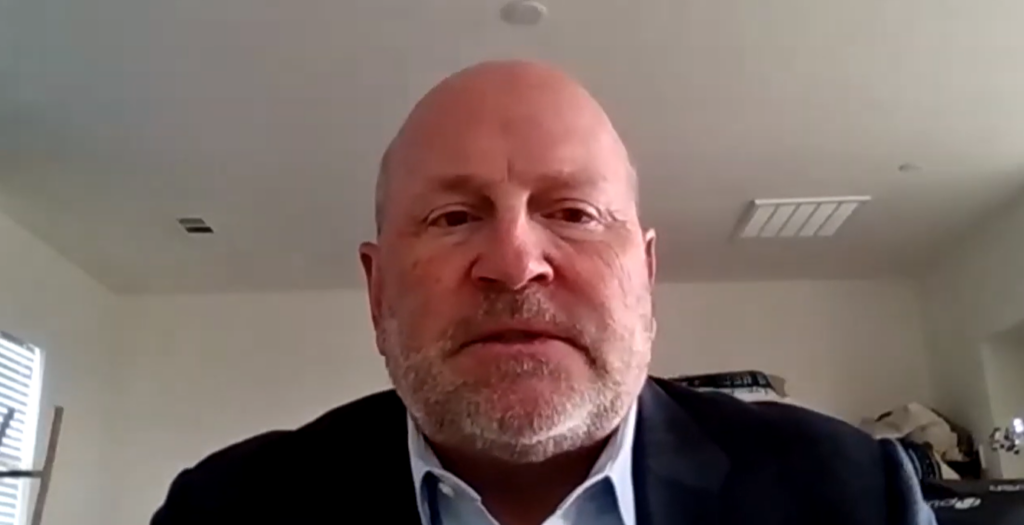
The FINRA page for this PDF can be found by visiting this following link: https://www.finra.org/sites/default/files/fda_documents/2022075185901%20Boustead%20Securities%2C%20LLC%20CRD%20141391_Sutter%20Securities%2C%20Incorporated%20CRD%2030770_Keith%20Charles%20Moore%20CRD%205191450%20Complaint%20vrp.pdf
Explore by category
Antitrust
Monopolies and anti-competition tactics used to crush rivals.
View Cases →Product Safety Violations
When companies sell dangerous goods, consumers pay the price.
View Cases →Environmental Violations
Pollution, ecological collapse, and unchecked greed.
View Cases →Labor Exploitation
Wage theft, worker abuse, and unsafe conditions.
View Cases →Data Breaches & Privacy
Misuse and mishandling of personal information.
View Cases →Financial Fraud & Corruption
Lies, scams, and executive impunity that distort markets.
View Cases →Intellectual Property
IP theft that punishes originality and rewards copying.
View Cases →Misleading Marketing
False claims that waste money and bury critical safety info.
View Cases →