The Human Cost They Didn’t Track
Baghouses are not complicated technology. They are essentially giant industrial vacuum filters that catch the particles and chemical dust your factory produces before those particles reach the air outside. When a baghouse is working properly, the pressure difference across the filter falls within a set range. When it falls outside that range, the filter may be clogged, damaged, or bypassed. The whole reason the law requires daily pressure readings is simple: you can’t see the air you’re breathing, so someone has to check the equipment.
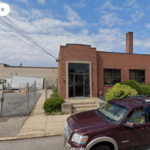
The people who live and work around 3200 County Road 6 East in Elkhart, Indiana didn’t get that protection for most of 2022. They had no way of knowing whether the pollution controls at the adhesives plant down the road were operating correctly, because the company itself wasn’t checking. The records that would have proved the baghouses were working weren’t kept. The readings that would have flagged a failing filter in early November and triggered a required fix weren’t recorded.
Elkhart County sits in a region with a history of industrial exposure. The workers inside the plant, the families in surrounding neighborhoods, the people with asthma or heart conditions who are most vulnerable to particle pollution: none of them could advocate for a repair that wasn’t being tracked. You can’t demand a fix for a problem that doesn’t exist on paper. That is the real cost of a monitoring failure. It doesn’t show up in any settlement agreement. It doesn’t have a dollar figure attached to it. It just doesn’t get counted.
Legal Receipts: What the Documents Say
Every quote below is taken verbatim from the Consent Agreement and Final Order filed with the EPA Region 5 Regional Hearing Clerk on May 4, 2026.
“From November 21, 2022 through December 15, 2022, Respondent failed to take a reasonable response to the pressure drop readings outside the normal range for the baghouse associated with Mixer 7 on the dates identified in Paragraph D.19, in violation of Condition D.1.8 of the 2022 FESOP.”
- This is the EPA’s formal allegation. “Reasonable response” is defined in the permit and exists specifically so that an out-of-range reading triggers immediate corrective action. For at least 16 days across four weeks, Mixer 7’s filter was flagging abnormal readings and nothing documented was done about it.
- The permit sets the normal operating range at 3.0 to 6.5 inches of water pressure drop. Readings below 3.0 inches signal the filter may not be catching what it is supposed to catch. The company never documented a response during this entire period.
“From January 3, 2022 through December 16, 2022, Respondent failed to maintain daily records of the pressure drop across the baghouses or include in its daily record the reason for the lack of a pressure drop reading for the dates and corresponding mixers identified in the table in Paragraph 20, in violation of Condition D.1.10(c) of the 2022 FESOP.”
- This allegation covers essentially the entire calendar year of 2022, across up to eleven mixers at a time. The law requires either a reading or a written explanation for why a reading wasn’t taken. Neither was provided on hundreds of mixer-operating-days throughout the year.
- The permit explicitly allows an explanation of “the process did not operate that day” as a valid reason for a missing reading. The company chose not to provide even that minimal documentation.
“Respondent neither admits nor denies the allegations stated in Section E of this CAFO; consents to the assessment of a civil penalty as stated below; consents to any conditions specified in this CAFO; waives any right to contest the allegations set forth in Section E of this CAFO; and waives its right to appeal this CAFO.”
- This is the standard “no admission” settlement language. The company pays the fine, waives all its rights to fight the case, but legally never acknowledges that it did anything wrong. This matters because a future enforcement action cannot cite an admission of guilt from this case, only that the enforcement action occurred.
- The company waived every available legal defense, every right to appeal, and every right to contest the facts in court while simultaneously not admitting any wrongdoing. It is a legal structure designed to close cases cheaply and quietly.
“Any violation of this CAFO may result in a civil judicial action for an injunction or civil penalties of up to $124,426 per day per violation, or both.”
- The maximum statutory penalty available for future violations is $124,426 per day per violation. The total penalty actually assessed for nearly a year of documented monitoring failures across up to eleven pieces of equipment was $47,024, a fraction of a single day’s maximum for a single violation.
What the Permit Said vs. What the Company Did
The 2022 Federally Enforceable State Operating Permit set clear requirements. The documented record shows a consistent gap between those requirements and the company’s actual practice across 2022.
- Claimed compliance framework: The FESOP required daily pressure drop monitoring on all operating mixers. The documented reality is that readings were simply not recorded on the vast majority of operating days throughout 2022, spanning Mixers 1 through 11.
- Required corrective action: The permit required a “reasonable response” any time a baghouse reading fell outside the 3.0 to 6.5 inch range. When Mixer 7 recorded below-threshold readings across at least sixteen days in November and December 2022, no documented corrective response was recorded.
- Documentation requirement: When a reading was not taken, the permit required the company to record the reason, for example noting the process was not operating that day. For the hundreds of missing readings across 2022, no such reason was documented.
How Time Worked in the Company’s Favor
The gap between when violations occurred and when any formal accountability arrived is a structural feature of the enforcement system, not a bug.
- Violations documented in this case began on January 3, 2022. The EPA conducted its inspection on February 28, 2023, more than thirteen months later. The violations had already ended nearly three months before the inspection took place.
- The EPA issued its Notice of Violation on June 4, 2024, fifteen months after its own inspection, and more than two and a half years after the violations began.
- The Final Order was signed on May 1, 2026, more than four years after the first documented violation. During that entire window the company operated, produced adhesives, and generated revenue with no enforceable penalty on record.
- The company had thirty days from the filing date to pay its $47,024 penalty. There is no indication in the CAFO of any production halt, operational disruption, or financial consequence that occurred during the four-year gap between the violation and the settlement.
Societal Impact: Who Bears the Consequences
Public Health
- Baghouses on industrial mixers are designed to capture particulate matter and chemical dust before it reaches ambient air. When a baghouse operates outside its normal pressure range, its capture efficiency is uncertain. During the 16-plus documented days when Mixer 7’s pressure readings were below the 3.0-inch threshold, no corrective action was taken and no documentation exists confirming the filter was working correctly.
- For the broader portion of 2022 when monitoring records simply weren’t kept, there is no documented basis to confirm that any of the ten or eleven mixers’ baghouses were functioning within design parameters. The absence of records is not the same as a clean bill of health. It is a gap in the evidence that affected people in the surrounding area had no knowledge of and no ability to address.
- Industrial adhesives manufacturing involves chemical solvents and volatile compounds. Particulate and chemical emissions from improperly filtered industrial processes carry documented respiratory and cardiovascular risks, particularly for vulnerable populations including children, the elderly, and those with pre-existing lung conditions.
Economic Inequality
- Facilities like the one at 3200 County Road 6 East in Elkhart are rarely located next to wealthy neighborhoods. The populations most exposed to industrial air quality failures are, by documented national pattern, lower-income communities with less political power to demand enforcement. The $47,024 penalty goes to the U.S. Treasury, not to any affected resident.
- The cost of monitoring compliance was built into the permit requirement. The company’s failure to maintain those records effectively transferred the cost of uncertainty about air quality to the surrounding community, which absorbed any resulting health exposure without compensation.
- Residents have no individual legal remedy established by this CAFO. The settlement “resolves only Respondent’s liability for federal civil penalties for the violations specifically alleged.” Community members are outside the scope of this agreement entirely.
The Settlement Isn’t Justice
The CAFO documents a penalty of $47,024 for nearly a year of systematic monitoring failures across up to eleven industrial mixers at an operating adhesives manufacturing plant. The structural problems with that number deserve examination.
- The maximum civil penalty available under the Clean Air Act for future violations of this CAFO is $124,426 per day per violation. The total penalty assessed for hundreds of documented violation instances across eleven pieces of equipment across nearly twelve months was $47,024. That works out to a fraction of a single day’s maximum for a single violation.
- Respondent “neither admits nor denies the allegations.” No admission of wrongdoing is attached to this settlement. In any future enforcement proceeding, the company can characterize this case as a settled administrative matter, not a proven violation.
- The corrective measures accepted as sufficient were: submission of monitoring data for January through May 2025 showing no deviations, and updated monitoring forms. These are documentation improvements, not structural changes to the equipment or independent verification that the baghouses performed correctly during 2022.
- Penalties paid under this CAFO are not deductible as federal taxes, per Section 33 of the CAFO. This is a standard provision and a minor constraint. It does not change the core math: the cost of non-compliance for an entire year was $47,024, payable in thirty days, with no admission, no community remedy, and no independent audit of the 2022 emissions record.
The total civil penalty assessed for nearly twelve months of documented air quality monitoring failures across up to eleven industrial mixers at an operating adhesives plant in Elkhart, Indiana.
The maximum statutory penalty available for a single day of a single future violation of this same order: $124,426. The assessed penalty equals less than nine hours of that maximum rate.
This Is the System Working as Intended
Every procedural step in this case followed the rules. That is precisely the problem.
- The Clean Air Act’s administrative penalty track, Section 113(d), is explicitly designed to allow EPA to settle violations through consent agreements without court involvement. This case followed that path perfectly: inspection, notice, conference, settlement, fine, done. The system processed a year of monitoring failures as a routine administrative matter.
- The “neither admits nor denies” settlement structure is standard practice across EPA enforcement. It exists because it makes cases easier to close. It also ensures that companies can absorb penalties as a cost of operations without any legal record of confirmed wrongdoing that could be cited against them in civil suits by affected residents.
- The four-year gap between violation and final order is not an aberration. It reflects the resource constraints of EPA’s enforcement apparatus, the deliberate procedural steps built into the consent agreement process, and the reality that administrative enforcement is not designed to produce rapid consequences for ongoing violations.
- The CAFO notes that the EPA and the Department of Justice jointly determined this matter was “appropriate for an administrative penalty assessment” even though the violations occurred more than one year before the proceeding began. That determination is standard but not inevitable. Criminal referral and federal civil action were both available statutory options. Administrative settlement was the choice made.
- The corrective requirement, better forms and a few months of recent clean data, does nothing to establish what the 2022 air quality record actually was. The monitoring data that would answer that question doesn’t exist, because the company didn’t keep it. The system accepted that gap as closed.
What a Legitimate Fix Looks Like
Editorial AnalysisThe core structural failure this case exposes is simple: self-reported monitoring records are the only accountability mechanism, and when a company stops keeping them, the enforcement system has no independent way to know what emissions actually occurred. The fix has to address that gap directly.
Regulatory Track
- EPA Region 5 should require facilities with documented monitoring recordkeeping failures to submit to third-party verification of compliance for a mandatory period following any settlement, rather than accepting the company’s own updated records as corrective evidence.
- IDEM, as the state permitting authority that issued and amended the FESOP, should implement periodic unannounced inspections at facilities with prior monitoring violations. The February 2023 EPA inspection in this case was the trigger for enforcement; there is no documented record of IDEM independently flagging the 2022 gaps.
- EPA should require that any facility with baghouses serving multiple mixers implement real-time electronic data logging that transmits pressure drop data to a state-accessible database, rather than relying on handwritten daily logs. This makes monitoring failures immediately visible rather than discoverable only during a scheduled inspection.
Legislative Track
- Congress should examine whether the Clean Air Act’s administrative penalty cap structure, which allows multi-year, multi-equipment violations to be settled for amounts far below the per-day-per-violation statutory maximum, is producing deterrence or simply a predictable cost of operations that facilities can price in.
- Legislation requiring that a portion of CAA administrative penalties be directed to community health monitoring funds in the affected geographic area would begin to close the gap between the Treasury collecting a fine and the community absorbing the health exposure. Currently, affected residents receive nothing from this settlement.
- The “neither admits nor denies” settlement structure should be reexamined for cases where monitoring failures span extended periods across multiple pieces of equipment. Documented, systematic non-compliance differs materially from a single recordkeeping error, and the legal record should reflect that distinction.
Corporate Governance Track
- As a condition of settlement, Indiana Sealant and Adhesives should be required to implement an independent internal audit of its environmental compliance recordkeeping, conducted by a qualified third party and submitted to IDEM and EPA on an annual basis for a minimum of three years.
- The updated monitoring forms the company submitted in May 2025 are a start, but the CAFO contains no requirement for a designated compliance officer or documented chain of responsibility for baghouse monitoring data. That accountability chain should be a required element of any corrective action plan following a monitoring failure of this scope and duration.
- Any future FESOP renewal for this facility should include a condition requiring that monitoring data gaps trigger automatic notification to IDEM within 48 hours, rather than being discovered months later during an external inspection.
What Now?
The responsible entities in this case are Indiana Sealant and Adhesives, LLC, operating at 3200 County Road 6 East, Elkhart, Indiana 46514, and the regulatory bodies that are authorized to hold them to higher standards going forward. This case is now settled, but the permit continues and so does the obligation to monitor.
Regulatory Watchlist
- EPA Region 5 (Chicago): The enforcement authority that brought this case. Follow their public enforcement actions database for any subsequent violations at this facility. Contact: R5airenforcement@epa.gov
- Indiana Department of Environmental Management (IDEM): The state agency that issued and amended the FESOP. IDEM’s public records include permit files and inspection histories for permitted facilities in Indiana.
- EPA Office of Inspector General: If you have information about ongoing violations at this or similar facilities, the OIG accepts tips at oig.epa.gov.