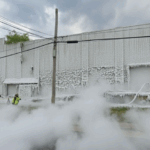
A federal inspection documented seven physical safety issues and a poorly tracked hazard-review process at a New Brockton, Alabama, facility holding 28,000 pounds of anhydrous ammonia. Ben E. Keith agreed to pay $55,864 without admitting or denying the allegations.
Clean Air ActTL;DR
- Ben E. Keith operated an ammonia refrigeration system containing 28,000 pounds of anhydrous ammonia, above the 10,000-pound threshold for federal Risk Management Program requirements.
- During a May 2024 inspection, the Environmental Protection Agency documented seven conditions involving equipment support, chemical storage, emergency information, hazard labels and other engineering safeguards.
- Only 5 of 45 recommendations from a March 2021 process hazard analysis had been documented as completed. EPA acknowledged that some others may have been completed but said they weren’t being tracked.
- EPA alleged failures to follow recognized engineering practices and to promptly resolve, document and communicate hazard-analysis recommendations.
- The company agreed to a $55,864 civil penalty, waived its right to contest the allegations and certified that the alleged violations had been corrected. It neither admitted nor denied the underlying allegations.
- The record describes prevention and preparedness failures; it does not report an ammonia release, injury or environmental damage.
The case turns on the safeguards meant to stop an industrial refrigeration problem from becoming an emergency… and as a bonus, also on whether the company could prove that identified hazards had actually been addressed.
The Facts
At its facility at 1 Ben E. Keith Way in New Brockton, Alabama, the company operated a refrigeration system using anhydrous ammonia. EPA’s agreement says the system held 28,000 pounds of the chemical.
That amount placed the facility under the Clean Air Act’s Risk Management Program. The program applies when a regulated substance reaches a specified threshold inside an industrial process. For anhydrous ammonia, the threshold cited in the agreement is 10,000 pounds. Covered facilities must develop an accidental-release prevention program and submit a Risk Management Plan to EPA.
EPA inspected the facility’s records and equipment on May 2, 2024. The inspection examined compliance with federal chemical-accident prevention rules and with what regulators call “recognized and generally accepted good engineering practices,” or RAGAGEP. In practical terms, those are established engineering and safety standards used to design, maintain and operate covered equipment.
The Controls EPA Said Were Missing
EPA’s observations covered seven separate conditions. Several involved the ammonia machinery room; others concerned related fuel and chemical storage around the facility.
Unsupported ammonia piping
EPA said piping in the AU-10 penthouse was prone to swaying and vibration because it lacked sufficient support. The engineering standard cited in the agreement requires supports designed to prevent movement that can cause damage, unsafe conditions or loss of function.
No emergency contact signage
Inspectors found no emergency facility contact information near either entrance to the ammonia machinery room or elsewhere nearby. The cited standard calls for accessible shutdown instructions, contact details, ammonia inventory and system-pressure information.
Oil drums without secondary containment
Oil drums stored inside the ammonia machinery room lacked the secondary containment intended to control a spill, according to EPA.
An ungrounded flammable cabinet
The flammable-material cabinet in the maintenance shop wasn’t grounded. EPA cited a fire-code provision requiring grounding for static-producing equipment in flammable-gas areas.
Unlabeled generator fuel tanks
A diesel emergency generator and its fuel tanks in the parking lot lacked the hazard diamond or other approved marking used to identify ignitable liquids for emergency response.
Oil-removal equipment
EPA said Oil Still OS-1 lacked any of the specified arrangements for safely returning, transferring or draining oil, including the prescribed series of shut-off and self-closing valves.
Gasoline equipment in the machinery room
Gasoline-powered equipment was stored inside the ammonia machinery room outside approved fire-rated storage containers, the inspection found.
EPA used these observations to allege that Ben E. Keith failed to ensure and document that the covered process was designed and maintained in accordance with accepted engineering practices. Because the case ended through consent rather than adjudication, the observations weren’t tested in a contested hearing.
The Hazard List That Wasn’t Being Tracked
A separate problem appeared in the facility’s own hazard-review process. A March 2021 process hazard analysis had produced 45 recommendations. By the May 2024 inspection, only five were documented as complete.
EPA didn’t conclude that every other recommendation remained physically unfinished. Its agreement expressly leaves open the possibility that additional work had been done. The records, however, didn’t track that work. That distinction matters: a safety action that cannot be traced to a decision, deadline and completion record leaves regulators—and the facility itself—without reliable evidence that the identified hazard was resolved.
From the inspection record
“Of the 45 recommendations from the March 2021 process hazard analysis (PHA), only 5 had been documented as completed at the time of the inspection. Although some of the other PHA recommendations may have been completed, they were not being tracked.” EPA Consent Agreement, paragraph 15(b)
Federal rules required a system to address the analysis team’s findings, resolve recommendations on time, document the actions to be taken, create a written schedule and communicate those actions to employees whose work could be affected. EPA alleged that Ben E. Keith failed across that chain of responsibilities.
How the Enforcement Case Developed
A process hazard analysis generated 45 recommendations for the facility.
EPA inspected Risk Management Program records and equipment. Only five recommendations were documented as complete, and inspectors recorded seven physical conditions.
EPA issued a Notice of Potential Violation, notifying the company of the alleged violations and offering an opportunity to confer.
Representatives of EPA and Ben E. Keith met to discuss the notice.
Who Had to Rely on These Controls
The agreement doesn’t document an ammonia release, fire, spill, injury or environmental impact. It therefore doesn’t support claims that workers or nearby residents suffered physical harm.
It does identify the people expected to rely on the prevention system. Operating and maintenance employees were among those who should have received information about hazard-analysis actions affecting their assignments. Trained refrigeration staff and emergency responders were supposed to find shutdown instructions and contact information near the ammonia system. Inspectors found that required signage absent.
The practical consequence established by the record is a prevention program EPA considered deficient. Pipe supports, spill containment, hazard labels, controlled storage and documented follow-through are separate layers of protection. The settlement addresses gaps in those layers, not the aftermath of a documented accident.
The record documents missing safeguards and incomplete tracking. It does not document an ammonia release or resulting injury.
The Company’s Response
Ben E. Keith resolved the case without admitting or denying EPA’s factual allegations. It accepted the $55,864 penalty, waived its right to contest the alleged violations and waived an appeal of the accompanying final order.
The company also certified, to the best of its knowledge, that it was in compliance with the relevant Clean Air Act requirements and that all alleged violations had been corrected. The consent agreement doesn’t describe the corrective work, provide completion records or identify which of the hazard-analysis recommendations were ultimately carried out.
What the Order Actually Does
The final-order text approves the consent agreement and directs Ben E. Keith to comply with its terms upon filing. The company must pay the civil penalty within 30 calendar days of the agreement’s effective date. The supplied material doesn’t show that filing date, so it doesn’t establish when the payment deadline began.
Full compliance resolves the company’s federal civil-penalty liability only for the facts and violations specifically alleged in this case. The agreement doesn’t amount to a finding that the company committed the alleged violations. It also doesn’t remove the company’s continuing duty to comply with federal, state and local law.
What Remains Unresolved
- The document doesn’t identify the substance of all 45 process hazard analysis recommendations.
- It doesn’t establish how many recommendations beyond the five documented at inspection were later completed.
- It doesn’t provide the schedules, work records or employee communications used to close the recommendations.
- It doesn’t describe how each of the seven physical conditions was corrected or independently verified.
- It doesn’t report a release or injury associated with the cited conditions.
What a Legitimate Fix Looks Like
Editorial analysisThe company’s compliance certification is legally significant, but a durable safety system requires records that can be checked later. Each hazard recommendation should have an assigned action, responsible person, deadline, completion evidence and a record showing that affected employees were informed.
The physical corrections should be equally traceable: adequate pipe supports, visible emergency information, secondary containment, proper hazard markings, controlled combustible storage, grounded equipment where required and compliant oil-removal hardware. Those controls also have to remain in place after the enforcement file closes.
The agreement supplies a certification of correction, not the underlying corrective record. Whether that record now accounts for every recommendation and each observed condition is the central question the supplied document leaves unanswered.
The source document for this investigation is attached below.