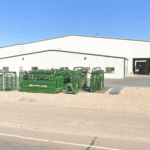
Vopak’s “Floating Roof” Failures Put Louisiana at Risk
EvilCorporations.com • EPA Region 6 Consent Agreement • 37 min readThe Non-Financial Ledger: What $168,000 Doesn’t Cover
Hahnville, Louisiana sits in St. Charles Parish, a stretch of land along the Mississippi River between New Orleans and Baton Rouge that locals and researchers have called “Cancer Alley” for decades. The petrochemical corridor running through this region hosts one of the highest concentrations of industrial facilities in the United States. The people who live here — disproportionately Black, disproportionately low-income — did not choose to live next to these plants. Many of their families were here long before the refineries arrived.
Vopak’s terminal in Hahnville stores benzene-containing wastewater generated by a Union Carbide chemical plant that sits directly next to it. Benzene is not a minor irritant. It is a Group 1 human carcinogen, meaning the scientific and medical consensus — backed by the World Health Organization, the International Agency for Research on Cancer, and the EPA itself — is that there is no safe threshold of exposure. There is no amount of benzene you can breathe where the risk of leukemia and other blood cancers drops to zero.
When that stilling well on Tank 1331 sat open and that roof leg on Tank 1301 lacked its required sleeve and seal, benzene vapors were rising from those tanks and going somewhere. They didn’t disappear at the fence line. They traveled with the wind. The families in Hahnville, the workers driving on Louisiana Highway 3142, the children at the school nearest to that industrial corridor — none of them were told that the required containment on those tanks had failed. None of them were given a choice. They breathed whatever came out, in whatever concentration it reached them, for however long those conditions persisted.
The settlement document tells us EPA detected the emissions on April 20, 2022, inspected on April 21, 2022, and that Vopak says it completed corrective actions by May 4, 2022 — roughly two weeks later. What the document does not tell us is how long those conditions existed before EPA happened to drive by with its mobile monitoring vehicle. The violations were discovered by a federal surveillance program called the Pollution Accountability Team, not by Vopak’s own self-reporting. The company’s internal inspection and maintenance procedures — which the settlement explicitly requires to be overhauled — were apparently not catching these failures on their own.
The $168,000 penalty Vopak agreed to pay will go to the U.S. Treasury. It will fund nothing in St. Charles Parish. No health monitoring. No air quality improvements. No fund for residents who want their blood tested for benzene metabolites. No compensation for years of living downwind from a terminal whose required controls were not working. The penalty amount was calculated based on factors like the company’s compliance history, the economic benefit of noncompliance, and the seriousness of the violations. The people breathing the air were not a line item.
“The families in Hahnville were not told the required containment on those tanks had failed. They breathed whatever came out, in whatever concentration it reached them, for however long those conditions persisted.”
What the law required was straightforward: a sleeve on the roof leg, a closed cover on the stilling well. These are not exotic or expensive pieces of equipment. They are the basic, minimum engineering controls that separate a managed industrial hazard from an uncontrolled one. Their absence meant that tanks holding benzene-contaminated water were venting as openly as an uncapped well. The regulatory framework that required these controls exists precisely because communities like Hahnville cannot afford to lose the fight against chronic, low-level toxic exposure. When the controls fail, the community absorbs the cost in ways that never appear in a settlement document.
What They Got Caught Doing: The Violations in Plain Language
Federal law under the Clean Air Act requires specific, physical engineering controls on tanks that hold volatile hazardous chemicals. Vopak chose to meet its legal obligations using the “external floating roof” compliance pathway — and then failed to maintain the basic components that pathway requires.
- Tank 1301 — Missing Roof Leg Sleeve: Every opening in an external floating roof tank must be covered, sealed, or fitted with a gasketed lid that stays closed at all times except during active use. The roof leg on Tank 1301 had none of these. No sleeve, no cover, no seal, no lid. EPA’s OGI camera captured visible emissions venting directly from this opening. This violated 40 C.F.R. § 60.112b(a)(2)(ii), which in turn put Vopak in violation of 40 C.F.R. § 61.351(a)(2) — the NESHAP for Benzene Waste Operations.
- Tank 1331 — Open Stilling Well: A stilling well is a tube that runs through the floating roof to allow liquid level measurements. It must be kept closed when not in active use. On Tank 1331, EPA found it open — not cracked, open — connected to the roof through what the document describes as a “slotted emissions sleeve.” This violated 40 C.F.R. § 60.112b(a)(2)(ii) and also 40 C.F.R. § 63.1063(b)(3), a separate National Emission Standard under Subpart WW for storage vessel control. The double violation means Vopak broke two independent regulatory frameworks simultaneously with one open port.
- GMAP Detection Came First: The violations were not caught by Vopak’s own inspection program. EPA’s Geospatial Measurement of Air Pollution vehicle, running as part of the federal Pollution Accountability Team project, drove the perimeter on April 20, 2022, and detected emissions before any inspector set foot on the property. Vopak’s internal controls did not find this; a federal surveillance truck driving past did.
- Corrective Actions Were Completed May 4, 2022: Vopak submitted documentation twelve days after the inspection claiming the issues had been fixed. The settlement document does not specify how long the violations existed before EPA’s visit, and the source material contains no information on that duration. What we know is that they were present when EPA arrived unannounced.
- The Facility Operates Under a Louisiana DEQ Permit: Part 70 Permit No. 2520-00186-V1 was issued by the Louisiana Department of Environmental Quality on August 31, 2022 — after the violations were observed but before the EPA issued its notice. The state permitting process and the federal enforcement action appear to have run on entirely separate tracks.
Legal Receipts: Straight from the Document
The Consent Agreement and Final Order filed September 16, 2024, with EPA Region 6 in Dallas contains specific findings and admissions. These are the words in the official record.
“Using the OGI camera, emissions were observed venting from the external floating roof at one of the tank legs on Tank 1301 (EQT 037). Tank 1331 (EQT 016) was observed to have an open stilling well connected to the top of the external floating roof through a slotted emissions sleeve.” Docket No. CAA-06-2024-3372, Paragraph 45 — Findings of Fact
- This is the documented, on-camera observation made by federal inspectors. Emissions were visible on the Optical Gas Imaging footage — this is physical evidence, not an allegation.
- The OGI camera technology detects gas leaks invisible to the naked eye by measuring differences in infrared light absorption. When EPA says emissions were “observed,” that means the gas was dense enough and flowing enough to appear clearly on specialized equipment.
- The “slotted emissions sleeve” on Tank 1331’s stilling well is particularly significant: the sleeve is a component designed to manage the connection between a measuring port and the roof. Its presence does not substitute for a closed cover, and finding it open means the tank was actively exchanging vapor with the atmosphere.
“At the time of the Inspection, the roof leg on Tank 1301 was not equipped with a leg sleeve, gasketed cover, seal, or lid that was maintained in a closed position, in violation of 40 C.F.R. § 60.112b(a)(2)(ii). By not complying with its chosen alternative, 40 C.F.R. § 60.112b(a)(2), Respondent is in violation of 40 C.F.R. § 61.351(a)(2).” Docket No. CAA-06-2024-3372, Paragraph 51 — Alleged Violations
- The phrase “not equipped with” is important. This is not a worn-out seal or a gasket that degraded. There was no sleeve, no cover, no seal, and no lid. The required component was simply missing.
- “By not complying with its chosen alternative” reveals that Vopak elected to use the external floating roof compliance pathway as a substitute for the default tank standards. When a company picks an alternative compliance method, it takes on full responsibility to meet every requirement of that method. Vopak chose this path and then failed it.
- The cascading citation structure (violating § 60.112b triggers a violation of § 61.351, the NESHAP for Benzene Waste Operations) shows how one physical failure immediately breaks federal hazardous air pollutant law — not just a minor operational rule.
“The stilling well on Tank 1331 was open, in violation of 40 C.F.R. § 60.112b(a)(2)(ii). By not complying with its chosen alternative, 40 C.F.R. § 60.112b(a)(2), Respondent is in violation of 40 C.F.R. § 61.351(a)(2). The stilling well on Tank 1331 being open was also in violation of 40 C.F.R. § 63.1063(b)(3). By not complying with the applicable provisions of 40 C.F.R. § 63 Subpart WW, Respondent is in violation of 40 C.F.R. § 63.1103(e)(3).” Docket No. CAA-06-2024-3372, Paragraph 52 — Alleged Violations
- Tank 1331’s open stilling well produced a double violation — breaking both the benzene waste operations NESHAP (Subpart FF) and the separate storage vessel control standard (Subpart WW). These are two independent regulatory systems, both of which Vopak violated simultaneously with one open port.
- 40 C.F.R. § 63.1063(b)(3) specifically requires that “each cover over an opening in the floating roof… shall be closed at all times, except when the cover must be open for access.” There was no active access underway. The well was simply open.
- 40 C.F.R. § 63.1103(e)(3) is the standard that applies to storage vessels holding liquids with organic HAP vapor pressures at or above 3.4 kPa and capacities at or above 95 cubic meters. Vopak’s tanks are benzene wastewater storage vessels that clearly fall within this range, meaning compliance with Subpart WW was mandatory, not discretionary.
“For the purpose of this proceeding, Respondent: […] neither admits nor denies the specific factual allegations contained in the CAFO.” Docket No. CAA-06-2024-3372, Paragraph 53(b) — Civil Penalty and Conditions of Settlement
- This is the standard corporate settlement language that allows companies to resolve enforcement actions without creating a judicial admission of guilt. Vopak pays $168,000, agrees to new compliance obligations, and officially never “admits” to the emissions being documented on federal inspection camera footage.
- The practical effect: in any future legal proceeding by private citizens or other agencies, this settlement cannot be cited as an admission. The official record shows a penalty paid and violations alleged — not violations proven or admitted.
- Vopak did, however, explicitly waive its right to contest the alleged violations, waive its right to appeal the Final Order, and consent to the EPA’s jurisdiction. The company gave up all its procedural defenses while simultaneously declining to admit what the camera showed.
“Respondent agrees that this CAFO constitutes an enforcement action for purposes of considering Respondent’s compliance history in any subsequent enforcement action.” — Paragraph 54(b), Docket CAA-06-2024-3372
Societal Impact Mapping: Who Pays the Real Price
Public Health
Benzene is the central chemical hazard in this case. It saturates the wastewater Vopak stores and handles. Its vapor pressure characteristics are precisely why these tanks require the engineering controls that failed.
- Benzene is classified as a Group 1 human carcinogen by the International Agency for Research on Cancer. Chronic exposure — including low-level, long-term inhalation — is causally linked to acute myeloid leukemia, non-Hodgkin lymphoma, and other blood system cancers. There is no established safe exposure level.
- St. Charles Parish sits within the industrial corridor between New Orleans and Baton Rouge where cumulative air pollution from multiple petrochemical sources already burdens residents. The EPA’s own EJScreen environmental justice tool shows elevated cancer risk indices in communities adjacent to these facilities, driven substantially by air toxics like benzene.
- The violations were discovered by a mobile EPA monitoring program, not by community complaints or emergency response. This means residents had no early warning mechanism. If the GMAP vehicle had not been in the area during its Pollution Accountability Team sweep, the open tank conditions might have continued undocumented for an indeterminate period.
- Vopak’s new compliance conditions require quarterly OGI inspections and seal-gap measurements going forward. These safeguards did not exist — or were not being enforced — at the time of the violations. The settlement acknowledges implicitly that the facility’s prior inspection and maintenance procedures were inadequate.
- The settlement requires Vopak to overhaul its Standard Operating Procedures for inspections, preventative maintenance, oversight, and recordkeeping. The existence of this requirement confirms that no adequate written SOPs existed or were being followed at the time the tanks were found open.
Economic Inequality
The structural economics of industrial siting in Louisiana concentrate environmental risk on communities with the least political and financial power to resist it.
- The $168,000 penalty Vopak agreed to pay is a rounding error against the revenues of a global bulk liquid storage company. Vopak N.V., the Dutch parent company of VIIA, operates terminals across dozens of countries. A $168,000 fine creates no meaningful financial deterrent to future noncompliance at this scale of operation.
- The settlement explicitly states that the penalty was determined in part by “the economic benefit of noncompliance” — meaning EPA calculated how much money Vopak saved by not maintaining proper equipment or inspections and factored that into the fine. The fact that this calculation is necessary confirms that the economic incentive to skip compliance exists and was operative.
- The IRS notification requirement in the settlement (Paragraph 76) confirms the penalty exceeds $50,000 and must be reported to federal tax authorities. The settlement also specifies that the penalty is not tax-deductible. These provisions exist because in many past corporate pollution cases, companies have claimed penalties as business expenses, effectively having taxpayers subsidize the cost of regulatory violations.
- Residents living near the Vopak terminal in Hahnville have no direct compensation mechanism in this settlement. None of the $168,000 goes to a community health fund, air monitoring program, or remediation effort in St. Charles Parish. The public in whose interest the Clean Air Act was written receives zero direct financial benefit from this enforcement action.
- The independent third-party audit Vopak must fund, the quarterly inspections, and the seal-gap measurements are all costs borne by the company going forward. These are compliance costs that should have existed from the beginning. The community bore the externalized cost of their absence for however long the tanks were in the noncompliant condition EPA found.
The “Cost of a Life” Metric
Federal penalty calculations factor in company size, economic benefit of noncompliance, and violation severity. Here is what the number means in practice.
What Now? The Compliance Trap and What You Can Do About It
Vopak has signed a settlement that requires new inspection protocols, an independent audit, and quarterly OGI surveys. These are good requirements. They are also requirements that should have been in place before April 20, 2022, when an EPA surveillance truck had to catch what internal operations missed.
Who Is Accountable at This Facility
- Managing Director, VIIA St. Charles, LLC: John Caamano, 2000 West Loop South, Suite 1040, Houston, TX 77027. He signed the Consent Agreement on September 16, 2024. His name is on the document. He is the senior executive on record.
- EPA Enforcement Contact: Benjamin Donaldson, U.S. EPA Region 6, Donaldson.Benjamin@epa.gov. All inspection reports, OGI videos, and seal-gap measurement documentation are required to be submitted to this officer under the settlement terms.
- Respondent’s Legal Counsel: Dottie Watson, Foley [law firm], DWatson@foley.com, 1000 Louisiana Street, Suite 2000, Houston, TX 77002.
Regulatory Watchlist
These are the agencies with active jurisdiction over this facility and similar industrial operations.
- EPA Region 6 (Dallas): Primary federal enforcer. Filed and settled Docket CAA-06-2024-3372. Has reserved the right to pursue enforcement for any new violations found during the mandated audit and inspection period.
- Louisiana Department of Environmental Quality (LDEQ): Issued the facility’s Part 70 Operating Permit. Received a copy of the EPA’s Notice of Violation. Has jurisdiction over state air quality permits and can impose independent penalties.
- EPA Office of Environmental Justice and External Civil Rights: The cumulative pollution burden in Cancer Alley communities has been the subject of formal Title VI civil rights complaints. This office investigates whether state environmental agencies (like LDEQ) are discriminatorily permitting industrial facilities in communities of color.
- OSHA: The facility’s workers handle benzene-contaminated wastewater. OSHA’s benzene standard (29 C.F.R. § 1910.1028) applies to workplace exposures. Worker safety in benzene operations is a separate enforcement domain from the EPA’s ambient air rules.
- Department of Justice, Environment and Natural Resources Division: The settlement document notes that EPA and DOJ jointly determined this matter was appropriate for administrative (rather than judicial) penalty. DOJ retains authority to pursue civil judicial action if Vopak violates the Final Order.
How to Push Back
- Demand the Audit Report: The independent audit Vopak must fund and conduct will be submitted simultaneously to EPA and Vopak. Under the settlement, it is a public document. File a Freedom of Information Act (FOIA) request with EPA Region 6 for the audit report once submitted. FOIA requests can be filed at foia.epa.gov. The settlement requires no confidential business information claims to be asserted over audit documents.
- Contact the Louisiana Bucket Brigade: This New Orleans-based environmental justice organization has been documenting industrial air pollution in Cancer Alley for decades. They run community air monitoring programs and coordinate with affected residents. They can help St. Charles Parish residents monitor air quality independently of any company-reported data.
- Use EPA’s ECHO Database: The Enforcement and Compliance History Online (ECHO) database at echo.epa.gov tracks inspection records, violation history, and penalty actions for every facility regulated under federal environmental law. Docket CAA-06-2024-3372 will appear there. You can track Vopak’s ongoing compliance reports when they are submitted.
- Demand the OGI Video Footage: Paragraph 61(e) of the settlement requires Vopak to submit OGI video capture documenting any emissions observed during the quarterly inspections. These videos should be obtainable via FOIA. The original April 21, 2022 inspection footage referenced in the settlement also exists in the EPA’s files.
- Organize at the Parish Level: St. Charles Parish Council meetings are public. Residents can appear to demand that LDEQ be questioned about why a permit was issued in August 2022, after EPA had already found violations, with no apparent condition requiring the violations to be resolved first. That sequence of events is worth scrutiny at the local government level.
- Support Cumulative Impact Legislation: Louisiana has historically lacked cumulative impact assessment requirements — rules that would force regulators to consider the total toxic burden on a community before issuing new permits. Environmental justice advocates in Louisiana have been pushing for such frameworks. Supporting those organizing efforts creates the legal infrastructure to fight the next permit before it is issued.
The source document for this investigation is attached below.