Four Years of Poison, Zero Reports: How Cyanco International Hid Its Sodium Cyanide Operation from the Federal Government
A Cyanide Factory With No Paper Trail: What Cyanco Was Hiding and Why It Matters
Sodium cyanide is not an obscure industrial byproduct. It is one of the most deliberately toxic substances manufactured at industrial scale anywhere on earth. It is used primarily in gold and silver mining, where it leaches precious metals from ore through a process that has poisoned rivers, groundwater, and communities on multiple continents. It kills human beings at microgram-per-kilogram doses. It requires specialized emergency response protocols. It is the kind of chemical that federal law was specifically designed to track, document, and disclose, because the public has a right to know when thousands of pounds of it are being made in their backyard.
Cyanco International LLC operates a facility at 1 Monsanto Rd FM 2917, Alvin, TX 77511. The address is worth noting: the road is named after Monsanto. Alvin is a small city in Brazoria County, Texas, roughly 30 miles south of Houston. It sits within one of the most petrochemically saturated industrial corridors in the United States. The people who live nearby did not need another unreported toxic chemical operation in their community. They got one anyway.
Under the Toxic Substances Control Act (TSCA) and its Chemical Data Reporting rule at 40 C.F.R. Part 711, any manufacturer producing 25,000 pounds or more of a reportable chemical substance at a single site during any calendar year is required to submit production data to the EPA during each four-year CDR submission cycle. This is the baseline transparency mechanism for industrial chemical production in the United States. It is how regulators, researchers, first responders, and communities find out what is being made, how much of it, and where. It is a legal requirement with no ambiguity and no loopholes for Cyanco’s situation.
Cyanco manufactured sodium cyanide in excess of the 25,000-pound threshold in at least one of the calendar years 2020, 2021, 2022, and 2023. The EPA’s enforcement document states the violation covered all four of those years. The 2024 CDR submission period opened on June 1, 2024 and was ultimately extended to November 22, 2024. Cyanco filed nothing. The company that produces one of the most toxic chemicals in commercial use stayed quiet for the entire reporting window, then stayed quiet some more, until federal investigators came knocking in February 2025.
— EPA Region 6, Docket No. TSCA-06-2025-6181, Paragraph 33
The CDR system exists specifically because the public cannot protect itself from chemical hazards it does not know about. Emergency responders cannot plan for substances that are not on the map. State and local agencies cannot monitor air or water near facilities that never declared what they were making. The entire architecture of chemical safety depends on this disclosure chain. Cyanco broke it for four years and paid less than the average American makes in a year to make it go away.
The Numbers That Tell the Story
The chart above renders the gap between what Cyanco paid and what the law allowed. TSCA Section 16, 15 U.S.C. § 2615, authorizes penalties of up to $37,500 per day of violation. Even a conservative single-year calculation produces a maximum exposure of roughly $13.7 million. Cyanco paid $28,039 total. The EPA accepted it. The math is an indictment of enforcement, not just the company.
The Non-Financial Ledger: What a Four-Year Reporting Blackout Costs People Who Don’t Have Lawyers
There is a specific kind of theft that does not show up in criminal codes. It is the theft of information. When a corporation withholds mandatory data about what toxic chemicals it is producing, it takes something from every person who lives downwind, downstream, or within emergency response range of its facility. The people of Alvin, Texas, and the broader Houston metro area did not know, for four consecutive years, that a company at the end of a road named for one of the most notorious chemical corporations in American history was manufacturing sodium cyanide in excess of 25,000 pounds annually. They were not given a choice about that knowledge. It was kept from them by corporate inaction, and ratified by a federal penalty so small it functions as permission.
Sodium cyanide is acutely toxic through inhalation, ingestion, and skin absorption. It interferes with cellular respiration by binding to cytochrome c oxidase, effectively starving cells of oxygen from the inside. Industrial releases of the compound have caused mass casualty events at mining and chemical facilities internationally. Emergency planning for a facility that handles this substance requires local fire departments, hazmat teams, and hospitals to know it is there, in what quantities, and through what processes. The CDR reporting system feeds directly into the kind of community right-to-know infrastructure that determines whether a fire department shows up to a chemical accident with water hoses or with the specialized neutralizing agents required to prevent a cyanide release from becoming a neighborhood-wide catastrophe. Four years of missing data is four years of degraded emergency preparedness.
The people most exposed to this information gap are the workers inside the Cyanco Alvin facility and the residents of the surrounding community. Alvin, Texas, is not a wealthy suburb with political connections and well-funded environmental advocacy organizations. It is a working-class city in Brazoria County. Its residents rely on state and federal agencies to enforce the laws that are supposed to keep them informed about what is happening in the industrial facilities around them. When those agencies settle four-year violations for $28,039, they communicate something clear to everyone paying attention: the cost of hiding is cheaper than the cost of compliance, and the people who bear the risk are not the people making the calculation.
Consider the asymmetry of this situation with clarity. Cyanco International LLC is not a mom-and-pop chemical shop. It is, per the EPA’s own filings, classified under NAICS code 325199, “All Other Basic Organic Chemical Manufacturing,” a sector dominated by large industrial operations with professional compliance staff, legal counsel, and regulatory affairs departments. The company’s compliance contact is titled “Head of SHES,” which stands for Safety, Health, Environment, and Sustainability. A company large enough to employ a specialized SHES executive for its specialty mining chemicals division has the institutional infrastructure to know about CDR reporting obligations. The failure to report was not an oversight buried in complexity. It was a gap in execution at a company that explicitly exists to manage exactly this kind of obligation.
The dignity harm here is real and specific. When a company like Cyanco skips its CDR filings, it treats the communities around its facilities as irrelevant. The reporting requirement exists because the public, through Congress, decided that communities have a right to know what toxic chemicals are being manufactured near them. That right was voted into law. Cyanco’s failure to report was not a technical paperwork lapse; it was a practical denial of the community’s legal right to information. The residents of Alvin did not get to weigh in on whether they were comfortable living near a facility producing tens of thousands of pounds of sodium cyanide annually. The data that would have made that conversation possible was never filed.
The settlement’s finality compounds this. Under the consent agreement, Cyanco paid $28,039, certified it had corrected the violation, and walked away. The EPA closed the matter. No public hearing was held. No community notification was required. No independent audit of the four-year production history was mandated. The community that was denied information for four years received no formal acknowledgment that they had been wronged, no remediation of the information gap, and no binding commitment that this would not happen again beyond the standard boilerplate that the company must comply with applicable law going forward. The ledger, in human terms, remains wide open.
Legal Receipts: The Document Speaks for Itself
Every item below is a verbatim or directly cited passage from EPA Docket No. TSCA-06-2025-6181, the Consent Agreement and Final Order in the matter of Cyanco International LLC. These are the receipts.
“For at least one of the calendar years 2020, 2021, 2022, and 2023, Respondent manufactured greater than 25,000 pounds of one chemical substance at the facility, with the following Chemical Abstract Services Registry Number (CASRN): Sodium cyanide (CASRN 143-33-9).” — Findings of Facts and Conclusions of Law, Paragraph 23, Docket No. TSCA-06-2025-6181
“During calendar years 2020, 2021, 2022, and 2023, Respondent manufactured Sodium cyanide (Na(CN)), identified in Paragraph 23, in excess of the applicable threshold quantity for reporting for the 2024 CDR Rule.” — Alleged Violations, Count 1, Paragraph 32, Docket No. TSCA-06-2025-6181
“Respondent failed to report to EPA for Sodium cyanide (Na(CN)) during the 2024 submission period.” — Alleged Violations, Count 1, Paragraph 33, Docket No. TSCA-06-2025-6181
“Respondent violated section 15(3)(B) of TSCA, 15 U.S.C. § 2614(3)(B), by failing to submit this report as required by a rule promulgated under TSCA.” — Alleged Violations, Count 1, Paragraph 34, Docket No. TSCA-06-2025-6181
“Respondent: a. admits the jurisdictional allegations set forth herein; b. neither admits nor denies the factual and other legal allegations stated herein; c. consents to the assessment of a civil penalty, as stated herein; d. consents to any conditions specified herein; e. waives any right to contest the allegations set forth herein; and f. waives its rights to appeal the Final Order accompanying this Consent Agreement.” — Consent Agreement and Civil Penalty, Paragraph 35, Docket No. TSCA-06-2025-6181
“Respondent agrees that, in settlement of the claims alleged herein, Respondent shall pay a civil penalty of twenty-eight thousand and thirty-nine dollars ($28,039).” — Penalty Assessment and Collection, Paragraph 39, Docket No. TSCA-06-2025-6181
“Section 16 of TSCA, 15 U.S.C. § 2615, authorizes the assessment of a civil penalty for violations of TSCA Section 15, 15 U.S.C. § 2614, in an amount not to exceed $37,500 for each day of the violation.” — Statutory and Regulatory Background, Paragraph 13, Docket No. TSCA-06-2025-6181
“On or about February 12, 2025, EPA initiated an offsite compliance monitoring investigation of the Respondent’s facility to conduct a record review and assess the company’s compliance with TSCA.” — Findings of Facts and Conclusions of Law, Paragraph 27, Docket No. TSCA-06-2025-6181
“On April 02, 2025 EPA Region 6 issued a notice of violation to the Respondent identifying the TSCA Section 8(a) violation related to the failure to report a chemical subject to the 2024 Chemical Data Reporting Rule.” — Findings of Facts and Conclusions of Law, Paragraph 28, Docket No. TSCA-06-2025-6181
“Nothing herein shall be construed to limit the power of EPA to undertake any action against Respondent or any person in response to conditions that may present an imminent and substantial endangerment to the public health, welfare, or the environment.” — Effect of Consent Agreement and Reservation of Rights, Paragraph 56, Docket No. TSCA-06-2025-6181
“Respondent hereby certifies that as of the date of the execution of this CAFO, Respondent has corrected the violations alleged in this CAFO and is now, to the best of its knowledge, in compliance with the applicable provisions of the 40 C.F.R. Part 711 TSCA Chemical Data Reporting requirements.” — Additional Terms of Settlement, Paragraph 48, Docket No. TSCA-06-2025-6181
“Penalties paid pursuant to this CAFO shall not be deductible for purposes of Federal, State, and local taxes.” — Effect of Consent Agreement and Reservation of Rights, Paragraph 53, Docket No. TSCA-06-2025-6181
“Any change in the legal status of the Respondent, or change in ownership, partnership, corporate or legal status relating to the company, or changes pertaining to its ownership and/or management of will not in any way alter Respondent’s obligations and responsibilities under this CAFO.” — Additional Terms of Settlement, Paragraph 45, Docket No. TSCA-06-2025-6181
— Paragraph 44, Docket No. TSCA-06-2025-6181
Societal Impact Mapping: What Unreported Cyanide Manufacturing Does to a Community
Environmental Degradation
Sodium cyanide is classified as a hazardous substance under multiple federal frameworks precisely because of its capacity to devastate ecosystems. When sodium cyanide contacts water, it forms hydrogen cyanide gas, a compound lethal to aquatic life at concentrations measured in parts per billion. Cyanide spills from mining and chemical facilities have wiped out fish populations, contaminated drinking water sources, and rendered entire river systems biologically dead for years. The Baia Mare disaster in Romania in 2000, widely considered the worst environmental accident in Europe since Chernobyl, was caused by a cyanide-laden tailings pond breach at a gold mine. That is the industrial context within which Cyanco operates and produces its product.
The Alvin, Texas facility sits in Brazoria County, a region already under extraordinary petrochemical pressure. The broader Houston-Galveston area consistently ranks among the most air-polluted in the United States. Brazoria County is laced with industrial waterways and drainage systems that feed into the Gulf of Mexico. The CDR system that Cyanco failed to participate in for four years feeds into EPA risk assessment models, state environmental permit reviews, and community-level environmental justice analyses. When production data is missing, those models produce incorrect outputs. Regulators making decisions about cumulative chemical exposure in already-overburdened communities are working with an incomplete picture, and the people in those communities are bearing the consequences of that informational gap.
The fact that the EPA’s investigation was initiated as an “offsite compliance monitoring investigation” involving a “record review” rather than an on-site inspection with environmental sampling means there is no publicly available data in this docket on actual releases, discharges, or environmental conditions at or near the Alvin facility during the four unreported years. The absence of that data is precisely the problem the CDR system was designed to prevent. What was produced, how it was stored, whether any releases occurred, and what the environmental footprint of four years of undisclosed sodium cyanide production looks like remain outside the public record as it stands today.
Public Health
The CDR reporting system is a cornerstone of the Toxic Substances Control Act’s public health architecture. It is the mechanism through which the EPA, state agencies, academic researchers, and community health advocates obtain a baseline picture of what toxic chemicals are being produced, where, and in what quantities. This data is used to assess cumulative chemical burdens in communities with high concentrations of industrial facilities, to identify whether vulnerable populations, specifically children, the elderly, and people with pre-existing respiratory or metabolic conditions, are being exposed to elevated chemical risk through proximity to production sites. Four years of missing sodium cyanide production data from the Alvin facility represents a genuine gap in this public health surveillance infrastructure.
The acute toxicity of sodium cyanide is only part of the public health story. Chronic low-level exposure to cyanide compounds, through air, contaminated groundwater, or occupational pathways, is associated with a range of neurological and cardiovascular effects. Workers inside the Cyanco facility are the most directly exposed population. Their safety depends on robust regulatory oversight, transparent production reporting, and accurate emergency response planning. When a company fails to report its production data to the federal government, it also degrades the data environment that OSHA, the National Response Center, and state emergency management agencies use to assess worker and community risk. The informational vacuum created by Cyanco’s non-reporting does not stay neatly inside the fence line of a corporate facility.
The settlement document itself contains a passage that makes the stakes explicit. Paragraph 56 states that nothing in the CAFO limits the EPA’s power to act if conditions “may present an imminent and substantial endangerment to the public health, welfare, or the environment.” The EPA included that reservation of rights for a reason. It reflects the agency’s awareness that a cyanide manufacturing operation that has been operating outside the mandatory reporting framework for four years could present undisclosed risks that a penalty payment and a compliance certification do not fully resolve. The public, however, has no access to whatever risk assessment EPA conducted before accepting a $28,039 settlement to close the matter.
Economic Inequality
The penalty in this case is $28,039. According to U.S. Census data, the median household income in Alvin, Texas, hovers around $65,000 to $70,000 annually. The fine Cyanco paid to settle four years of failing to report toxic chemical production is roughly equivalent to five months of income for a median Alvin family. For a company operating in the specialty mining chemicals sector, embedded in global gold and silver mining supply chains, the fine represents a cost of doing business so small it is categorically indistinguishable from a rounding error in an annual budget. This is the economic inequality that environmental enforcement produces when penalties are calibrated to settle cases rather than to deter future violations.
The regulatory framework Cyanco circumvented exists in part because of decades of environmental justice research showing that low-income communities and communities of color bear a disproportionate share of industrial chemical risk in the United States. Brazoria County and its surrounding Houston-area communities fit this pattern precisely. These are not abstract statistics; they are the material conditions of life for people who live near facilities like the Cyanco Alvin plant. When a corporation avoids its reporting obligations, the communities that most need the protections built into the CDR system are the ones who experience the full weight of the information gap. The company’s executives and shareholders do not live downwind of the facility. They experience the cost of the violation as a line item in a legal settlement. The people of Alvin experience it as four years of not knowing what was being produced in their community.
The $37,500-per-day maximum penalty authorized under TSCA Section 16 was set precisely to make non-compliance economically irrational. The theory is that if the fine is large enough, companies will invest in compliance rather than risk enforcement. A settlement of $28,039 for four calendar years of violation inverts that logic entirely. It communicates that the cost of getting caught is far less than the cost of building robust compliance infrastructure, and it does so in a way that is most visible to the industries most likely to repeat the calculation. The economic message this settlement sends to other chemical manufacturers in Region 6 and beyond is measurable and consequential.
The “Cost of a Life” Metric: Running the Numbers
The math above is not rhetorical. It is the literal arithmetic of the consent agreement applied to the duration of the alleged violation. Cyanco International produced sodium cyanide, in excess of 25,000 pounds annually, across four calendar years, without filing the federal reports that would have placed that production on the public record. The settlement resolves that at $19.19 per day. The CDC’s guidelines for hazmat response to sodium cyanide exposure cite immediate danger to life and health (IDLH) concentrations of 4.7 parts per million in air. The EPA’s own risk communication materials for cyanide compounds describe the substance as capable of causing death within minutes of significant exposure. The penalty Cyanco paid does not register on the scale of that hazard.
To translate the figure differently: TSCA permits the EPA to fine a violator up to $37,500 for each day of violation. If the EPA had applied even one week of maximum daily penalties, the fine would have been $262,500, more than nine times what Cyanco actually paid. If it had applied maximum penalties for a single month, the fine would have been $1.125 million. The gap between the statutory maximum and the actual settlement is not explained in the public record. The EPA accepted $28,039. The public did not get to weigh in on that number.
What Now: Names, Watchlists, and What You Can Actually Do
Named Parties in the Record
The following individuals are named in the signed consent agreement and final order filed with the EPA Regional Hearing Clerk on May 22, 2025:
- Vijay Darsi, VP and Secretary of Cyanco International LLC. Signed the consent agreement on behalf of the company on May 20, 2025.
- Chris Stebbins, Head of SHES (Safety, Health, Environment, and Sustainability), Specialty Mining Chemicals, Cyanco International LLC. Listed as the compliance contact for service of the final order. Address: 1 Monsanto Rd FM 2917, Alvin, TX 77511.
- Cheryl T. Seager, Director, Enforcement and Compliance Assurance Division, U.S. EPA Region 6, Dallas, TX. Signed for the EPA on May 21, 2025.
- Thomas Rucki, Regional Judicial Officer, Region 6. Issued the Final Order on May 22, 2025.
- Lorena Vaughn, Regional Hearing Clerk, U.S. EPA Region 6. Filed and served the order on May 22, 2025.
Regulatory Watchlist
These are the agencies with active or potential jurisdiction over Cyanco International LLC and the Alvin, Texas facility. Watch their public dockets.
- U.S. EPA Region 6 (Dallas, TX) — Primary enforcement authority for TSCA violations at this facility. Docket No. TSCA-06-2025-6181 is the active record. EPA reserves the right to pursue additional enforcement actions beyond this settlement.
- OSHA Region 6 — Occupational safety oversight for chemical manufacturing workers at the Alvin facility. Sodium cyanide is covered under OSHA’s Process Safety Management (PSM) standard for highly hazardous chemicals.
- Texas Commission on Environmental Quality (TCEQ) — State-level environmental regulator for Brazoria County industrial facilities. TCEQ has independent authority to require reporting and impose penalties under Texas law.
- National Response Center (NRC) — The federal point of contact for chemical spill and release notifications. Reports on any incidents at the Alvin facility would be logged here.
- Brazoria County Emergency Management Office — Local emergency planning committee (LEPC) responsible for hazmat preparedness. Community members can contact this office to ask what plans are in place for a sodium cyanide incident at the Cyanco facility.
- EPA CDR Public Database — Now that Cyanco has certified compliance, its sodium cyanide production data for the 2020-2023 period should appear in the EPA’s CDR public release. Verify it yourself at EPA’s Chemical Data Reporting public database.
Grassroots and Mutual Aid
If you live in Alvin, Texas, or Brazoria County, you have a right to request information about hazardous chemical facilities in your area. The Emergency Planning and Community Right-to-Know Act (EPCRA) requires facilities handling hazardous chemicals above threshold quantities to file Tier II reports with your state and local emergency planning committees. Request the current Tier II filings for the Cyanco Alvin facility from the Texas SERC (State Emergency Response Commission) and your local LEPC. This is public information. You are legally entitled to it.
Connect with existing environmental justice organizations operating in the Houston industrial corridor. Groups active in this region have decades of experience fighting petrochemical industry non-compliance and can provide community members with legal and organizing resources. Air Alliance Houston, Texas Environmental Justice Advocacy Services (t.e.j.a.s.), and the Texas Campaign for the Environment are entry points for community members seeking to engage this issue beyond reading about it.
File public comments with EPA Region 6 if and when Cyanco’s facility becomes subject to any new permit review, renewal, or compliance proceeding. The consent agreement explicitly states that EPA reserves its right to pursue additional enforcement actions. Public pressure on regulatory agencies to use that authority is one of the few levers ordinary people have in this system. Use it.
Share this document. The EPA publishes these consent agreements in its public records, but most people never see them. The CDR violation that took four years to surface and cost Cyanco less than a month of a single compliance officer’s salary would have remained invisible without the investigative work of tracking federal enforcement dockets. Share this article with your neighbors, your local elected officials, and anyone who lives near a chemical facility and believes they deserve to know what is being produced next to their home.
The source document for this investigation is attached below.
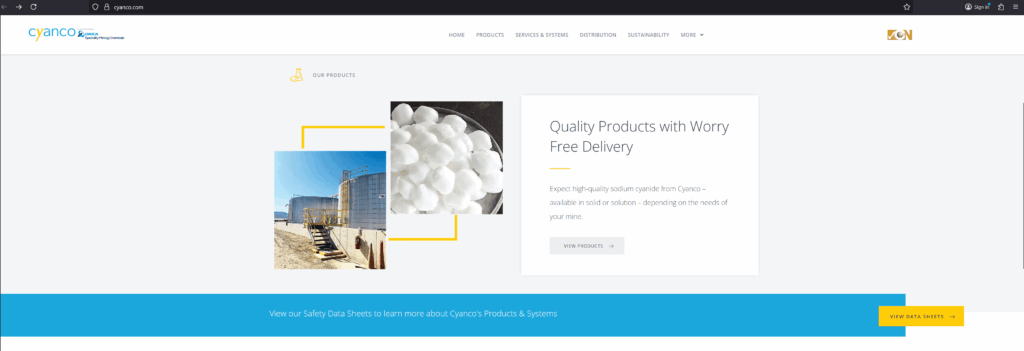
You can read all 18 pages in all its 18 page glory on the EPA’s website: https://yosemite.epa.gov/OA/RHC/EPAAdmin.nsf/Filings/40C3314974C1ECB385258C93000A83D6/$File/Cyanco%20International%20LLC.pdf
Explore by category
Antitrust
Monopolies and anti-competition tactics used to crush rivals.
View Cases →Product Safety Violations
When companies sell dangerous goods, consumers pay the price.
View Cases →Environmental Violations
Pollution, ecological collapse, and unchecked greed.
View Cases →Labor Exploitation
Wage theft, worker abuse, and unsafe conditions.
View Cases →Data Breaches & Privacy
Misuse and mishandling of personal information.
View Cases →Financial Fraud & Corruption
Lies, scams, and executive impunity that distort markets.
View Cases →Intellectual Property
IP theft that punishes originality and rewards copying.
View Cases →Misleading Marketing
False claims that waste money and bury critical safety info.
View Cases →