Lead In The Walls, Lies On The Job Site
A Colorado home renovation company gutted pre-1978 houses without a single lead safety certification, left poisonous paint chips scattered across floors and yards, posted no warnings, and kept no records. The EPA caught them doing it at four separate properties.
Four Properties. Zero Compliance. Federal Violations At Every Turn.
The EPA’s investigation of Solon Homes Inc was not a single surprise raid. It unfolded across more than a year, covering four separate Pueblo, Colorado addresses, and found the same pattern of disregard at every single one.
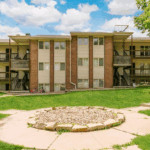
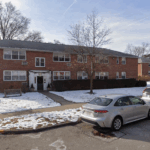
- March 6, 2023: EPA inspectors arrived at the East 3rd Street job site, 1710 East 3rd Street, Pueblo, Colorado. The property was built before 1978. A major remodel was underway. No floor plastic. No ground coverings. No warning signs. Paint chips and debris outside the work area. No certified renovator on site. No firm certification on record.
- April 2, 2024: EPA inspected 1916 Bragdon Avenue, Pueblo, Colorado, another pre-1978 property in active renovation. The inspectors found the identical set of failures: no floor coverings, no ground coverings, no warning signs, uncontained waste with paint debris scattered outside the work area, and no certified renovator assigned.
- July 9, 2024: The EPA formally requested information from Solon Homes about two additional properties where renovations were planned or underway. This is the moment the company knew regulators were watching both past and future work.
- August 16, 2024: Solon Homes submitted information about recent renovations at 55 Small Avenue and 412 East Ash Street, both in Pueblo, Colorado. For both properties, the company could not produce documentation that a certified renovator was assigned, and could not produce documentation that required post-cleaning verification had been performed: four more violations.
- All four properties were legally defined as “target housing” under the Toxic Substances Control Act, meaning federal law specifically and explicitly required every lead-safe work practice Solon Homes ignored.
What A Fine Cannot Measure: The Real Price Paid By Pueblo Families
Lead poisoning does not send a bill. It arrives quietly, in a child’s bloodstream, months or years after the exposure. By the time a doctor catches it, the damage is often done. That is the particular cruelty of what federal lead safety rules were designed to prevent, and what Solon Homes’ consistent, documented failure to follow those rules put at stake on four Pueblo streets.
The homes on East 3rd Street, Bragdon Avenue, Small Avenue, and East Ash Street were all built before 1978. That year is not an arbitrary cutoff. It is the year the federal government banned lead-based paint in residential housing, because decades of evidence had made one fact unavoidable: lead paint in older homes is one of the most common sources of childhood lead poisoning in the United States. Dust from disturbed lead paint, invisible to the eye, settles on floors where toddlers crawl. It clings to window sills children touch. It lands in yards where kids play.
Federal law does not require that a company prove a child was harmed before enforcing lead safety rules. The standard is prevention, because the harm is so well-documented and so irreversible. Lead poisoning in children causes permanent brain damage. It lowers IQ, causes behavioral problems, impairs hearing, and can stunt physical growth. There is no treatment that reverses neurological damage once it occurs. No medication. No therapy. No settlement check.
When EPA inspectors arrived at East 3rd Street and Bragdon Avenue, they found workers tearing into the walls of pre-1978 homes with no plastic on the floors to capture the falling dust. No sheeting on the ground outside to catch debris. No warning signs telling anyone to stay back. Paint chips and debris had already escaped the work area. A certified renovator, the trained professional whose job is to ensure none of this happens, had never been assigned to either site. The company itself had never even obtained the basic certification from the EPA that would allow it to legally perform this kind of work.
Consider what that looks like in practice. People were living around these job sites. Families in Pueblo, a city with a median household income well below the national average, in neighborhoods where older housing stock is common, were trusting that the company renovating homes near them or for them was following the law. They had every reason to expect that. The law requires it. Solon Homes did not bother.
The record-keeping violations at Small Avenue and East Ash Street add another dimension. The company could not prove that certified renovators had been assigned. It could not prove that post-cleaning verification had been performed. Post-cleaning verification is the final check, the step where a trained renovator confirms the work area has been properly cleaned of lead dust before occupants return. Without that documentation, there is no way to know whether those homes were safe to re-enter. There is no record that anyone checked.
Pueblo’s communities of color and low-income residents are disproportionately exposed to lead hazards through older housing. The families most likely to be renting or living in pre-1978 homes are also the families with the least power to demand that contractors follow the rules. Solon Homes operated in that gap between legal obligation and community power, and it cost the company $40,200. The families living with the uncertainty of what dust they may have breathed pay a price that has no installment plan.
Directly From The Document: What The EPA Found And What Solon Homes Agreed To
These are the words of the official federal consent agreement, Docket No. TSCA-08-2025-000, filed with EPA Region 8 on September 24, 2025. Every quote below is verbatim.
“At both the East 3rd Street Jobsite and the Bragdon Avenue Jobsite, at the time of the inspections, the EPA observed that no plastic sheeting or other impermeable material was covering the floor surfaces in the work areas to contain dust.” — Consent Agreement, Counts 4-5, Paragraph 24
- This is an admission documented by federal inspectors, not a claim. EPA personnel were physically present and observed the absence of floor coverings at two separate job sites during active renovation of lead-paint-era homes.
- Floor coverings are one of the most basic requirements of the RRP Rule: they must be in place before renovation begins, not added later. Their absence means lead-contaminated dust from disturbed paint had nothing stopping it from spreading across the floor of occupied or soon-to-be-occupied residential space.
“At both the East 3rd Street Jobsite and the Bragdon Avenue Jobsite, at the time of the inspections, the EPA observed uncontained waste, including paint chips and debris, outside of the work area.” — Consent Agreement, Counts 8-9, Paragraph 30
- Paint chips from pre-1978 homes are not ordinary construction waste. Federal law treats them as a hazardous material requiring containment precisely because lead particles are highly mobile: chips break down into dust, dust settles on surfaces, and that dust is what enters children’s bodies through normal hand-to-mouth contact.
- “Outside of the work area” means the contamination had already escaped. Whether it reached a living room, a kitchen, or a yard cannot be determined from this document, because the required containment and post-cleaning verification were never implemented.
“Respondent failed to obtain initial firm certification from the EPA prior to performing the renovation at the East 3rd Street Jobsite as required by 40 C.F.R. § 745.89(a).” — Consent Agreement, Count 1, Paragraph 18
- Firm certification is the foundational requirement of the entire RRP system. It is not a technicality. A company cannot legally perform renovation work on pre-1978 housing for compensation without first being certified by the EPA. Solon Homes performed this work without ever clearing that bar.
- The East 3rd Street inspection was the first one conducted, in March 2023. The fact that the company lacked firm certification at that point, and continued operating through at least August 2024 across three additional properties, suggests this was not an oversight quickly corrected.
“Respondent did not assign a certified renovator to the renovations at the East 3rd Jobsite or the Bragdon Avenue Jobsite, as required by 40 C.F.R. § 745.89(d)(2).” — Consent Agreement, Counts 2-3, Paragraph 21
- A certified renovator is not simply a supervisor. This is a role with specific federal responsibilities, including ensuring all required containment is in place, performing or directing the post-cleaning verification, and training any non-certified workers on site. Without one, none of those functions were being performed by anyone legally qualified to perform them.
- The violation occurred at both inspected sites independently. This is a systematic operational failure, not an isolated incident tied to one project or one crew.
“For both the East Ash Jobsite and the Small Avenue Jobsite, Respondent failed to retain or produce the following records to demonstrate compliance with the RRP Rule, pursuant to 40 C.F.R. § 745.86(b)(6): (a) documentation that a certified renovator was assigned, and (b) documentation that the certified renovator performed the post-cleaning verification.” — Consent Agreement, Counts 12-15, Paragraph 36
- Record retention requirements exist so that regulators and residents can verify what actually happened on a job site after the fact. When a company cannot produce those records, there is no way to confirm that required safety steps were ever taken. The absence of documentation is itself a federal violation separate from the underlying failure to perform the required steps.
- Post-cleaning verification is the final safety gate before a home is considered safe for occupancy following renovation. For both Small Avenue and East Ash Street, there is no documented evidence this gate was ever closed.
“By signing this Consent Agreement, Respondent: (a) acknowledges this Agreement constitutes an enforcement action for purposes of considering Respondent’s compliance history in any subsequent enforcement action; (b) admits the jurisdictional allegations made herein; (c) neither admits nor denies the factual allegations contained herein; and (d) consents to the assessment of the penalty specified in this Consent Agreement.” — Consent Agreement, Settlement, Paragraph 40
- The “neither admits nor denies” clause is standard legal boilerplate in EPA consent agreements, but it does not mean the facts are disputed. The EPA’s factual allegations are entered into the official federal record and will be considered in any future enforcement action against this company.
- Solon Homes agreed to pay $40,200 without contesting the EPA’s jurisdiction or the violations in any court or administrative proceeding. The company also waived all rights to judicial or administrative review of this settlement.
Required By Law Versus What Solon Homes Actually Did
Who Actually Pays When A Company Skips Lead Safety Rules
Public Health
The documented violations directly created conditions for lead exposure in residential neighborhoods. The public health consequences of lead exposure are among the most thoroughly researched and most severe in environmental medicine.
- Lead-based paint dust disturbed during renovation of pre-1978 housing is the leading source of childhood lead poisoning in the United States. Every violation involving missing floor coverings, ground coverings, and uncontained waste increased the probability that lead-contaminated particles spread beyond the work area into spaces occupied by people.
- Children under six are the most vulnerable population to lead poisoning. The EPA’s RRP Rule specifically identifies this age group as a key reason pre-1978 housing receives heightened federal protections. There is no documented threshold below which lead exposure is considered safe for children: the Centers for Disease Control and Prevention has stated that no level of lead exposure is safe.
- The absence of post-cleaning verification documentation at Small Avenue and East Ash Street means there is no verified record that those homes were safe for re-entry after renovation. Occupants who returned to those homes had no way of knowing whether lead dust levels had been adequately reduced, because no one with federal certification had confirmed it.
- Lead poisoning causes irreversible neurological damage in children, including lowered IQ, impaired cognitive development, and increased rates of learning disabilities and behavioral disorders. These health outcomes generate lifetime costs in healthcare, special education, and reduced earning capacity that fall on families and public systems, not on the contractor whose negligence contributed to the exposure.
- Adults exposed to elevated lead levels face increased risk of high blood pressure, kidney damage, and reproductive harm. Renovation workers on Solon Homes’ job sites who were not certified and not protected by proper containment protocols were also at elevated risk of occupational lead exposure, a workers’ health issue the document does not address because it falls outside the EPA’s specific enforcement scope here.
Economic Inequality
The geographic and economic context of these violations is not incidental. Pueblo, Colorado is a post-industrial city with a significant working-class and low-income population, and a housing stock that includes a high proportion of pre-1978 homes. These conditions concentrate lead hazard risk in communities with the fewest resources to respond to it.
- Families renting in pre-1978 housing in lower-income neighborhoods are statistically the most likely to be exposed to lead hazards. They are also the least likely to have the financial or legal resources to independently monitor contractor compliance, request EPA certifications, or pursue legal remedies if their health is harmed.
- The cost of childhood lead poisoning falls disproportionately on low-income families and public systems. Medical evaluation, cognitive testing, and any therapeutic interventions are not covered by the contractor. The family absorbs those costs, or the public healthcare system does.
- The $40,200 penalty assessed against Solon Homes represents a fraction of the maximum possible penalty. With 15 violations at a maximum of $49,722 each, the theoretical ceiling was $745,830. Solon Homes paid 5.4 cents on the maximum dollar. The discount reflects factors like the company’s ability to pay and the nature of a first-enforcement settlement, but the financial math means the penalty may represent a smaller deterrent for a company working in markets where the profit margin on a major remodel exceeds the fine.
- Communities that cannot afford to hire lawyers or environmental consultants to audit renovation contractors must rely entirely on EPA enforcement. When companies know that enforcement is episodic and penalties are a fraction of the maximum, the business calculus of non-compliance becomes less dangerous to the company and more dangerous to the community.
- Pueblo’s median household income sits below the Colorado state average. The neighborhoods where these four job sites are located represent the kind of working-class and lower-income residential areas where pre-1978 housing is most concentrated and where the consequences of lead exposure compound other economic stressors over years and generations.
The Number That Tells You Everything About How This Ended
What You Can Do With This Information Starting Today
This consent agreement is now part of Solon Homes Inc’s federal compliance record. Any future enforcement action against this company must consider it. Here is who is watching, who to contact, and how communities can push back harder than any single EPA fine.
Key Parties Named In The Enforcement Action
- Christel Aime, contact email CAime@aime-management.com, signed the consent agreement on behalf of Solon Homes Inc as the authorized representative of the respondent.
- David Cobb, Supervisor, Toxics and Pesticides Enforcement Section, Enforcement and Compliance Assurance Division, EPA Region 8, signed as the complainant’s authorized representative.
- Kristin Jendrek, Compliance Officer, EPA Region 8, is the designated contact for payment proof and compliance monitoring under this agreement.
- Shaula Eakins, EPA Region 8, is the designated contact for service of the final order.
Watchlist: Regulatory Bodies With Jurisdiction
- EPA Region 8 (Denver): The enforcing authority for this case. Covers Colorado, Montana, North Dakota, South Dakota, Utah, and Wyoming. If you observe renovation work on pre-1978 housing without required lead safety practices, you can file a complaint at epa.gov or directly with Region 8.
- EPA’s Toxic Substances Control Act (TSCA) Enforcement Office: The federal body responsible for RRP Rule compliance nationally. Tracks certified firms and renovators. You can verify whether a company holds current EPA firm certification at the EPA’s RRP database before allowing any contractor to work on a pre-1978 home.
- Colorado Department of Public Health and Environment (CDPHE): Colorado administers its own lead programs and can receive complaints about lead hazards in residential properties independent of federal EPA action.
- OSHA (Occupational Safety and Health Administration): Has jurisdiction over worker lead exposure during renovation activities. If renovation workers are being exposed to lead without proper protections, OSHA complaints can trigger separate enforcement independent of EPA’s RRP Rule.
- HUD (Department of Housing and Urban Development): Has jurisdiction over lead hazards in federally assisted housing and can act on lead paint violations in rental properties receiving federal subsidies.
Direct Actions For Residents And Communities
- Look up contractor certification before any work begins. The EPA maintains a public searchable database of RRP-certified firms. Before any contractor touches a pre-1978 home you live in or rent, search epa.gov/lead to confirm they hold current firm certification. If they do not, that is a federal violation before the first wall comes down.
- Document and photograph job sites in your neighborhood. If you observe renovation work on older housing with no floor coverings visible, no ground sheeting, no warning signs, or paint debris outside the work zone, photograph it with a timestamp and file a complaint with EPA Region 8. Enforcement actions like this one often begin with a complaint-driven inspection.
- Connect with Pueblo-area tenant and housing advocacy organizations. Groups working on housing conditions in post-industrial Colorado cities have the relationships and institutional knowledge to navigate regulatory complaints, support affected families, and apply political pressure on local code enforcement when federal regulators are slow to act.
- Demand lead testing if you have children under six and recent renovation work has occurred near your home. Blood lead level testing is available through pediatricians and community health clinics. In Colorado, children enrolled in Medicaid are entitled to lead screening. Early detection is the only intervention that matters, because the neurological damage cannot be reversed once it occurs.
- Push local officials in Pueblo to require proof of EPA firm certification as part of the building permit process. Cities and counties can, in their permitting systems, require contractors to show valid EPA RRP certification before a permit for renovation of pre-1978 housing is issued. This creates a local checkpoint that does not depend on EPA inspection resources.
The source document for this investigation is attached below.
I decided to skip the introduction here since idk if anybody was actually reading it or just skipping straight to the meat and analysis of the case. We’ll see how this new way of doing it works! But first, please visit this following EPA link for a copy of the above consent agreement: https://yosemite.epa.gov/OA/RHC/EPAAdmin.nsf/Filings/9ED4559B70D9F5B285258D10006F63FD/$File/TSCA-08-2025-0009%20Solon%20Homes%20Consent%20Agreement_rev%209.23.25.pdf
Explore by category
Antitrust
Monopolies and anti-competition tactics used to crush rivals.
View Cases →Product Safety Violations
When companies sell dangerous goods, consumers pay the price.
View Cases →Environmental Violations
Pollution, ecological collapse, and unchecked greed.
View Cases →Labor Exploitation
Wage theft, worker abuse, and unsafe conditions.
View Cases →Data Breaches & Privacy
Misuse and mishandling of personal information.
View Cases →Financial Fraud & Corruption
Lies, scams, and executive impunity that distort markets.
View Cases →Intellectual Property
IP theft that punishes originality and rewards copying.
View Cases →Misleading Marketing
False claims that waste money and bury critical safety info.
View Cases →