
Scribner Grain & Lumber Caught Venting Toxic Gas
The Non-Financial Ledger
This isn’t just about a fine. The sum of $24,106 is pocket change, a rounding error on a corporate balance sheet. The real story is about the non-financial ledger, the one that tracks risk, betrayal, and the quiet gamble a company makes with other people’s lives. Scribner Grain & Lumber Company, located at 223 Railroad Street in a small Nebraska town, made a series of choices. They chose not to replace safety valves on time. They chose not to build simple barriers to protect massive tanks of toxic gas from being hit by a vehicle. They chose not to fix the very foundations their chemical storage relied on. These were not oversights; they were economic decisions. Every dollar saved was a risk transferred directly to their employees and the surrounding community.
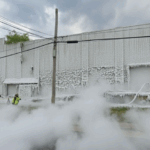
The danger was not abstract. It was not a line item in a risk assessment report that no one reads. According to the EPA’s own inspectors, on February 22, 2023, the danger was in the air itself. Anhydrous ammonia, a gas that is corrosive to skin, eyes, and lungs, was actively leaking from a pipe. This is the reality of deregulation and lax enforcement. A company can operate for years, cutting corners on basic, life-preserving maintenance, until the day the poison starts seeping out. Think of the workers at that facility, breathing that air. Think of the families in Scribner, Nebraska, completely unaware that a chemical cloud could be one valve failure, one truck accident, away from engulfing their homes.
This kind of negligence is a profound betrayal of communal trust. In small towns, local businesses are supposed to be part of the fabric of the community. They employ neighbors and sponsor local teams. But here, that trust was corroded, just like the failing tank supports the EPA found. Scribner Grain & Lumber operated with equipment that violated what the industry itself calls “recognized and generally accepted good engineering practices.” This is the baseline, the absolute minimum for safety, and they failed to meet it. They failed to install emergency shutoff valves correctly. They failed to inspect underground pipes that could be silently rotting away. They didn’t even bother to write down what to do if something went wrong.
The legal document reveals that their Standard Operating Procedures failed to address common, predictable problems. A low flow rate, a blocked line, contamination in the system—these are the day-to-day issues that, without a clear plan, can escalate into a catastrophe. This lack of preparation shows a deep institutional contempt for safety. It suggests a culture where production and profit are the only metrics that matter, and the health of workers and the public is an externality, someone else’s problem to deal with when the leak finally happens. The fine they paid isn’t actually justice. No! Don’t let yourself be fool! It’s actually just the price of a permit to endanger the public, a fee for getting caught.
This was not a hypothetical risk buried in a binder. Anhydrous ammonia was actively leaking from a pipe on the day inspectors arrived.
The final insult is the legal dance of “neither admitting nor denying” the facts. It is a tool that allows a corporation to pay a fine, make the problem go away, and avoid any true accountability for the specific dangers they created. They pay the money, but they do not have to stand before their community and admit, “Yes, we let the valves expire. Yes, our tanks were unprotected. Yes, our pipes were leaking toxic gas into the air you breathe.” This legal fiction allows the cycle to continue. The check is cashed, the case is closed, and the public is left to wonder what other invisible dangers are lurking just down the street, managed by companies that have learned it is far cheaper to pay for their mistakes than to prevent them.
Legal Receipts
The consent agreement between Scribner Grain & Lumber and the EPA is a public record. Below are the direct findings and allegations from that document. These are not our interpretations; they are the government’s official account of the company’s failures.
During the Inspection, EPA personnel discovered that anhydrous ammonia was actively leaking from a vapor line of Respondent’s piping on the riser adjacent to the 30,000-gallon tank.
The company failed to follow basic engineering standards in multiple ways, as listed in the official filing:
a. Failing to replace pressure relief valves before the “change by” date…
b. Failing to install barriers to protect the bulk anhydrous ammonia tanks that would be sufficient to prevent damage to the tanks from vehicle impact…
c. Failing to maintain the integrity of the tank supports and footings…
d. Failing to install emergency shutoff valves in the liquid and vapor fixed piping of the transfer system…
e. Failing to inspect the underground piping at least every five years…
Their written safety plans were fundamentally incomplete, failing to account for common operational failures:
The standard operating procedures did not address common potential deviations such as: 1) not opening a vapor line during a transfer; 2) a low flow rate caused by a system malfunction; or 3) contamination of the anhydrous ammonia either from supplier or due to an unknown breach in the system.
In the settlement, the company agreed to pay a penalty without admitting fault for these specific failures:
Respondent… neither admits nor denies the specific factual allegations stated herein; consents to the assessment of a civil penalty…
The penalty was set at just over twenty-four thousand dollars:
Respondent shall pay a civil penalty of twenty-four thousand one hundred six dollars ($24,106)…
Societal Impact Mapping
Environmental Degradation
Anhydrous ammonia is primarily used as a nitrogen fertilizer; it’s essential for industrial agriculture. But in its raw form, it is a toxic substance with a significant environmental cost when mishandled. An uncontrolled release, like the one actively happening at the Scribner facility, poses a direct threat to the local ecosystem. The gas is lighter than air but rapidly absorbs moisture, including from the soil, plants, and water bodies.
A significant leak can create a dead zone. It can raise the pH of soil and water to levels that are lethal for native plants, insects, and aquatic life. The failure to inspect underground piping is particularly concerning. A slow, undetected leak from a buried pipe could contaminate groundwater for years, poisoning the water table that the local community and ecosystem rely on. The $24,106 fine does not account for the long-term environmental monitoring that should be required after such profound negligence.
Public Health
The most immediate and severe impact of Scribner’s failures is on public health. Anhydrous ammonia is a severe irritant. At low concentrations, it causes coughing and irritation to the eyes, nose, and throat. At high concentrations, it can cause chemical burns to the skin, permanent lung damage, and death. The gas aggressively seeks moisture, meaning it will burn any moist part of the body it contacts, including the lungs.
The list of violations reads like a blueprint for a public health disaster. The lack of protective barriers meant a simple traffic accident could have ruptured a tank, releasing a toxic cloud over Scribner. The expired pressure relief valves could have failed under pressure, causing a catastrophic tank explosion. The active leak meant that every day, workers were being exposed to a known hazardous chemical. This is not a paperwork issue. It is a direct and sustained threat to the bodily autonomy and physical well-being of every person working at or living near that facility.
Economic Inequality
The fine of $24,106 is a textbook example of how the justice system treats corporate crime. It’s a cost of doing business, not a deterrent. Consider the cost of compliance: replacing industrial-grade pressure valves, pouring concrete for vehicle barriers, hiring specialists to inspect underground piping, and maintaining tank foundations. These costs are real. But instead of paying them, Scribner Grain & Lumber effectively offloaded that financial burden onto the public in the form of risk.
This creates a two-tiered system of safety. Wealthier communities often have more resources and political power to fight against such facilities or demand stringent oversight. Working-class and rural communities are frequently seen by corporations as sacrifice zones, where the cost of poisoning the air and endangering residents is lower. The penalty is so small it financially incentivizes other companies to gamble. Why spend fifty thousand dollars on upgrades when the penalty for getting caught is less than half that? This system privatizes profits from corner-cutting and socializes the consequences, leaving ordinary people to bear the true cost of corporate negligence.
What Now?
The individuals responsible for the day-to-day decisions at Scribner Grain & Lumber are not named in the EPA document, but the responsibility rests with the company’s ownership and management.
Corporate Roles on Notice:
- The President/CEO of Scribner Grain & Lumber Company
- The Facility Manager at 223 Railroad Street, Scribner, NE
- The Board of Directors of Scribner Grain & Lumber Company
Watchlist:
These are the agencies tasked with preventing this from happening again. They need public pressure to do their jobs.
- U.S. Environmental Protection Agency (EPA), Region 7
- Occupational Safety and Health Administration (OSHA)
This settlement is a closed case, but the pattern of behavior is not unique. Communities, especially in rural areas, are on the front lines of corporate negligence. Real power doesn’t come from regulators; it comes from mutual aid and local organizing. If you live near an industrial or agricultural facility, find out what chemicals they store. Use the EPA’s public databases. Form community groups to monitor these facilities and demand transparency. Document everything. Build a network with your neighbors so that when a company decides your health is a risk worth taking, you are ready to fight back together.
The source document for this investigation is attached below.
Please click on this link to see the above consent agreement from the EPA’s own website since I’ve been facing false accusations of publishing AI slop lately: https://yosemite.epa.gov/OA/RHC/EPAAdmin.nsf/Filings/0E953680A7BB18D585258D81006DFFFD/$File/Scribner%20Grain%20%20Lumber%20Consent%20Agreement%20and%20Final%20Order.pdf
You can contact Scribner Lumber by calling them @ 402-664-2501
Explore by category
Antitrust
Monopolies and anti-competition tactics used to crush rivals.
View Cases →Product Safety Violations
When companies sell dangerous goods, consumers pay the price.
View Cases →Environmental Violations
Pollution, ecological collapse, and unchecked greed.
View Cases →Labor Exploitation
Wage theft, worker abuse, and unsafe conditions.
View Cases →Data Breaches & Privacy
Misuse and mishandling of personal information.
View Cases →Financial Fraud & Corruption
Lies, scams, and executive impunity that distort markets.
View Cases →Intellectual Property
IP theft that punishes originality and rewards copying.
View Cases →Misleading Marketing
False claims that waste money and bury critical safety info.
View Cases →Related posts:
 Organicgirl LLC paid a $151k fine to the EPA for public endangerment via ammonia leak
 CALAMCO: A California Cooperative Gambled With Public Health And Lost
 The Million-Dollar Mess Private Industry Left for New Jersey Taxpayers
 FGF Brands had a giant toxic ammonia leak. They were only fined $130K by the EPA.
