Fired with Slurs for Trying to Keep People Alive
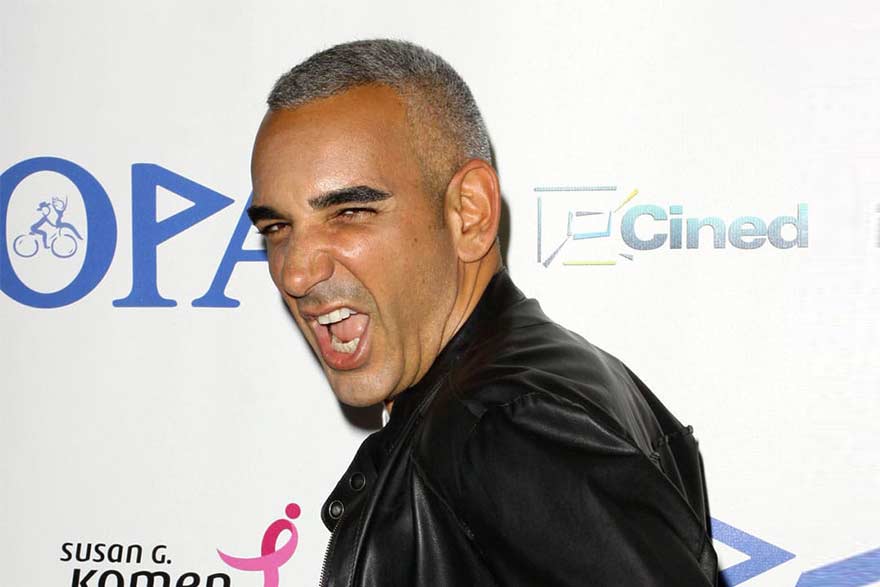
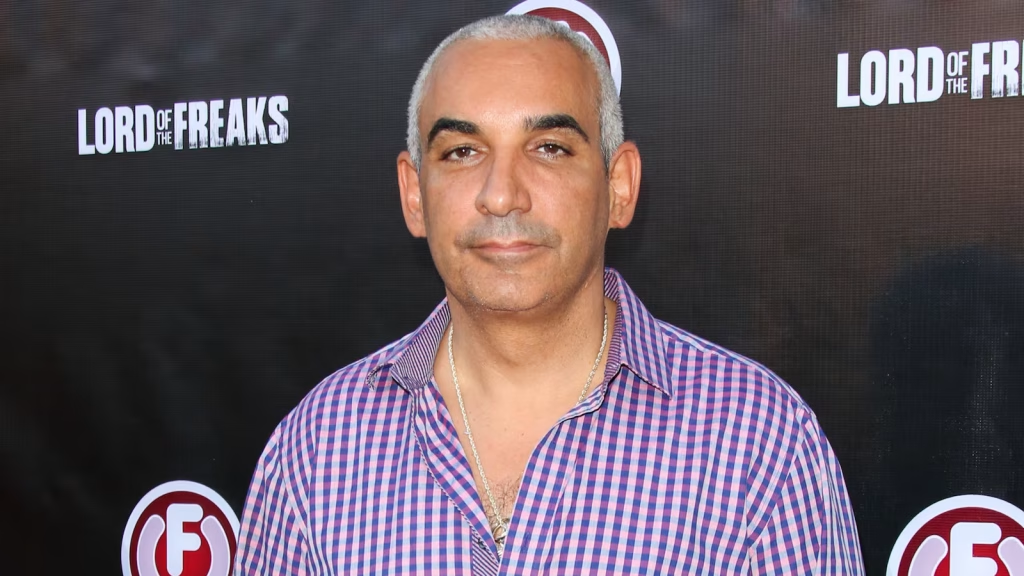
A California jury heard the evidence and concluded that a company’s owner screamed homophobic slurs into an employee’s face, close enough for his spit to land on him, then fired that employee for refusing to suspend 700 pounds of equipment over an audience in a building that four city inspectors had already flagged with roughly 20 code violations.
A Venue That Should Never Have Opened
In September 2017, ADP was racing to convert a Hollywood Boulevard church into a hologram theater in time for a high-profile celebrity investor event scheduled for September 28, 2017. The company had already issued press releases announcing the opening date. Karl Zirpel, ADP’s VP of Operations since March 2014, was on site responsible for installing the hologram projection equipment.
When Zirpel arrived, the building had no restrooms, no fire exit signs, no ADA-compliant ramps, and no drywall. The hologram equipment, including a projector unit weighing 700 pounds destined to be installed in the ceiling directly above the seated audience, had not yet been brought out of storage. This was the building they wanted to fill with celebrities and investors in three days.
On September 25, 2017, four separate Los Angeles City inspectors walked through the site. Every single one of them denied approval for work completed to date. Zirpel documented roughly 20 code violations, including plumbing and electrical deficiencies. The Los Angeles Department of Building and Safety issued a formal correction notice. Two inspectors told Zirpel directly that it would be impossible for the theater to receive approvals in time for the September 28 opening.
Cover-Up Attempt: Plywood and Black Paint
After the inspectors left, ADP’s owner Alkiviades David ordered the construction crew to cover exposed electrical wiring on the theater walls with plywood, paint it black, and hang drapes over it. Zirpel understood this as the creation of a fire hazard inside a venue that already had no posted fire exit signs. The Oakland Ghost Ship warehouse fire, which killed more than 20 people in a similarly unpermitted event space, was explicitly referenced by the fire inspector as a warning to Zirpel and ADP’s chief technical officer.
On September 26, 2017, Zirpel reported his concerns to ADP’s Senior VP of Operations, Ian Robertson, and then placed two calls to Los Angeles County Fire Inspector Eugene Andrews. Zirpel later testified he was so nervous about reporting his own employer that he hung up on the first call. He called back, gave no name, and told the inspector the theater was scheduled to open on September 28, that none of the completed work had been approved, and that someone needed to come look. He was told an inspector would come the next day.
The following morning, Inspector Andrews walked into the theater, briefly assessed what he saw, and ordered everyone out. He halted all work. Standing outside the building, Andrews told Zirpel and Nick, ADP’s chief technical officer, that they could each be held personally liable and referred to the district attorney if anyone was injured in a fire. David’s response to learning all of this via text message was: “We need this setup done. The permits will be given tomorrow morning. Nothing stops.”
Timeline of Events: September 2017
The Moment of Firing
When David arrived at the theater on the evening of September 27 and found work stalled, Zirpel confronted him directly. Zirpel told David they had zero inspector sign-offs, listed the reasons the event could not proceed safely, and repeated that continuing the work was unsafe. David, according to the court record, “immediately blew up.” He told Zirpel to shut up, to “go with the program,” and stated Zirpel was “in or out.”
When Zirpel kept repeating his safety concerns, David entered what witnesses described as a “fit of rage.” He stood so close to Zirpel’s face that Zirpel could feel David’s spittle hitting him. David yelled obscenities, called Zirpel a “faggot,” and told him he was fired. As Zirpel turned and walked out, David told him to “suck my dick.” David then followed Zirpel outside and continued screaming at him in the street.
The Non-Financial Ledger: What Money Does Not Repay
Zirpel had worked for ADP for four years. He had built his expertise from the ground up, learning hologram technology, installation, and production staging. By 2014, ADP had trusted him enough to make him Vice President of Operations. He had earned real institutional knowledge in a niche technical field, and he had given ADP years of his professional life. Then, in the span of a few minutes in a half-finished theater, his employer erased all of that in the most degrading way imaginable.
Zirpel was gay. He had not disclosed his sexual orientation to most of his coworkers. He worked in a masculine construction environment where, by his own account, coming out carried real social risk. Alkiviades David was one of the very few people in that workplace who knew. When David screamed “faggot” and “suck my dick” in front of Zirpel’s colleagues, he weaponized that private knowledge to maximize the humiliation. He did not stumble into those words. He reached for them deliberately, knowing exactly what they would cost Zirpel.
The court record preserves a detail that is easy to overlook and impossible to forget: after screaming at Zirpel, following him outside, and continuing to berate him in the street, David then “came to his senses,” acknowledged the mistakes he had made, and tried to embrace Zirpel. Zirpel told him to get away. This is not the behavior of someone who lost control in a moment of stress. This is the behavior of someone who knew he had gone too far, understood what he had done, and assumed a hug could fix it. Zirpel walked away and never returned to work.
Consider also what Zirpel was actually doing when he was fired. He was not committing insubordination for personal gain. He was refusing to install a 700-pound projector into an unpermitted ceiling above an audience of human beings. He had watched four city inspectors flag the building. He had been told personally by a fire inspector that he could be criminally charged if anyone died in a fire there. He had reported all of this to his superiors through proper channels. He had texted in-house counsel. He had called the fire department. He had done everything a responsible employee is supposed to do. His reward was public humiliation and immediate termination.
Legal Receipts: Straight from the Record
“David ‘immediately blew up,’ and told Zirpel to shut up and ‘go with the program,’ and that he was either ‘in or out.’ Zirpel kept repeating what they were doing was not safe. David went into a ‘fit of rage,’ yelled in Zirpel’s face, and using numerous obscenities, told Zirpel to ‘get out,’ to ‘get the f… out, you faggot,’ and that Zirpel was fired. While yelling at Zirpel, David was standing so close to Zirpel that Zirpel could feel David’s spittle flying against his face.” California Court of Appeal, Zirpel v. Alki David Productions, Inc., Certified for Publication July 14, 2023
“We need this setup done. I read this text you sent. The permits will be given tomorrow morning. Nothing stops.” Text message from Alkiviades David to Karl Zirpel, September 27, 2017 — cited in court record as evidence of causation
“The Court has determined that the September 28, 2017 event at the Hologram Theater had not been properly permitted and thus the construction that related to that September 28, 2017 event was unlawful.” Trial Court instruction to the jury, as quoted in the Court of Appeal opinion
“There is substantial evidence David acted with malice when terminating Zirpel’s employment… David verbally abused Zirpel in the presence of his coworkers, screaming obscenities and homophobic epithets in Zirpel’s face, following him outside the theater, and telling him to ‘suck my dick.’ This conduct is substantially different than the adoption of a flawed attendance policy… We cannot conclude the conduct at issue here was at a ‘low end of the range’ of reprehensible behavior.” California Court of Appeal, Zirpel v. Alki David Productions, Inc., affirming the $6 million punitive damages award
“The trial court upheld the punitive damages award based on ‘sufficient evidence of reprehensible conduct’ by David… The most reprehensible aspect of David’s conduct was firing an employee for standing up for the safety of invitees to the event.” California Court of Appeal, Zirpel v. Alki David Productions, Inc., July 14, 2023
Societal Impact: Who Else Was at Risk
Public Safety: 700 Pounds Over a Crowd
The physical danger at the core of this case was concrete and documentable. ADP planned to suspend hologram projection equipment weighing 700 pounds from the ceiling of a building that four city inspectors had refused to approve. The ceiling and floor integrity had not been verified. Plumbing and electrical violations were documented and unresolved. Exposed electrical wiring had been hidden behind painted plywood and drapes rather than corrected. The fire inspector invoked the Oakland Ghost Ship fire, which killed more than 20 people, as a direct analogy for what he was observing at the theater.
The event on September 28, 2017 was an invitation-only affair for celebrities and potential investors. These were members of the public, not ADP employees. They had no knowledge of the 20-plus code violations, the denied inspections, the covered wiring, or the unpermitted equipment installation above their heads. ADP’s own in-house counsel acknowledged a permit application had been submitted but the record shows the only permit document ADP ever produced was printed on October 7, 2021, four years after the event, and indicated the permit was issued on the day of the event itself, September 28, 2017. The law required the permit before construction began. ADP had the permit issued on the same day attendees walked through the door.
Zirpel’s refusal to complete the installation may have prevented a structural or electrical catastrophe. The court record does not speculate on this, and neither will this article. The documented facts are sufficient: a building with unresolved electrical violations, no fire exit signage, and 700 pounds of ceiling-mounted equipment drew an invited crowd without any of them knowing the state of the space they were entering. One employee said no. ADP fired him for it.
Economic Inequality: What It Cost a Working Person to Do the Right Thing
Karl Zirpel earned $72,800 per year as Vice President of Operations at ADP. For that salary, he was managing complex technical installations, navigating building code compliance, supervising renovation projects, and serving as the company’s primary point of contact with city inspectors. When he was fired on September 27, 2017, he lost that income immediately. The jury awarded him $368,717 (more than five years of his entire annual salary, and barely enough to cover two years of rent for a family in Los Angeles) in economic damages, meaning the financial destruction to his career took years to develop and years to document.
ADP, meanwhile, hosted its celebrity investor event as scheduled. The show went on. The company’s owner attended. The workers who stayed and followed orders continued their employment. The one person who said the situation was unsafe and that continuing was illegal lost his job, his income, his privacy, and his dignity in the same moment, on the same night, in front of his colleagues. This is the standard math of workplace retaliation: the person with the least power pays the highest price for telling the truth.
ADP’s financial condition at the time of trial is partially obscured because the company refused to fully produce the financial documents requested during the punitive damages phase. The trial court ruled that because ADP withheld documents, ADP could not then challenge the sufficiency of the evidence used to calculate its net worth. A company that could afford celebrity investor events, hologram technology, Hollywood Boulevard venues, in-house counsel, and a VP-level operations staff refused to show the jury its books when it came time to calculate the punishment for what that company had done. The court shut that strategy down.
Damages Breakdown: What the Jury Awarded Zirpel
The Cost of a Life: By the Numbers
What Now? Who Answers. Who Watches.
Corporate Accountability
- Alkiviades David: Principal and owner of Alki David Productions, Inc. Named throughout the court record as the individual who committed the retaliatory firing with malice, oppression, and fraud. The jury’s punitive award was directed at ADP, the company he owns and controls.
- Alki David Productions, Inc. (ADP): The entertainment and media company found liable on three separate whistleblower retaliation counts. Withheld financial documents during the punitive damages phase and then attempted to argue the resulting award was excessive. The court rejected that argument.
Regulatory Watchlist
- California Labor Commissioner’s Office (DLSE): The agency with enforcement authority over Labor Code Sections 1102.5 and 232.5, the exact statutes under which Zirpel prevailed. Workers in California who face retaliation for reporting safety violations can file a complaint here.
- Cal/OSHA: The California workplace safety agency. The conditions at the Hollywood Boulevard theater, including electrical violations, unpermitted ceiling equipment over audiences, and covered wiring, fall squarely within Cal/OSHA’s mandate. Workers can report unsafe conditions anonymously.
- Los Angeles Department of Building and Safety (LADBS): Already issued the correction notice in this case. If ADP or its principals operate future venue projects in Los Angeles, LADBS inspection records are public and searchable.
- California Civil Rights Department (CRD): The homophobic language used in Zirpel’s termination may support additional discrimination complaints under FEHA. Workers who experience similar conduct have the right to file with this agency.
What You Can Do Right Now
If you work in entertainment, construction, or any industry where powerful owners pressure workers to proceed under unsafe conditions, document everything in writing. Text your supervisor. Email HR. Call the inspector. The record in this case shows that Zirpel’s paper trail, his texts, his call log, and his documented objections, is exactly what made it possible for a jury to understand what happened. Know your state’s whistleblower protections. California Labor Code Section 1102.5 says your employer cannot fire you for refusing to participate in activity you reasonably believe is illegal. Find your local workers’ center, labor union hall, or mutual aid network. These organizations provide resources and legal referrals to workers who cannot afford to fight alone. The person who said no to power in this story won. That is not accidental. That is the result of documented evidence, legal protection, and years of organized labor advocacy that made those protections law in the first place.
The source document for this investigation is attached below.
Explore by category
Antitrust
Monopolies and anti-competition tactics used to crush rivals.
View Cases →Product Safety Violations
When companies sell dangerous goods, consumers pay the price.
View Cases →Environmental Violations
Pollution, ecological collapse, and unchecked greed.
View Cases →Labor Exploitation
Wage theft, worker abuse, and unsafe conditions.
View Cases →Data Breaches & Privacy
Misuse and mishandling of personal information.
View Cases →Financial Fraud & Corruption
Lies, scams, and executive impunity that distort markets.
View Cases →Intellectual Property
IP theft that punishes originality and rewards copying.
View Cases →Misleading Marketing
False claims that waste money and bury critical safety info.
View Cases →