The Non-Financial Ledger
Grand Island, Nebraska is a working-class city. It is a place where people keep their windows open in summer, where kids play in backyards, where people breathe the air without thinking about it because that is something you are supposed to be able to do for free.
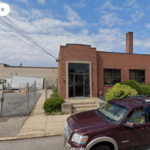
Swift Beef’s facility sits at 555 South Stuhr Road in that city. The facility runs two large wastewater lagoons that produce biogas as a byproduct of processing beef. That biogas contains hydrogen sulfide, a toxic compound that smells like rotten eggs and, at elevated concentrations, attacks the nervous system, causes respiratory damage, and can kill. When hydrogen sulfide hits open air or gets burned in a flare, it converts to sulfur dioxide, another lung-damaging pollutant that triggers asthma attacks, aggravates heart and lung disease, and is particularly brutal for children and the elderly.
The equipment designed to prevent that gas from reaching the surrounding community was a set of iron sponge scrubbers. Those scrubbers were supposed to scrub the worst of the hydrogen sulfide out before anything reached the flare or the air. They required regular media replacement. They required daily temperature monitoring. They required accurate recordkeeping so that if something went wrong, someone would know about it and could fix it.
According to the EPA’s findings, Swift Beef did none of that. They did not replace the scrubber media on a regular schedule. They did not keep the temperature records they were legally required to keep. They diverted clarifier sludge into the lagoons, which sped up the rate at which the toxic gas was being produced. The chemical reaction inside the scrubbers generated heat. No one addressed the rising temperatures. And then, in February 2024, the scrubbers caught fire.
In the weeks surrounding that fire, the facility experienced a cascade of failures: the north lagoon collapsed in January 2024, releasing uncontrolled gas emissions. After the scrubbers burned, the company cut open the south lagoon cover to dispose of fire-fighting materials, releasing more uncontrolled emissions. The people living downwind of Grand Island’s industrial corridor did not receive a public warning. The state regulators who were legally entitled to a report within two working days did not receive one until August 21, 2024, nearly six months after the fire.
The violation of trust here is layered. Residents around that facility had a right to clean air enforced by law. Regulators had a right to timely information so they could intervene. The community had a right to know when the equipment protecting it from toxic gas had burned down. None of those rights were honored in time. A fine gets paid. The air does not get an apology.
Legal Receipts: What the Documents Actually Say
“During a performance test conducted by Respondent in April 2023, H2S concentrations at the scrubber outlet were 1,837 ppmvd, or 1,737% above the limit.”
- The legal limit at the scrubber outlet was 100 parts per million by volume. Swift Beef’s own test returned 1,837 ppmvd. This is not a borderline reading. This is nearly eighteen times the maximum permitted concentration.
- This was Swift Beef’s own performance test, meaning the company itself generated the data proving it was out of compliance, and yet the violations continued.
“During performance tests conducted by Respondent in July 2023 and January 2024, H2S concentrations at the scrubber inlet were 6,419 ppmvd and 8,593 ppmvd, respectively.”
- The legal inlet limit was 5,000 ppmvd. Both tests exceeded it, and the July 2023 to January 2024 readings show the concentration climbing, not falling. This documents a deteriorating situation over time.
- The inlet violation at 8,593 ppmvd just one month before the scrubbers burned establishes a direct factual link between the rising gas load and the fire that followed.
“Respondent did not route biogas to the flare or scrubbers during several serious incidents at the Facility. Specifically, in January 2024 the north lagoon collapsed, then in February 2024 the scrubbers caught fire, and Respondent unsealed the south lagoon to dispose of fire-fighting materials. These incidents resulted in uncontrolled emissions of H2S from the lagoons.”
- This paragraph documents three separate incidents within approximately six weeks during which hydrogen sulfide gas was released into the surrounding environment with zero emission controls operating.
- The decision to unseal the south lagoon to dispose of fire-fighting materials turned a crisis response into an additional emissions event. The community absorbed the consequences of that decision.
“On June 15, 2024, Respondent submitted the compliance certification reports for years 2020 and 2021, which were due on March 31, 2021, and March 31, 2022, respectively.”
- The 2020 compliance report arrived over three years late. The 2021 report arrived over two years late. These were not paperwork delays; they were legally required declarations of whether the facility was operating within its permitted limits.
- Regulators cannot act on information they do not have. Late compliance certifications are not a technicality; they are a structural barrier to enforcement.
“Respondent did not submit a class I operating permit application.”
- After the scrubbers failed and SO2 emissions climbed past 100 tons per year, Swift Beef crossed the federal threshold that legally required it to apply for a major-source Title V operating permit by October 2025. It never filed.
- A Title V permit would have imposed more rigorous monitoring, public reporting, and compliance obligations. Not filing it meant those higher-level obligations never came into force.
Profit-Maximization at All Costs
The pattern documented across 20 violations points to a single organizing logic: the cost of compliance was consistently deferred until federal regulators forced a reckoning.
- The iron sponge scrubbers required regular media replacement to function. The EPA documented that Swift Beef did not replace the media on a regular schedule to prevent exhaustion. Scrubber media is a consumable input with a cost. Skipping its replacement is a direct operating savings at the expense of emission control.
- During a portion of 2023, Swift Beef diverted clarifier sludge into the lagoons. The EPA’s findings document that this decision increased the rate at which H2S was generated in the biogas, accelerating the overload on the scrubbers. Clarifier sludge disposal presumably saved the company cost elsewhere in its operations, while the consequences were externalized onto the scrubbers and, ultimately, the surrounding air.
- Required daily temperature readings on the scrubbers were not kept until July 2023. Without those records, there was no formal internal mechanism to flag and address the rising temperatures that eventually caused the fire. The cost of not monitoring was initially zero to the company and eventually catastrophic to the equipment and the community’s air quality.
- The fine of $1,578,440 resolves 20 separate counts of violation. The maximum statutory penalty per day of violation under the CAA, adjusted for inflation, is $59,114. The settlement represents a negotiated fraction of what the full penalty exposure could have been.
The Letter but Not the Spirit
Swift Beef operated under a class II (synthetic minor) permit, a designation that exists specifically to allow facilities to cap their emissions below the major-source threshold and avoid the more rigorous requirements of a Title V operating permit. The structure of that system contains a built-in vulnerability.
- 129 Neb. Admin. Code ch. 6 § 001.02 allows a facility with emissions potentially above major-source levels to voluntarily cap those emissions below the threshold and operate under a lighter-touch class II permit. The purpose of that option is to give facilities flexibility while still ensuring emissions stay controlled. Swift Beef held a class II permit while its scrubbers were functionally failing, meaning the “cap” on emissions was being maintained on paper through permit conditions while the physical infrastructure needed to honor those conditions was deteriorating.
- After the scrubbers burned and became inoperable in February 2024, the facility crossed the 100-ton-per-year SO2 threshold for major-source classification around October 2024, according to the EPA’s estimate. At that point the law required a Title V permit application within 12 months. Swift Beef never filed. The compliance obligation existed; the act of filing was simply not performed.
- The permit required that any noncompliance be reported to state regulators within two working days. Swift Beef did not report the February 2024 scrubber fire until August 21, 2024. The obligation was known. The deadline was clear. The report was not filed for approximately 180 days after it was due.
How Capitalism Exploits Delay: Time as a Corporate Weapon
In this case, delay was not a legal strategy. It was an operational pattern: violations were allowed to compound, reports were not filed, and the regulators who could have intervened were kept in the dark for months and years at a time.
- The 2020 compliance certification, due March 31, 2021, was not submitted until June 15, 2024: over three years and two months late. The 2021 report, due March 31, 2022, was submitted the same day, over two years late. During those years, regulators had no certified picture of the facility’s compliance status for those operating periods.
- The malfunction report for the scrubber fire was due within two working days of February 23, 2024. It was submitted on August 21, 2024. The EPA’s enforcement chart shows that two other required malfunction reports, for the biogas flowmeter failure and the failure to document its maintenance, list no submission date at all.
- Records documenting routine maintenance on the scrubbers, which scrubber was in operation during biogas combustion, flare and pilot light maintenance, and daily temperature readings on the scrubbers were all required from the beginning of the permit period. According to the EPA, none of these records were kept until July 2023. For the continuous flow monitor calibration records, the gap extended until May 2024.
- The continuous flow meter required to measure unscrubbed biogas to the flare was not operated and maintained from June 1, 2024 to January 29, 2025, a gap of approximately eight months. Without that meter, accurate accounting of the flare’s gas load was impossible, and the regulatory system’s ability to verify permit compliance was structurally compromised.
Societal Impact Mapping
Public Health
The documented emissions failures created direct, measurable risk for the people living and working near the Grand Island facility.
- Hydrogen sulfide at elevated concentrations causes headaches, nausea, eye and throat irritation, and at high exposures, respiratory failure. The scrubber outlet reading of 1,837 ppmvd is a concentration level that, if it reached the public, would constitute a serious acute health hazard.
- Sulfur dioxide, the byproduct of H2S combustion in the flare, is a criteria air pollutant for which the EPA sets national ambient air quality standards specifically because of its documented effects: worsened asthma, aggravated cardiovascular and lung disease, and elevated risk for children and the elderly. The facility crossed the 100-ton-per-year SO2 emission threshold after the scrubbers failed, meaning elevated SO2 was being emitted for months while the facility operated without its full complement of controls.
- During the January 2024 lagoon collapse, the February 2024 scrubber fire, and the cutting of the south lagoon cover, biogas containing hydrogen sulfide was released with no emission controls operating. These were not brief equipment blips; they were multi-day or multi-week uncontrolled emission events in a residential and working region of Nebraska.
- The failure to report these events to state regulators within the required two-day window meant that any coordinated public health response, air quality monitoring deployment, or community notification was delayed or never triggered at all.
Economic Inequality
The communities most exposed to industrial air pollution are rarely the ones who own the industrial facilities doing the polluting.
- Meat processing facilities are typically sited in working-class communities and rural areas where land is cheaper and political resistance is lower. The workers at the Grand Island facility and the residents in surrounding neighborhoods bore the respiratory risk while the facility’s owners operated without full emission controls for an extended period.
- The $1,578,440 fine is a negotiated settlement. Swift Beef, as a major beef processing operation, absorbs a fine of this scale as a cost of business. The health burden carried by residents near a facility that was emitting hydrogen sulfide at nearly eighteen times the permitted level has no equivalent monetary settlement attached to it.
- The absence of a continuous flow meter from June 2024 to January 2025 and the missing compliance certifications for 2020 and 2021 meant that the community’s primary tool for verifying that the facility was operating safely, the public regulatory record, was incomplete. The information asymmetry favored the corporation.
Environmental Degradation
The documented violations resulted in sustained and uncontrolled releases of toxic gases into Nebraska’s ambient air over a multi-year period.
- The facility’s wastewater lagoons continuously produced biogas containing hydrogen sulfide. The permit system’s emission limits exist because these lagoons are a persistent pollution source, not a one-time event. The failure to maintain the scrubbers meant that the ongoing, chronic emissions from the lagoons were insufficiently controlled for an extended period.
- From January 1, 2025, the facility has exceeded the 12-month consecutive limit of 233,366,000 standard cubic feet of unscrubbed biogas as fuel in the flare. This ongoing violation represents a continuing excess of SO2 emissions beyond what the permit was designed to allow the surrounding environment to absorb.
- The uncontrolled H2S releases during the lagoon collapse, the scrubber fire, and the lagoon cover removal were episodic spikes on top of the facility’s chronic baseline emissions problem.
The Settlement Isn’t Justice
The consent agreement resolved 20 separate counts of Clean Air Act violations with a single negotiated payment, and the structural terms of that resolution deserve scrutiny.
- Swift Beef “neither admits nor denies the specific factual allegations stated herein.” The company admitted jurisdiction and consented to the penalty, but the legal record does not include an admission that any of the documented violations actually occurred. That means the documented evidence of nearly eighteen-times-over-limit toxic gas emissions and a scrubber fire caused by neglected maintenance is settled but officially unacknowledged by the company.
- The maximum penalty per violation under the current CAA inflation-adjusted schedule is $59,114 per day. The violations in this case span multiple years across 20 counts. The settled penalty of $1,578,440 reflects the EPA’s compromise authority under Section 113(d)(2)(B) of the CAA, which permits the Administrator to “compromise, modify, or remit, with or without conditions, any administrative penalty.” The gap between maximum theoretical exposure and the actual settlement is not disclosed in the document.
- The stipulated penalty for failing to meet the March 31, 2027 compliance deadline starts at $450 per day for the first 30 days and rises to $700 per day beyond that. At $700 per day, Swift Beef could remain non-compliant for years for a cost that is a rounding error on a major industrial operation’s budget.
- No individual at Swift Beef faces any documented consequence. Bob Krebs, President and COO, signed the consent agreement. The penalty falls on the corporate entity, not on the decision-makers who chose not to replace scrubber media, not to keep temperature logs, and not to report the fire for six months.
- Affected residents near the Grand Island facility receive nothing under this settlement. There is no restitution fund, no health monitoring program, and no requirement for community notification of past emission events.
The Numbers in Human Terms
Related posts: