The Non-Financial Ledger
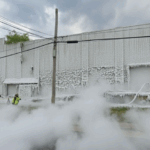
On a summer morning in August 2023, workers inside a pork processing plant in Hatfield, Pennsylvania had to stop what they were doing and leave the building. An operator made an error that let pressure build up in the ammonia lines. A pressure relief valve opened and vented approximately 160 pounds of anhydrous ammonia to the roof.
At such high concentrations anhydrous ammonia causes severe burns to the eyes, skin, and respiratory tract. At lower concentrations it causes immediate irritation, disorientation, and panic. The threshold for immediate danger to life and health is 300 parts per million. The people inside that facility did not have advance warning. They did not make a choice about their exposure. They were there doing their jobs, and they left because they had to.
The safety infrastructure that exists specifically to limit how bad a release can get, the pressure relief valves designed to control exactly the kind of overpressure event that occurred, had not been maintained on schedule. When the EPA went looking after the evacuation, it found that 145 of the 375 valves in the system had not been recertified or replaced within the required five-year window. These are not obscure rules buried in fine print. They are the engineering baseline for keeping roughly 100 tons of toxic refrigerant from becoming a catastrophic release in a populated area.
The workers who evacuated that day are not named in the EPA document. They have no line in the $90,000 settlement. The consent agreement does not require Clemens to acknowledge that anything wrong was done. What exists in the record is a checklist of overdue maintenance and a fine that will be paid electronically, on a schedule, to a government account.
Legal Receipts
These are direct quotes from the EPA consent agreement, filed April 27, 2026. They establish the violations and their duration on the record.
“As reported in Respondent’s risk management plan, anhydrous ammonia, Chemical Abstract Service (‘CAS’) Number 7664-41-7, is used at the Facility to cool and freeze its pork products. The Facility’s freezing and cooling system holds 201,852 pounds of anhydrous ammonia.” EPA Consent Agreement, Paragraph 22 — U.S. EPA Docket No. CAA-03-2026-0133
- This establishes that Clemens holds anhydrous ammonia at more than 20 times the 10,000-pound regulatory threshold that triggers the federal Chemical Accident Prevention Program requirements. The facility is not a marginal case; it operates at the scale where a failure is a public emergency.
“On August 13, 2023, Respondent reported the release of approximately 160 pounds of anhydrous ammonia from the Facility due to an operator error, causing pressure in the lines to build and a PRV to vent to the roof. The release caused the building to be evacuated and the initiation of the emergency notification process.” EPA Consent Agreement, Paragraph 28 — U.S. EPA Docket No. CAA-03-2026-0133
- The emergency notification process was triggered. This was not a contained event caught during a routine audit. An actual release occurred, people left the building, and that is what caused the EPA to start looking at Clemens’s compliance record.
- The PRV that vented is the same category of safety device that 145 others at the facility were operating past their required recertification date.
“On August 23, 2024, Respondent submitted to the EPA a replacement schedule for the 375 PRVs in use at the Facility. Respondent also provided a chart of all PRVs in use at the Facility, including the date of installation; the chart indicated 145 PRVs had been installed more than five years earlier than the date of submission.” EPA Consent Agreement, Paragraph 31 — U.S. EPA Docket No. CAA-03-2026-0133
- Clemens submitted the replacement schedule more than a year after the evacuation. The company’s own records showed which valves were overdue. This was not a situation where the violations were discovered by surprise; the data existed internally.
- Of the 375 total PRVs in the facility, 145 were confirmed overdue, which is 38.7 percent of the entire pressure relief valve inventory.
“From January 17, 2024, until August 10, 2024, Respondent violated 40 C.F.R. § 68.79(a).” EPA Consent Agreement, Paragraph 36 — U.S. EPA Docket No. CAA-03-2026-0133
- This covers the compliance audit violation specifically. Clemens certified its previous audit on January 16, 2021. The three-year requirement meant a new certified audit was due by January 16, 2024. It was not completed until August 10, 2024, a gap of nearly seven months.
- This means the facility was operating a high-hazard ammonia system with a lapsed compliance audit at the same time the EPA was investigating the August 2023 evacuation.
— EPA Consent Agreement, Paragraph 40
Public Deception
The Risk Management Program exists specifically because industrial facilities holding large quantities of hazardous chemicals are required to tell the government and the surrounding community what safeguards are in place. Clemens’s compliance record shows the safeguards certified on paper were not fully maintained in practice.
- What was certified: Clemens’s Risk Management Plan, submitted to EPA, represented that the facility had a prevention program in compliance with 40 C.F.R. Part 68, including inspection and maintenance procedures following recognized engineering standards. What the record shows: 145 of 375 pressure relief valves had not been recertified or replaced within the mandatory five-year window required by ANSI/IIAR 6, the specific engineering standard Clemens was required to follow.
- What was certified: The company’s January 16, 2021, compliance audit certification represented that it had evaluated its compliance with RMP Regulations and that its procedures were adequate and being followed. What the record shows: The required follow-up audit was due by January 16, 2024. It was not completed until August 10, 2024, leaving the certification lapsed for nearly seven months while the facility continued operating with 201,852 pounds of anhydrous ammonia on site.
Profit-Maximization at All Costs
The maintenance failures documented by the EPA are a predictable outcome when deferred maintenance on safety-critical equipment is treated as an acceptable budget decision.
- Replacing or recertifying a pressure relief valve is not a complex or expensive operation compared to the liability of a catastrophic ammonia release. Clemens operates a facility holding 201,852 pounds of anhydrous ammonia. The cost of scheduled valve maintenance is a cost of operating safely at that scale. The record shows 145 valves went past their deadline.
- The total civil penalty for both violations combined is $90,000. This covers a multi-year failure to maintain 38.7 percent of the facility’s pressure relief valve inventory, a seven-month lapse in compliance audit certification, and an ammonia release that forced an evacuation. The penalty functions as an accounting line item, not a deterrent.
- The consent agreement carries no admission of wrongdoing. Clemens “neither admits nor denies the specific factual allegations.” The company signs, pays electronically, and the matter is resolved. This is the entire cost of the documented conduct.
Regulatory Gray Zones
The violations documented here are clear-cut failures, but the settlement structure reveals a specific gap in how the Clean Air Act’s administrative penalty system functions for facilities at this scale.
- Section 113(d) of the Clean Air Act authorizes administrative penalties for violations of the Risk Management Program regulations. The penalty cap and the specific factors EPA must consider under Section 113(e) create a ceiling that, in a case like this one, produces a $90,000 outcome for a facility holding 100 tons of a regulated toxic substance. The statute permits this; it is not illegal. It is the authorized outcome.
- The consent agreement is “simultaneously commenced and resolved” under 40 C.F.R. §§ 22.13(b) and 22.18(b)(2) and (3). This procedural mechanism allows EPA to open and close an administrative enforcement action in a single instrument, bypassing a formal contested hearing. The result is efficient resolution but also means no independent adjudicator examined the facts on the public record before the case closed.
- The RMP regulations require audits every three years, but the enforcement window for the audit violation is defined from the date the audit became overdue. The seven-month lapse counted in the penalty calculation begins January 17, 2024, even though the underlying failure to schedule and complete the audit was a decision made some time earlier. The rule creates a specific counted violation period that may understate the actual duration of the compliance gap.
Legal Minimalism: The Letter but Not the Spirit
The Risk Management Program was designed after industrial chemical disasters, specifically to ensure that facilities holding threshold quantities of hazardous substances could not simply represent compliance on paper without maintaining actual safety infrastructure.
- The rule: 40 C.F.R. § 68.79(a) requires a certified compliance audit every three years. The purpose is to ensure that a qualified review periodically verifies that RMP procedures are being followed in practice, not just documented in a plan. The gap: Clemens certified its January 2021 audit and then allowed the three-year clock to run past the January 2024 deadline, meaning the facility operated for seven months in 2024 without a current certified audit, during the same period the EPA was investigating the August 2023 ammonia release. The filing of the 2021 certification satisfied the letter of the rule at the time; the failure to timely complete the 2024 cycle violated it.
- The rule: 40 C.F.R. § 68.73(d)(2) requires inspection and testing to follow Recognized and Generally Accepted Good Engineering Practices (RAGAGEPs). The IIAR 6 standard, the specific RAGAGEP for ammonia refrigeration, requires all PRVs that vent to atmosphere to be recertified or replaced on a five-year cycle. The purpose is to ensure that the devices that prevent overpressure events from escalating into catastrophic releases remain functionally certified. The gap: Clemens maintained a facility-wide PRV inventory and had the installation dates on record. The company knew or should have known which valves were approaching the five-year mark. The system existed; the maintenance schedule did not keep pace with it.
How Capitalism Exploits Delay: Time as a Corporate Weapon
The timeline from the triggering ammonia release to full PRV compliance is nearly two years, and the record documents the pace at which each step occurred.
- The ammonia release that prompted the investigation occurred on August 13, 2023. The EPA did not issue an Information Request Letter until March 14, 2024: seven months later. Clemens responded with the requested information on April 19, 2024.
- Clemens did not submit a replacement schedule for its 375 PRVs until August 23, 2024, more than 12 months after the release that triggered the investigation. Even after submitting the schedule, the company continued reporting overdue valves to EPA through the fall of 2024.
- Full replacement of all 145 overdue PRVs was not completed until July 8, 2025, approximately 23 months after the release that initiated the investigation. During the intervening period, the facility continued to operate with a system that had a documented, reported proportion of its pressure relief valve inventory out of compliance.
- The consent agreement was filed with the EPA Region 3 Regional Hearing Clerk on April 27, 2026, more than two and a half years after the initial release. The formal enforcement action resolved after the remediation was already complete, meaning the penalty functions as a retroactive accounting settlement rather than a lever that compelled faster corrective action.
Societal Impact Mapping
Public Health
The documented release and the underlying maintenance failures carry direct public health implications for workers inside the facility and the surrounding Hatfield, Pennsylvania community.
- The August 13, 2023, release of approximately 160 pounds of anhydrous ammonia was sufficient to force a building evacuation and trigger the emergency notification process. Anhydrous ammonia causes severe respiratory and skin injury at elevated concentrations. The source document does not report injuries, but it documents that people left the building as a direct result of the release.
- The facility holds 201,852 pounds of anhydrous ammonia, more than twenty times the threshold that triggers federal hazard assessment and emergency planning requirements. At that quantity, a larger failure or cascading event would not be a workplace incident; it would be a community emergency. The PRVs that were out of recertification compliance are specifically the safety devices designed to prevent overpressure cascades.
- The facility is located at 2700 Clemens Road in Hatfield, Pennsylvania, a residential and commercial area in Montgomery County. The surrounding community has no direct mechanism to independently verify the real-time compliance status of the PRV inventory inside the facility. The RMP program’s public disclosure provisions are the primary avenue for that information, and those disclosures depend on accurate, current certifications.
Economic Inequality
The enforcement outcome distributes the costs of this compliance failure unevenly: workers absorbed the immediate risk, and the company paid a flat fine with no mechanism for worker compensation.
- The workers who evacuated the Hatfield facility on August 13, 2023, are not parties to the consent agreement. They have no claim under the administrative settlement for the disruption, the exposure risk, or any ongoing health concerns. The $90,000 penalty flows to the federal government, not to the people who were in the building.
- Industrial ammonia refrigeration workers are among the employees at highest risk in a release event. They are frequently lower-wage production workers, not the engineers and managers who make maintenance scheduling decisions. The financial consequence of the compliance failure falls on the company as a legal entity; the physical risk fell on the workforce.
- The consent agreement explicitly states that “penalties, interest, and other charges paid pursuant to this Consent Agreement shall not be deductible for purposes of federal taxes.” This is a meaningful provision, but it applies to the penalty payment specifically. It does not change the economic relationship between the company and the workers who bore the hazard.
The Settlement Isn’t Justice
The $90,000 consent agreement resolves both violations without admission of wrongdoing, without worker compensation, and with penalty terms that the source document itself limits in significant ways.
- The settlement covers two separate violations: a seven-month compliance audit lapse and a multi-year failure to maintain 145 pressure relief valves on a system with 201,852 pounds of toxic ammonia. The combined penalty is $90,000. The document does not publish the penalty calculation or the per-violation breakdown, so the deterrence value of each component cannot be independently evaluated from the record.
- Paragraph 6 of the consent agreement states: “Except as provided in Paragraph 5, above, Respondent neither admits nor denies the specific factual allegations set forth in this Consent Agreement.” Clemens pays the fine; the factual record of what happened is not admitted as true by the company.
- EPA’s reservation of rights language in Paragraph 57 makes clear the settlement “resolves only the EPA’s claims for civil penalties for the specific violation alleged.” Future enforcement on other conditions is preserved, but the current violations are closed. No injunctive relief, no independent audit requirement, and no enhanced monitoring obligation appears in the settlement terms beyond the company’s self-reported completion of the PRV replacement schedule.
- The workers who evacuated the facility receive nothing from this proceeding. The surrounding Hatfield community receives no notification under the settlement, no enhanced disclosure, and no requirement for Clemens to report publicly on its PRV recertification going forward beyond standard RMP obligations.
This Is the System Working as Intended
The outcome in this case is not a malfunction of the regulatory system. It is the system operating within its designed parameters, and those parameters were set by people who made choices about what industrial chemical safety is worth.
- The EPA’s Chemical Accident Prevention Program exists because Congress recognized, after disasters like Bhopal, that communities near industrial chemical facilities needed federally mandated hazard planning. The program requires risk management plans, compliance audits, and engineering standards specifically because industry’s voluntary compliance record was insufficient. Clemens’s violation of both the audit requirement and the valve maintenance standard confirms exactly what the program was designed to prevent.
- The administrative penalty process under CAA Section 113(d) simultaneously commences and resolves the enforcement action. No public hearing occurs. No independent fact-finder examines the record. The company waives its right to contest the allegations, pays the fine, and the matter closes. This is the standard pathway for this category of violation.
- The $90,000 outcome is what the statute’s penalty factors produced after EPA “took into account the factors specified in Section 113(e) of the CAA.” Those factors include good faith efforts to comply, ability to pay, and compliance history, among others. A company that cooperated with EPA’s post-release investigation, submitted replacement schedules, and ultimately completed the remediation benefits from those factors. The result is a penalty calibrated to the regulatory relationship, not to the risk imposed on workers and the surrounding community.
- The consent agreement was “simultaneously commenced and resolved” on April 27, 2026, more than two and a half years after the triggering release. By that date, all 145 valves had already been replaced. The enforcement action arrived after the corrective action was complete. This is a routine feature of administrative enforcement timelines, not an anomaly. The system moves at the pace of administrative law, not at the pace of chemical hazards.